

Harvest season can change traffic patterns on Idaho highways as agricultural trucks, trailers, farm equipment, and other commercial vehicles move crops and supplies between fields, storage sites, processors, and markets. Drivers near Boise, Meridian, and other Idaho communities may encounter slower vehicles, wide turns, heavy loads, and trucks entering or leaving rural roads and field access points.
Large trucks operate differently from passenger vehicles. Federal safety guidance confirms that large trucks have substantial blind spots, need extra room to turn, and require more time and distance to stop. When a truck and a passenger vehicle collide, the size and weight difference can contribute to severe injuries and a more complicated insurance investigation.
Hepworth Holzer, LLP helps injured people understand how driver conduct, truck records, vehicle condition, insurance coverage, and Idaho fault rules may affect a claim. A truck crash that happens during harvest season is not automatically the fault of the truck driver or the passenger vehicle driver. Responsibility depends on what happened, what duties applied, and what reliable evidence shows.
For more information about commercial truck claims, visit:
https://hepworthholzer.com/2020/09/16/idaho-truck-accident-guide/






Why Harvest Season Changes Idaho Highway Traffic 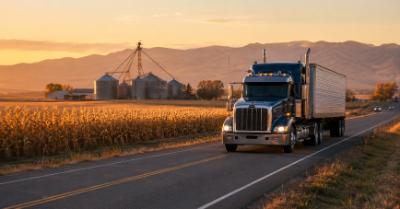
Harvest season changes Idaho highway traffic because agricultural transportation can place vehicles with very different speeds, sizes, stopping distances, and turning needs on the same roads. Idaho potato harvest generally begins in early September and can run through most of October, while other crops create their own seasonal transportation patterns.
A passenger vehicle traveling at highway speed may come upon a slow-moving truck or farm vehicle with less time to react than expected. A loaded truck may need more room to stop, turn, or merge. Trucks and farm equipment may also enter from field approaches, rural driveways, storage facilities, and side roads where drivers do not normally expect frequent heavy vehicle movement.
Drivers can reduce risk by watching farther ahead, leaving more following distance, avoiding truck blind spots, and passing only when there is enough sight distance and space to complete the maneuver safely.
Harvest traffic does not make a collision inevitable. It does make patience, visibility, and extra following distance more valuable.






Common Causes of Harvest-Season Truck Accidents
Harvest-season truck accidents can involve the same causes seen in other commercial vehicle collisions, along with conditions tied to agricultural transportation.
Examples can include:
- A truck entering or leaving a field, driveway, or rural access point without enough time or distance for approaching traffic
- A passenger vehicle attempting to pass a slow-moving truck where sight distance is limited
- A truck driver following too closely and being unable to stop when traffic slows
- Cargo that shifts, spills, or affects vehicle handling
- Brake, tire, lighting, steering, or maintenance problems
- Driver fatigue after long work periods or repeated trips
- Speed that is unsafe for traffic, road, visibility, weather, or load conditions
- Distracted driving by a commercial or passenger vehicle driver
- Unsafe lane changes near large truck blind spots
- Mud, crop material, or other debris on the roadway near agricultural operations
A crash may involve more than one factor. The central question is what caused the collision and whether each driver or business used reasonable care under the circumstances.
Why Harvest-Season Truck Crashes Can Cause Serious Injuries
Harvest-season truck crashes can cause serious injuries because large commercial vehicles can create substantial forces in a collision, especially when they are carrying heavy cargo. People in smaller vehicles may have less protection when struck by a truck, trailer, or piece of farm equipment.
Serious injuries can include:
- Broken bones and fractures
- Spinal injuries
- Traumatic brain injuries
- Internal injuries
- Shoulder, knee, and joint injuries
- Severe soft-tissue injuries
- Injuries that require surgery
- Long-term pain or physical limitations
The value of an injury claim depends on the evidence and the actual effect of the injuries. Medical records, diagnostic testing, treatment history, wage information, and documentation of daily limitations can affect how damages are evaluated.
Who May Be Responsible for a Harvest Truck Crash?
Responsibility for a harvest truck crash can extend beyond the person behind the wheel. Depending on the facts, a claim may involve a commercial driver, trucking company, vehicle owner, employer, cargo loader, maintenance provider, or another driver.
Agricultural transportation can involve several business relationships. A truck may be owned by one company, operated by another, loaded by a separate business, or used to haul products under a contract. Those relationships should be identified before anyone assumes that only one insurance policy or responsible party is involved.
Consider a hypothetical collision in which a loaded agricultural truck pulls from a side road onto a highway and a passenger vehicle strikes the rear portion of the trailer. The truck driver may claim the passenger vehicle was speeding or that the driver failed to react. The passenger driver may claim the truck entered the highway without enough clearance.
Roadway measurements, photographs, witness statements, camera footage, lighting conditions, vehicle damage, event data, and electronic records can help determine what happened.
What Evidence Matters After an Idaho Truck Accident?
Evidence after an Idaho truck accident can change or disappear quickly. Vehicles may be repaired, cargo may be moved, camera footage may be overwritten, electronic data may be lost, and witnesses may become harder to locate.
Evidence that may matter includes:
- Photographs and video of the crash scene
- Photographs of the vehicles and cargo
- Police crash reports
- Witness names and contact information
- Electronic logging device data
- Engine control module or event data
- Driver qualification records
- Inspection and maintenance records
- Dispatch and scheduling records
- Loading documents and bills of lading
- Company safety policies
- Insurance information
- Cellphone or communication records when legally obtainable and relevant
A focused truck accident investigation often begins by identifying what evidence exists, who controls it, and how long it may be retained.
For more information about truck accident insurance investigations, visit:
https://hepworthholzer.com/truck-accident-insurance-investigation/
Evidence can disappear long before a lawsuit deadline expires. Early preservation can affect what can be proven later.
Rules of a Personal Injury Claim Choosing a Personal Injury AttorneyRelated Videos
How Idaho Comparative Responsibility Can Affect Compensation
Idaho comparative responsibility can affect compensation when more than one person or business contributed to a crash. Idaho Code Section 6-801 provides that an injured person can recover when that person’s negligence or comparative responsibility is not as great as the negligence or comparative responsibility of the person from whom recovery is sought. Any damages awarded are reduced in proportion to the injured person’s share of responsibility.
In a harvest-season truck case, an insurer may argue that a passenger driver followed too closely, passed unsafely, remained in a blind spot, drove too fast for conditions, or failed to react soon enough. Those arguments should be tested against physical evidence, witness information, vehicle data, and other reliable records.
For more information about Idaho comparative responsibility, visit:
https://hepworthholzer.com/2020/10/08/comparative-responsibility/
What Compensation May Be Available After a Truck Accident?
Compensation after a truck accident depends on the injuries, fault evidence, available insurance coverage, and the long-term effects of the crash.
A serious Idaho truck accident claim may include losses such as:
- Medical expenses
- Future medical care
- Lost income
- Reduced earning capacity
- Pain and physical discomfort
- Physical limitations
- Loss of normal activities
- Property damage
An insurer may request a recorded statement or make an early settlement offer before the full medical picture is known. An injured person should avoid guessing about facts, minimizing symptoms, or signing a release before understanding what claims and rights the document affects.
For a broader overview of Idaho injury claims, visit:
https://hepworthholzer.com/2020/09/16/idaho-personal-injury-guide/
Verdicts & Settlements
What to Do After a Harvest-Season Truck Collision
After a harvest-season truck collision, medical care and immediate safety should come first. Call 911 when anyone may be injured or when the collision creates a roadway hazard. Follow emergency instructions and move away from active traffic when it is safe to do so.
If your condition allows:
- Photograph the vehicles, roadway, debris, skid marks, cargo, traffic signs, and surrounding area
- Get witness names and contact information
- Keep the crash report number
- Save medical records and bills
- Save repair estimates and property damage records
- Keep wage and employment information related to missed work
- Save letters, emails, and other insurance communications
- Avoid speculating about fault at the scene
- Avoid guessing in a recorded insurance statement
A serious truck collision may involve facts that are not visible at the scene, including truck data, maintenance history, cargo records, dispatch information, or company scheduling records.
How Long Do You Have to File an Idaho Truck Accident Claim?
The filing period for an Idaho truck accident claim depends on the type of claim and the parties involved. Idaho Code Section 5-219 generally provides a two-year limitation period for actions seeking damages for personal injury caused by another person’s wrongful act or neglect.
Some claims can have different deadlines or earlier notice requirements. For example, Idaho Code Section 6-906 requires certain claims against political subdivisions or their employees to be presented within 180 days from the date the claim arose or reasonably should have been discovered.
A filing deadline should not be treated as the amount of time available to investigate. Evidence can disappear much sooner.
How an Idaho Truck Accident Attorney Can Help
An Idaho truck accident attorney can help identify the people and businesses involved, preserve records, review insurance coverage, document medical and financial losses, and respond to attempts to shift responsibility.
Legal work may include:
- Sending evidence preservation demands
- Identifying involved companies and insurers
- Inspecting available vehicles and physical evidence
- Obtaining electronic truck data
- Reviewing driver qualification and safety records
- Reviewing inspection and maintenance records
- Examining cargo and loading information
- Locating and interviewing witnesses
- Reviewing insurance policies and coverage issues
- Working with qualified investigators or experts when needed
- Documenting medical treatment and financial losses
- Preparing the claim for settlement discussions or litigation
For more information about the firm’s Boise truck accident practice, visit:
https://hepworthholzer.com/boise-truck-accident-lawyers/
Speak With an Idaho Truck Accident Attorney
Speaking with an Idaho truck accident attorney can help you understand the evidence, insurance coverage, fault issues, and deadlines that may affect your claim. A serious harvest-season truck crash can leave you dealing with medical treatment, missed work, vehicle damage, and insurance calls at the same time.
Hepworth Holzer, LLP represents injured people in Boise, Meridian, and communities throughout Idaho. The firm can review the collision, available truck and driver evidence, insurance coverage, Idaho fault rules, and the deadlines that may apply to your situation.
Call 208-328-6998 or contact the firm online:
https://hepworthholzer.com/contact/
This article is for general informational purposes only. It is not legal advice and does not create an attorney-client relationship. Every case is different. Consult an attorney about your specific situation.
