



Do you Need Legal Help?
Contact the Hepworth Holzer team today to schedule a free legal consultation to discuss your personal injury case.

Our Idaho Personal Injury Lawyers






Boise Intersection Accident Lawyers
Intersections are where the largest share of serious Treasure Valley crashes happen — and where the evidence that decides fault disappears the fastest
A driver runs a red light on Eagle Road. Another fails to yield on a left turn across Fairview Avenue. A third blows through a stop sign on a residential side street in Meridian. Intersection crashes are the most common location for serious injury collisions in Ada County, and the evidence that proves what happened at the moment of impact — signal timing records, intersection camera footage, event data recorder data — begins disappearing within hours. If you were injured in an intersection crash anywhere in Boise, Meridian, Nampa, Eagle, Caldwell, or across the Treasure Valley, we are happy to talk to you about your situation. Call us today.
Intersection crashes account for a significant share of all reportable injury crashes in Idaho each year according to ITD data. In Ada County specifically, the combination of rapid population growth, increasing traffic volumes at high-use commercial intersections, and a road network that was not designed for current traffic loads has produced consistently high crash rates at specific locations year after year. This is not a random distribution — it is a predictable pattern that the Idaho Transportation Department, ACHD, and the cities that share responsibility for these roads track in their engineering and safety data.
Our firm has been practicing personal injury law in Idaho for more than 50 years. Our attorney team has practiced car accident law for well over a combined 100+ years. For a full overview of all car accident claims we handle in Idaho, see our main car accident hub. For a comprehensive look at which specific roads and intersections generate the most crashes in the Treasure Valley, see our page on dangerous roads and intersections in Idaho.
Hepworth Holzer also helps residents of Idaho with Personal Injury Matters in: Ada County, Caldwell, Canyon County, Eagle, Garden City, Gem County, Kuna, Meridian, Nampa and Star.
Types of Intersection Crashes We Handle
Intersection crashes take several distinct forms, each with its own liability analysis and evidentiary challenges:
- Red-light running crashes — a driver enters the intersection after the signal has turned red, striking a vehicle that had lawfully entered on green. These are among the most injurious intersection crashes because both vehicles are typically moving at approach speed when the collision occurs. Signal timing records are the critical evidence.
- Left-turn-across-path crashes — the most common and most injurious single intersection crash type. A driver turning left fails to yield to oncoming traffic moving through the intersection. Idaho Code Section 49-640 requires the turning driver to yield to oncoming vehicles close enough to constitute an immediate hazard. A collision in these circumstances is strong evidence of a statutory violation.
- Stop-sign violations — a driver fails to stop or rolls through a stop sign without yielding, striking a vehicle with the right of way. At four-way stops, the vehicle that arrived first has the right of way; when vehicles arrive simultaneously, the vehicle to the right has priority.
- Right-on-red violations — a driver turns right on red without yielding to pedestrians in the crosswalk or cross-traffic with the green signal.
- Signal malfunction crashes — conflicting signals, dark signals, or mistimed signal phasing can cause drivers with reasonable reliance on the signal to enter an intersection against traffic that also believed it had the right of way. These crashes may involve government entity liability under the Idaho Tort Claims Act.
- Roundabout entry crashes — Idaho has an increasing number of roundabouts in the Treasure Valley. Drivers entering a roundabout must yield to circulating traffic. Failure to yield on entry is the dominant cause of roundabout crashes.
- Rear-end within an intersection — a driver stopped for a yellow or red signal is struck from behind by a driver who either did not see the signal change or chose not to stop. For the specific analysis of rear-end crashes, see our rear-end collision page.
- Pedestrian and cyclist strikes at crosswalks — drivers who fail to yield to pedestrians in marked or unmarked crosswalks violate Idaho Code Section 49-702, which requires yielding to pedestrians lawfully crossing the roadway.
Idaho Car Accident Help
Accident Report & Claim Guide Dangerous Roads and Intersections Head-On Collision Hit and Run Accident Intersection Accident Parking Lot Accident Rear-End Collision Road Rage and Aggressive Driving Rollover Accident Speeding Accident T-Bone and Intersection Accident Uninsured and Underinsured Work Zone and Construction Zone Accident
7 Mistakes That Ruin Personal Injury Cases
Get our FREE guide and find out how you can protect your rights with Hepworth Holzer, LLPIdaho Right-of-Way Rules That Govern Intersection Cases
Idaho Code Section 49-640 and the related statutes establish clear right-of-way rules for the most common intersection scenarios:
- At a signalized intersection, vehicles facing green proceed; vehicles facing red stop and wait.
- At an uncontrolled intersection, the vehicle approaching from the right has the right of way when two vehicles arrive simultaneously.
- At a four-way stop, the first vehicle to arrive and stop proceeds first. When two vehicles stop simultaneously, the vehicle to the right proceeds first.
- A driver turning left must yield to oncoming vehicles that are within the intersection or so close as to constitute an immediate hazard.
- A driver entering a roadway from a private drive, alley, or parking lot must yield to all traffic on the through street.
- Pedestrians in a marked or unmarked crosswalk at a corner intersection have the right of way under Idaho Code Section 49-702. An unmarked crosswalk exists at every corner intersection in Idaho — the absence of painted lines does not eliminate the right of way.
Violations of these statutes are negligence per se under Idaho law. When the evidence establishes that the other driver violated an applicable right-of-way statute, the breach-of-duty element of the negligence claim is established without requiring further proof of unreasonable behavior.
Evidence in Intersection Crashes — and Why Speed Matters
Intersection crash evidence is perishable. Signal timing data logs over. Intersection camera footage overwrites — sometimes in as little as 72 hours. Dashcam files get recycled. Witness contact information is lost within hours if not captured at the scene. Our firm sends preservation letters to ACHD, ITD, nearby businesses, and individual witnesses the same day we are retained in a serious intersection case. The evidence we pursue includes:
- Traffic signal timing records from the maintaining agency. ACHD and ITD signal cabinets record phase history — when each signal phase began, how long it lasted, and when it ended. In a disputed red-light case, this data is often decisive.
- Intersection and nearby private cameras — city-owned intersection cameras exist at some Treasure Valley locations. Gas stations, banks, and fast-food restaurants at intersection corners frequently have exterior cameras with footage that captures approach speed, signal phase, and the collision itself. We identify and contact these businesses the same day we are retained.
- Vehicle event data recorder (EDR) downloads from both vehicles — pre-impact speed, throttle, braking, and steering inputs in the five seconds before the crash. In disputed-speed and disputed-fault cases this is often the most reliable evidence available.
- Cell phone records for the at-fault driver — distracted driving under Idaho Code Section 49-1401A is a common contributing factor at intersection crashes. We regularly subpoena carrier records when distraction is suspected.
- Witness statements — intersection crashes almost always have witnesses, and their contemporaneous observations about which light was green, whether a driver was looking at a phone, and how fast the vehicles were moving are highly persuasive with juries.
- Scene photographs of skid marks, debris fields, and final vehicle positions — accident reconstruction experts use this physical evidence to calculate approach speeds and determine point of impact when electronic evidence is unavailable.
- Traffic citations issued at the scene — a citation for running a red light or failing to yield carries real weight with insurance adjusters and juries and shifts the narrative of the claim significantly.
When the Signal Itself May Be the Problem
Some intersection crashes occur not because a driver violated a signal, but because the signal itself failed, was poorly timed, or was designed in a way that creates conflicting movements. When an ACHD or ITD signal malfunctions — a dark signal, a signal showing green in conflicting directions, or a signal with a phasing design that has produced documented conflicts — the agency that maintains the signal may share liability for the resulting crash.
These claims are governed by the Idaho Tort Claims Act under Idaho Code Section 6-901 et seq. A written notice of tort claim must be served on the correct government entity within 180 days of the crash. Missing this deadline permanently bars the claim against the government entity. When a signal malfunction or design issue may have contributed to your crash, the investigation must move immediately.
Idaho’s Comparative Fault Rule at Intersections
Idaho Code Section 6-801 applies to every intersection crash. Your recovery is reduced by your percentage of fault and is barred entirely if you are 50 percent or more at fault. Insurance companies defending intersection crash claims routinely try to assign fault to the injured driver — arguing they were speeding, that they should have seen the other driver coming, that they entered the intersection a second after the light turned yellow. These fault arguments are negotiable and often beatable with the right evidence. Event data recorder data showing your vehicle was moving at or below the speed limit, combined with signal timing records showing the signal was green in your direction, is difficult for the other side to overcome at trial.
Wrongful Death at Intersections
When an intersection crash is fatal, Idaho Code Section 5-311 governs the wrongful death claim. The statutory heirs — generally the surviving spouse, children, and certain other family members — may recover economic losses and non-economic losses including loss of companionship, guidance, and care. The non-economic damages cap under Idaho Code Section 6-1603 ($509,013.28 effective July 1, 2025) applies to ordinary negligence but not to reckless conduct or felonious acts such as DUI. Punitive damages under Idaho Code Section 6-1604 are available for egregious conduct — including DUI-related red-light running and cases of willful disregard for traffic control devices.
Why Hepworth Holzer
Our firm has investigated intersection crashes throughout the Treasure Valley for more than 50 years. We know how to pull signal timing records before they roll off, identify and contact camera-equipped businesses before footage overwrites, and retain reconstruction experts who can build the case from physical evidence when electronic evidence is unavailable. We are personal injury trial attorneys — not a settlement mill — and we have no qualms about going to trial when the insurance company refuses to value an intersection crash fairly. When you call, you talk to a real lawyer. Your case will be treated as a priority.
Related Car Accident Videos
Frequently Asked Questions About Intersection Accidents
Through signal timing records from ACHD or ITD, intersection camera footage, nearby private surveillance, witness statements, and vehicle event data recorder downloads. Signal timing data logs exactly when each phase began and ended. This data is available if requested quickly — it rolls off maintenance logs over time.
Yes, with evidence. Signal timing records often definitively resolve the yellow-versus-red dispute. Intersection camera footage and EDR data showing the other vehicle’s speed and braking pattern in the seconds before impact are also highly relevant.
Not automatically. Idaho Code Section 49-640 requires left-turning drivers to yield — but if the oncoming driver was running a red light, speeding, or distracted, the fault allocation shifts substantially. Left-turn crashes require thorough investigation, not a default assumption.
Potentially. Claims against government entities require written notice of tort claim within 180 days under Idaho Code Section 6-901. Discretionary immunity may apply to design decisions but not to negligent maintenance or failure to respond to a documented malfunction.
Two years from the crash date under Idaho Code Section 5-219 for private-party claims. Claims against government entities require written notice of tort claim within 180 days under Idaho Code Section 6-901. The 180-day deadline is the shorter and more dangerous of the two.
You can still recover as long as your fault is less than 50 percent under Idaho Code Section 6-801. Damages are reduced proportionally. The proportionality of each driver’s conduct matters significantly in the fault allocation.
Nothing upfront. We handle intersection crash cases on a contingency fee — we only get paid if we recover compensation for you. The initial consultation is free.
Related Car Accident Blog Posts

Dealing with the Trucking Company’s Insurance After a Crash in Idaho
Dealing with the Trucking Company’s Insurance After a Crash in Idaho When a commercial truck [...]

What Idaho Families Need to Know About Wrongful Death from a Truck Crash
Losing a family member in a commercial truck crash is one of the most devastating [...]
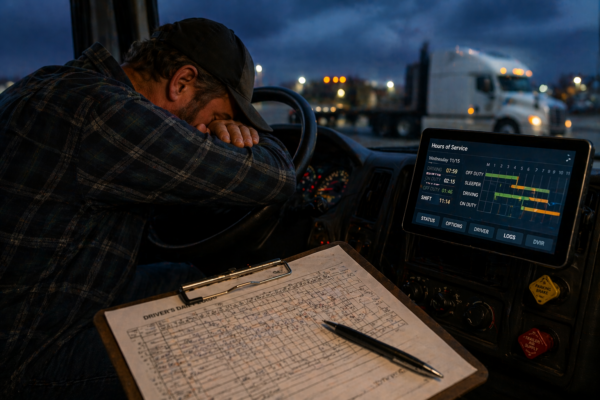
Hours of Service Rules and Truck Driver Fatigue: What Idaho Accident Victims Need to Know
Fatigued driving is one of the leading causes of serious commercial truck crashes in Idaho [...]

Black Box and ECM Data in Idaho Truck Crash Cases: What Your Lawyer Needs to Recover
When a commercial truck is involved in a serious crash, one of the most important [...]

The Most Dangerous Truck Corridors in Idaho: I-84, US-95, I-86, and I-184
Idaho’s highway system carries a level of commercial freight traffic that most residents never fully [...]

Understanding the Role of Black Ice in Boise Motorcycle & Bicycle Injury Claims
Boise, Idaho, is known for its beautiful outdoor activities, especially during the winter months. However, [...]

Understanding Uninsured and Underinsured Motorist Coverage in Idaho
Accidents happen, and while many people think about auto insurance in terms of their own [...]

Choose a Local Boise Personal Injury Lawyer
When you’ve been injured in Idaho whether in the Boise metro area of elsewhere, navigating [...]
What to Expect During the Uninsured Motorist Claim Process in Idaho
If you’ve recently been involved in a car accident and discovered that the driver responsible [...]
Do You Need a Lawyer for Uninsured/Underinsured Motorist Claims in Idaho?
If you have recently been in a car accident and are dealing with the aftermath, [...]

Uninsured Motorist Bodily Injury vs. Property Damage Coverage in Idaho
Navigating the aftermath of an accident involving an uninsured or underinsured motorist can be a [...]
How Long Do You Have to File an Uninsured Motorist Claim in Idaho?
When you’re involved in a car accident, it’s already a stressful experience. But what happens [...]
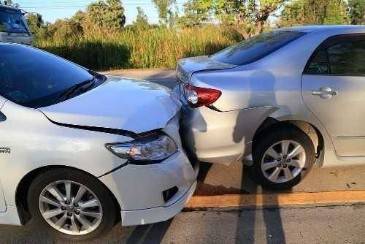
What to Do After an Accident with an Uninsured Driver in Idaho
Car accidents are stressful under any circumstances, but the situation becomes even more complicated when [...]

Is Uninsured/Underinsured Motorist Coverage Required in Idaho?
Navigating the complexities of auto insurance can be challenging, especially when it comes to understanding [...]
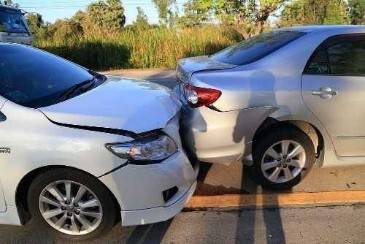
Filing a Claim with Your Uninsured Motorist Coverage in Idaho
Navigating the aftermath of a car accident can be a complex and overwhelming experience, especially [...]
Client Reviews
