



Do you Need Legal Help?
Contact the Hepworth Holzer team today to schedule a free legal consultation to discuss your personal injury case.

Our Idaho Personal Injury Lawyers






I-84 Truck Accidents in Idaho — A Dangerous Corridor
Idaho’s primary freight highway carries enormous commercial traffic daily — and when crashes happen, the consequences are severe
Interstate 84 is Idaho’s most heavily traveled commercial freight corridor. Running east to west across southern Idaho from the Oregon border near Ontario through Boise, Nampa, Caldwell, and on through Twin Falls toward the Utah state line, I-84 carries a constant flow of semi-trucks, tanker vehicles, flatbeds, and other commercial freight vehicles every hour of every day. It is the primary route connecting Pacific Northwest distribution centers to the rest of the country, and the volume of commercial traffic on this corridor is among the highest of any highway in the intermountain west.
That volume, combined with the specific geographic and weather conditions along I-84’s Idaho stretch, makes this corridor one of the most dangerous commercial trucking routes in the region. When a truck crash occurs on I-84, the injuries to occupants of smaller vehicles are typically catastrophic. The speed differential, the size difference, and the forces involved leave little margin for survival without serious injury.
Hepworth Holzer represents victims of I-84 truck crashes throughout the Treasure Valley and across Idaho. Our results in commercial trucking cases include a $5.00 million judgment in a wrongful death commercial truck collision case and a $4.80 million settlement in a trucking crash case. If you or a family member were hurt in a truck crash on I-84, call our Boise truck accident lawyers today for a free consultation.
Hepworth Holzer also helps residents of Idaho with Personal Injury Matters in: Ada County, Caldwell, Canyon County, Eagle, Garden City, Gem County, Kuna, Meridian, Nampa and Star.
Why I-84 Is Particularly Dangerous for Truck Crashes
Several factors combine to make I-84 in Idaho a high-risk corridor for serious commercial truck accidents. Understanding these factors is not just background information — in a truck crash case, they become part of the legal analysis. A driver or trucking company that fails to account for known conditions on a specific route they travel regularly cannot escape responsibility by treating those conditions as unforeseeable.
High commercial traffic volume. The sheer number of commercial vehicles on I-84 at any given time creates a statistical baseline for crashes. Trucks merge from distribution centers and rest areas, change lanes to pass slower vehicles, and interact constantly with passenger traffic. The higher the truck density, the higher the exposure to driver error, mechanical failure, and multi-vehicle incidents.
The Bliss grade and canyon approaches. West of Twin Falls, I-84 descends through several significant grades as the highway approaches the Snake River canyon area. These downgrades are well known to commercial drivers — or should be. Trucks carrying heavy loads that fail to engage engine braking, use brakes improperly on long descents, or fail to check brake condition before attempting a grade create serious runaway truck risk. Brake failure on a downgrade is one of the most catastrophic scenarios in commercial trucking, and the geography of southern Idaho’s I-84 corridor creates repeated opportunities for that failure.
High wind conditions. The open plain of southern Idaho along I-84 between Boise and Twin Falls is one of the windier stretches of interstate highway in the region. High crosswinds — particularly in the fall and winter months — can push lightly loaded or empty trailers significantly off course. Commercial drivers are required under federal regulations and general negligence principles to adjust their driving to actual conditions. A driver who maintains highway speed in crosswinds that are pushing their trailer into adjacent lanes has failed to meet that standard.
Winter ice and black ice conditions. Southern Idaho winters bring ice, snow, and black ice to I-84 on a regular basis. The temperature inversions common in the Treasure Valley can create deceptive surface conditions — roads that appear dry but carry a film of ice invisible to drivers. A fully loaded semi-truck traveling at 65 miles per hour on black ice has essentially no ability to stop or maneuver safely. Idaho law requires all drivers, including commercial drivers, to reduce speed and adjust their driving to actual road conditions. Failure to do so is negligence regardless of whether conditions were posted or warned.
Construction zones. I-84 through the Boise metropolitan area and along segments toward Twin Falls has been subject to ongoing construction and widening projects. Construction zones reduce lane widths, shift traffic patterns, lower speed limits, and create abrupt transitions that demand heightened attention from large vehicle operators. Commercial truck crashes in active construction zones are a recurring pattern, and when a construction-zone crash occurs, the investigation must address not only driver and carrier conduct but potentially the design and signing of the work zone itself.
The Boise metro merge zones. In the Treasure Valley, I-84 runs through the densest urban traffic in Idaho. The interchanges near the Vista Avenue area, the connector to I-184, the Airport interchange, and the merge points east of Boise where I-84 and I-84 business routes converge create high-conflict zones where the speed differential between merging vehicles and through traffic is greatest. Commercial trucks operating at highway speed through these zones have limited ability to react to sudden traffic changes, and the consequences of a rear-end or merge collision at speed are severe.
Idaho Truck Accident Help
18-Wheeler Accident Delivery Truck Accident I-84 Truck Accidents Wrongful Death Truck Crash Types of Crashes Preserving Evidence Choosing a Truck Accident Lawyer Common Causes of Truck Accidents Filing a Lawsuit Trucking Insurance Claims Liability Types of Compensation Truck Accident RegulationsRelated Truck Accident Videos

7 Mistakes That Ruin Personal Injury Cases
Get our FREE guide and find out how you can protect your rights with Hepworth Holzer, LLPInterstate 184 — The Boise Connector
Interstate 184, known locally as the Boise connector, links I-84 to downtown Boise through a short but heavily traveled urban segment. Delivery trucks, semi-trucks, and commercial vehicles use I-184 to access Boise’s downtown core, the airport, and industrial areas on the west side of the city. The connector sees both the high-speed commercial traffic characteristic of I-84 and the congested urban traffic of downtown Boise — a combination that creates particular hazard at on-ramps, off-ramps, and the narrow lanes through the downtown portion of the route.
Crashes on I-184 involving commercial vehicles follow the same legal analysis as any other commercial truck crash — driver error, carrier liability, regulatory violations, and evidence preservation all apply. The specific conditions of the connector — tight geometry, urban congestion, frequent stops and starts — mean that driver distraction, following too closely, and failure to yield are particularly common contributing factors.
Common Types of I-84 Truck Crashes
The specific types of commercial truck crashes that occur most frequently on I-84 in Idaho reflect the corridor’s particular hazards. Rear-end collisions occur when trucks following too closely fail to stop in time for slowing or stopped traffic — a particular risk in construction zones and in the congested merge areas near Boise. Jackknife crashes occur when drivers brake hard on wet or icy pavement, causing the trailer to swing out of alignment with the cab and sweep across multiple lanes.
Rollover crashes are a consistent pattern on I-84, particularly on curves and at interchange ramps where trucks traveling too fast for the geometry lose control. Tire blowouts at highway speed — often the result of inadequate tire maintenance — can cause sudden loss of vehicle control with little warning. Runaway truck incidents on the downgrade segments west of Twin Falls represent some of the most severe single-vehicle crashes on the corridor. For a full breakdown of the types of crashes that occur on Idaho highways and the legal implications of each, see our page on types of truck accidents in Idaho.
What Causes These Crashes — and Who Is Responsible
The causes of I-84 truck crashes are the same causes that drive commercial vehicle crashes nationwide — driver fatigue from hours of service violations, distracted driving, impaired driving, inadequate vehicle maintenance, improperly secured cargo, and negligent hiring and supervision by carriers. On I-84 specifically, fatigue is a particularly significant factor because the corridor serves long-haul routes. Drivers who have been operating for hours before reaching Idaho may be approaching or exceeding legal hours of service limits by the time they transit the state.
For a comprehensive breakdown of the causes we investigate in every truck accident case, see our page on the common causes of truck accidents in Idaho. For a full analysis of every party who may bear legal responsibility — from the driver to the carrier to the cargo loader — see our page on who is liable in an Idaho truck accident.
Related Truck Accident Blog Posts
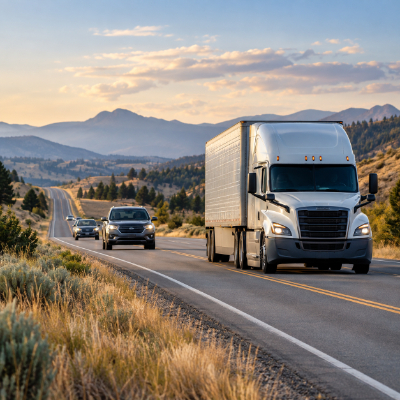
Idaho’s Long Range Transportation Plan Elevates Commercial Truck Drivers Over Motorist Safety: The Freight Is Moving Off the Freeway
In 2024, 88% of Idaho’s fatal commercial truck crashes happened on rural roads. Those are [...]
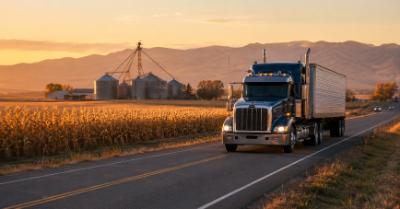
Harvest Season Truck Traffic and Serious Idaho Highway Accidents: What Drivers Should Know
Harvest season can change traffic patterns on Idaho highways as agricultural trucks, trailers, farm equipment, [...]

I-84 Truck Accident Guide for August
After an I-84 truck accident during August travel, move away from immediate danger when you [...]

Heat, Fatigue, and Truck Driver Errors on Idaho Highways
Summer heat can make long-haul trucking more demanding, and fatigue can make driver mistakes more [...]
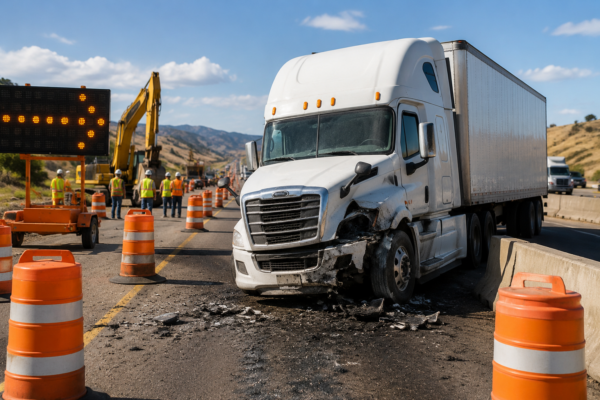
How Summer Construction Zones Lead to Serious Truck Accidents in Idaho | Hepworth Holzer, LLP
Summer roadway construction across Idaho creates conditions that significantly increase the risk of serious truck [...]

Dealing with the Trucking Company’s Insurance After a Crash in Idaho
Dealing with the Trucking Company’s Insurance After a Crash in Idaho When a commercial truck [...]
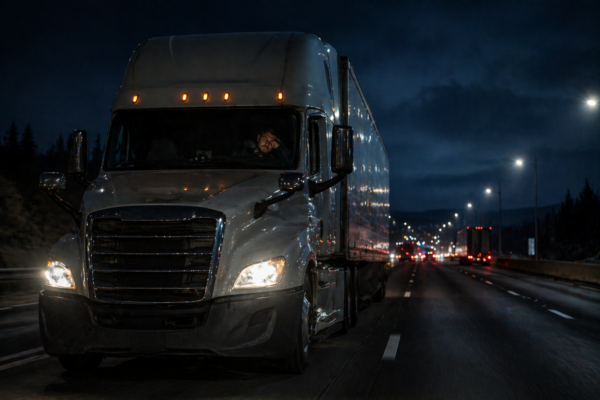
What Idaho Families Need to Know About Wrongful Death from a Truck Crash
Losing a family member in a commercial truck crash is one of the most devastating [...]
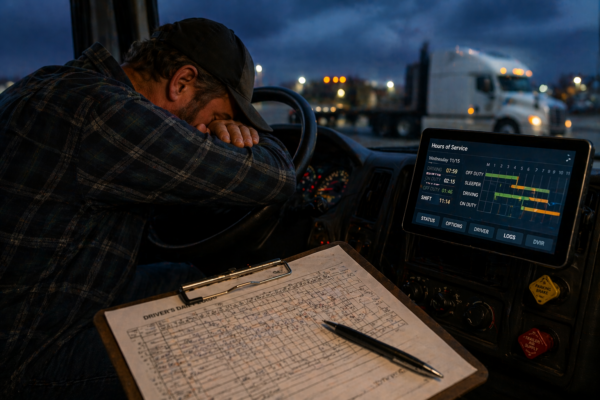
Hours of Service Rules and Truck Driver Fatigue: What Idaho Accident Victims Need to Know
Fatigued driving is one of the leading causes of serious commercial truck crashes in Idaho [...]

Black Box and ECM Data in Idaho Truck Crash Cases: What Your Lawyer Needs to Recover
When a commercial truck is involved in a serious crash, one of the most important [...]

The Most Dangerous Truck Corridors in Idaho: I-84, US-95, I-86, and I-184
Idaho’s highway system carries a level of commercial freight traffic that most residents never fully [...]
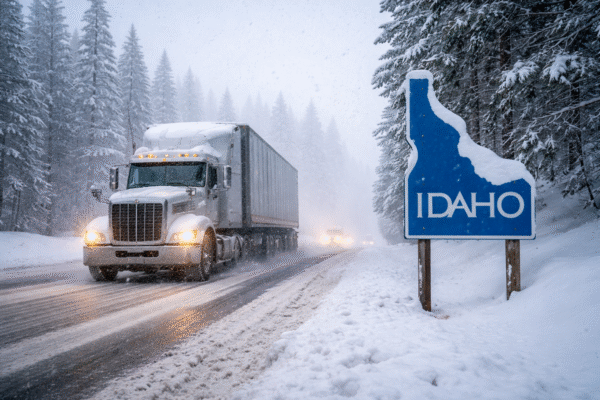
Why Winter Truck Braking Failures Lead to Severe Damages in Idaho
Winter in Idaho is no stranger to harsh weather conditions, and the challenges these conditions [...]
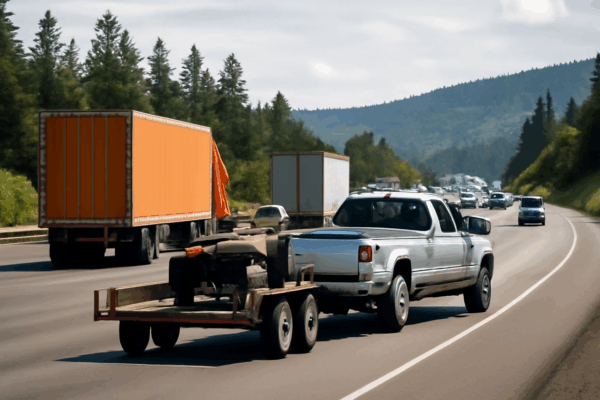
Hunting-Season Roadway Crashes on US-95 or Highway 55: Sorting Liability When Trucks and Trailers Are Involved
Hunting season in Idaho is a time when families and avid hunters alike take to [...]

Why Your Truck Accident Case May Take Longer Than You Expect
After a truck accident, victims often expect a swift resolution to their case. However, the [...]

The Role of Negligence in Truck Accident Claims in Idaho
Negligence is the foundation of most truck accident claims in Idaho. To recover compensation you [...]

Top 5 Mistakes to Avoid After a Truck Accident in Idaho
After a serious truck crash, the choices you make in the first few days can [...]
Evidence That Is Critical in I-84 Crash Cases
I-84 is a federally designated highway, which means it is monitored by Idaho Transportation Department cameras at key locations, particularly through the Boise metropolitan area. This camera footage can capture the crash itself or the moments leading up to it — but it is typically retained for only a limited period before being overwritten. Preservation demands must go to ITD promptly after a crash to secure this footage.
Commercial rest stops, truck stops, fuel stations, and businesses along I-84 may have exterior surveillance cameras that captured the truck before the crash — documenting speed, lane position, or driving behavior in the minutes before impact. Weight stations along I-84 maintain records of vehicles that passed through, which can establish the truck’s route, timing, and loaded weight. All of this evidence requires immediate preservation action.
The truck’s Engine Control Module and Electronic Logging Device data are critical in every I-84 truck crash case, as they are in any commercial vehicle crash. The specific conditions of I-84 — the known grades, the wind exposure, the winter hazards — make the ECM data particularly valuable because it can show whether the driver was adjusting speed appropriately for the conditions they were encountering or maintaining speed in conditions that required reduction. See our page on preserving evidence after a truck accident in Idaho for a complete breakdown of what evidence exists and how to secure it.
What to Do After an I-84 Truck Crash in Idaho
If you were involved in a truck crash on I-84 or I-184, the steps you take immediately afterward matter significantly. Get medical care first — do not wait, and do not refuse transport to the hospital if offered by emergency responders. If you are physically able, photograph the scene, the vehicles, the road conditions, the truck’s DOT number and carrier name, and any visible injuries before vehicles are moved. If other people stopped and witnessed the crash, get their contact information before they leave.
Do not speak with the trucking company’s insurance adjuster before contacting an attorney. Call Hepworth Holzer as soon as possible so we can send immediate preservation demands for ECM data, ELD records, ITD camera footage, and any other time-sensitive evidence. We handle these cases throughout the Treasure Valley and across Idaho. The consultation is free and there is no fee unless we recover compensation for you.
Client Reviews
