



Do you Need Legal Help?
Contact the Hepworth Holzer team today to schedule a free legal consultation to discuss your personal injury case.

Our Idaho Personal Injury Lawyers






Boise Rollover Accident Lawyers
Rollover crashes are catastrophic, complicated, and almost never the result of a single cause
Rollover crashes are catastrophic. They are also legally complicated — because they almost always involve more than one contributing factor. A driver error, a vehicle stability defect, a tire failure, a roadway hazard, or a combination of all four can contribute to the same rollover, and sorting out who is responsible for what requires real investigation. If you or a family member was injured in a rollover anywhere in Idaho, we are happy to talk to you about your situation. Just give us a call.
The Idaho Transportation Department’s crash data consistently shows rollover crashes as one of the deadliest collision types in Idaho relative to their frequency. While rollovers account for a minority of total crashes, they are significantly overrepresented in serious injury and fatality statistics — particularly on rural Idaho highways where speeds are high, soft shoulders are common, and emergency response times are long. Rollovers on I-84, SH-55, US-95, and SH-21 all appear in our firm’s case history. The combination of high speed, Idaho’s varied terrain, and vehicles with elevated centers of gravity creates conditions where a rollover can follow from a single moment of inattention or a single mechanical failure.
Our firm has been practicing personal injury law in Idaho for more than 50 years. Our attorney team has practiced car and truck accident law for well over a combined 100+ years. For a full overview of all car accident claims we handle in Idaho, see our main car accident hub.
Hepworth Holzer also helps residents of Idaho with Personal Injury Matters in: Ada County, Caldwell, Canyon County, Eagle, Garden City, Gem County, Kuna, Meridian, Nampa and Star.
Why Rollovers Produce Catastrophic Injuries
A rollover puts occupants through multiple impacts — sometimes half a dozen within a matter of seconds as the vehicle rotates. The roof becomes the primary barrier between the occupant and the ground, and roof strength varies dramatically across vehicle makes and model years. Vehicles that fail Federal Motor Vehicle Safety Standard 216 roof crush resistance requirements expose occupants to far greater injury than vehicles that meet or exceed the standard. The most common rollover injuries we handle include traumatic brain injury from roof crush or direct impact, cervical spinal cord injuries with partial or complete paralysis, ejection injuries — full ejection from the vehicle is the most common cause of rollover fatalities, partial ejection through side windows is nearly as dangerous — severe orthopedic fractures including those of the pelvis, femur, and upper extremities, and crush injuries when the vehicle comes to rest on the occupant.
Common Causes of Rollover Crashes in Idaho
Vehicle stability and design. Tall, narrow vehicles — SUVs, pickup trucks, passenger vans, some older Jeep models — carry a higher center of gravity and roll more easily than lower, wider passenger cars. Electronic Stability Control (ESC) has been standard equipment on U.S. vehicles since the 2012 model year and has reduced rollover rates substantially. Vehicles from before that era on Idaho’s roads may lack ESC entirely. When a vehicle with known stability deficiencies rolls under conditions that a properly designed vehicle would handle safely, the manufacturer faces product liability exposure.
Tire failures. A blown tire at highway speed — particularly a rear tire — is one of the most common rollover triggers in Idaho. Tread separation from underinflation, age-related degradation, manufacturing defects, and improper repairs can all cause sudden failure. When a tire failure contributes to a rollover, the tire manufacturer and — in some cases — the vehicle manufacturer and the dealer may share liability alongside the driver’s own conduct. Preserving the failed tire is one of the first things we do in cases involving suspected tire defects.
Tripping events. The majority of rollovers are “tripped” — the vehicle’s tires catch something that initiates the roll. Common trip points in Idaho include soft shoulders on rural highways where the pavement edge drops several inches to unpaved surface, roadway edge drop-offs from poor maintenance, guardrail end treatments that launch rather than redirect vehicles, and curbs and median barriers in urban areas. When a tripping object created or maintained by a public agency contributed to the rollover, a claim against ITD, ACHD, or the relevant highway district may be available subject to the Idaho Tort Claims Act’s 180-day notice requirement under Idaho Code Section 6-901.
Driver overcorrection. A very common single-vehicle rollover pattern is the overcorrection sequence: the driver’s right tires drop off the pavement edge onto a soft shoulder, the driver jerks the wheel back left to return to the road, and the vehicle rolls. This pattern does not automatically mean the driver is fully at fault. A driver who overcorrects in response to an oncoming vehicle that crossed the centerline, or in response to a highway edge drop-off that was several inches deeper than it should have been, may have a strong claim against someone other than themselves. Single-vehicle does not mean no-defendant.
Commercial vehicle interactions. When a commercial truck or another vehicle was involved in triggering the rollover — through a lane departure, an unsafe merge, or forcing the rolling vehicle off the road — our truck accident team analyzes the commercial vehicle’s involvement from the first day. See our page on Boise truck accident lawyers for more on commercial vehicle liability.
Why the Vehicle Must Be Preserved Immediately
The single most important decision in the days following a serious rollover is what happens to the vehicle. Insurance companies routinely declare rollover vehicles a total loss and move them to salvage within days or weeks of the crash. Once the vehicle is gone — crushed, parted out, or sold — so is the physical evidence of roof crush performance, tire tread condition, seatbelt latch function, airbag deployment, and the data stored in the event data recorder (EDR).
If you or a family member was seriously injured in a rollover, contact us before the vehicle goes to salvage. We work with accident reconstruction engineers and product liability experts who can inspect, document, and — in cases where a defect is suspected — retain the vehicle as evidence. The cost of vehicle preservation is a fraction of the evidence it protects. We routinely handle this preservation on an emergency basis in the first days after a serious rollover crash.
Product Liability in Rollover Cases
When a rollover involves potential product defects — a roof that crushed beyond applicable safety standards, a tire that separated, a seatbelt that unlatched on impact, an airbag that failed to deploy — the case expands significantly. Now there is a claim against the at-fault driver, if one exists, and a separate claim against the vehicle manufacturer, the tire manufacturer, the component supplier, and the dealer or distributor. Product liability cases require expert testimony in multiple disciplines, complex discovery against large corporations, and lawyers who are prepared to litigate against major manufacturers. Our firm has the experience and the resources to pursue cases at that level.
Idaho Car Accident Help
Accident Report & Claim Guide Dangerous Roads and Intersections Head-On Collision Hit and Run Accident Intersection Accident Parking Lot Accident Rear-End Collision Road Rage and Aggressive Driving Rollover Accident Speeding Accident T-Bone and Intersection Accident Uninsured and Underinsured Work Zone and Construction Zone Accident
7 Mistakes That Ruin Personal Injury Cases
Get our FREE guide and find out how you can protect your rights with Hepworth Holzer, LLPIdaho’s Comparative Fault Rule and the Damages Cap
Idaho uses a modified comparative fault rule under Idaho Code Section 6-801. You can recover as long as you are not more than 50 percent at fault, with damages reduced by your percentage. The non-economic damages cap under Idaho Code Section 6-1603 — $509,013.28 effective July 1, 2025 — applies to standard negligence cases. It does not apply when the conduct that caused the injury was willful, reckless, or felonious, such as a rollover caused by a drunk driver or by a driver engaged in racing or extreme recklessness.
Product liability claims have their own legal framework that interacts with but does not always track the standard negligence damages analysis. Whether a product defect claim is subject to the non-economic cap is a technical and fact-specific question that depends on the theory of liability. This is exactly the kind of analysis an experienced Idaho personal injury attorney needs to work through on your specific case before any decisions are made.
The Two-Year Deadline — and Why Rollovers Need Early Attention
Idaho Code Section 5-219 gives you two years for personal injury claims and Idaho Code Section 5-311 does the same for wrongful death. Rollover cases need an early start for reasons that go beyond the deadline itself. The vehicle disappears quickly. Tire evidence degrades. The EDR data can be overwritten if the vehicle is repaired and put back in service. The scene evidence — roadway edge condition, shoulder drop-off depth, guardrail end treatment — can change with routine maintenance. The insurance company has adjusters and engineers working from day one. You need someone doing the same thing on your behalf. For more on how Idaho law treats catastrophic injuries across different crash types, see our page on head-on collisions in Idaho.
Why Hepworth Holzer
Our firm has been doing this type of personal injury work for more than 50 years. Our attorney team has practiced car and truck accident law for well over a combined 100+ years. We have investigated rollover crashes including those involving product defects, tire failures, highway edge drop-offs, and commercial vehicle involvement. We have the resources to preserve a vehicle, retain the right reconstruction and product experts, and pursue both the at-fault driver and the manufacturer where the evidence supports it. We have no qualms about going to trial, and the insurance companies know it. When you call, you talk to a real lawyer. The consultation is free and there is no fee unless we recover compensation for you.
Related Car Accident Videos
Frequently Asked Questions About Rollover Accidents
Do not let the insurance company total and dispose of the vehicle until you have spoken with a lawyer. Rollover vehicles contain critical evidence — roof crush measurements, tire condition, seatbelt function, airbag deployment records, and event data recorder output — that disappears permanently when the vehicle goes to salvage.
Possibly. If the roof crushed beyond applicable safety standards, a tire separated due to a manufacturing defect, a seatbelt failed, or an airbag did not deploy, a product liability claim can be pursued. These cases require expert testimony and attorneys prepared to litigate against major manufacturers.
No. Single-vehicle rollovers frequently involve tire defects, roadway edge drop-offs, guardrail design failures, or another vehicle that forced the rollover and left. Single-vehicle does not mean single-cause and does not mean no defendant.
The cap under Idaho Code Section 6-1603 — $509,013.28 effective July 1, 2025 — applies to non-economic damages in standard negligence cases. It does not apply when conduct was reckless or felonious. Product liability claims have their own analysis. Application is fact-specific.
Longer than most. Product liability investigation and litigation against manufacturers extends these cases well beyond a year. Cases that go to trial may be 18 to 24 months or more from filing.
Nothing upfront. We handle rollover and product liability cases on a contingency fee. Expert costs are advanced by the firm in serious cases. The initial consultation is free.
Related Car Accident Blog Posts

Dealing with the Trucking Company’s Insurance After a Crash in Idaho
Dealing with the Trucking Company’s Insurance After a Crash in Idaho When a commercial truck [...]

What Idaho Families Need to Know About Wrongful Death from a Truck Crash
Losing a family member in a commercial truck crash is one of the most devastating [...]
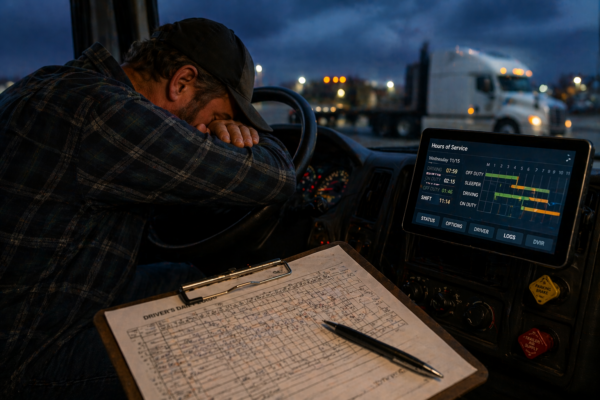
Hours of Service Rules and Truck Driver Fatigue: What Idaho Accident Victims Need to Know
Fatigued driving is one of the leading causes of serious commercial truck crashes in Idaho [...]

Black Box and ECM Data in Idaho Truck Crash Cases: What Your Lawyer Needs to Recover
When a commercial truck is involved in a serious crash, one of the most important [...]

The Most Dangerous Truck Corridors in Idaho: I-84, US-95, I-86, and I-184
Idaho’s highway system carries a level of commercial freight traffic that most residents never fully [...]

Understanding the Role of Black Ice in Boise Motorcycle & Bicycle Injury Claims
Boise, Idaho, is known for its beautiful outdoor activities, especially during the winter months. However, [...]

Understanding Uninsured and Underinsured Motorist Coverage in Idaho
Accidents happen, and while many people think about auto insurance in terms of their own [...]

Choose a Local Boise Personal Injury Lawyer
When you’ve been injured in Idaho whether in the Boise metro area of elsewhere, navigating [...]
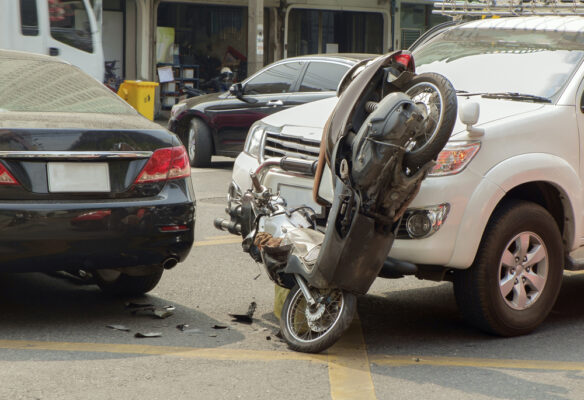
What to Expect During the Uninsured Motorist Claim Process in Idaho
If you’ve recently been involved in a car accident and discovered that the driver responsible [...]
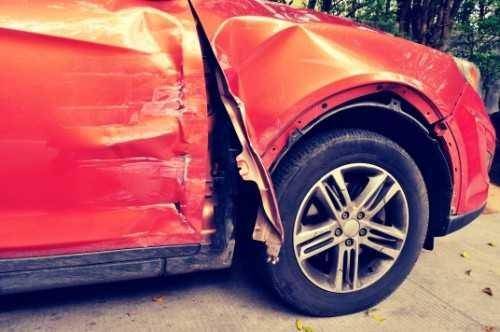
Do You Need a Lawyer for Uninsured/Underinsured Motorist Claims in Idaho?
If you have recently been in a car accident and are dealing with the aftermath, [...]

Uninsured Motorist Bodily Injury vs. Property Damage Coverage in Idaho
Navigating the aftermath of an accident involving an uninsured or underinsured motorist can be a [...]
How Long Do You Have to File an Uninsured Motorist Claim in Idaho?
When you’re involved in a car accident, it’s already a stressful experience. But what happens [...]
What to Do After an Accident with an Uninsured Driver in Idaho
Car accidents are stressful under any circumstances, but the situation becomes even more complicated when [...]

Is Uninsured/Underinsured Motorist Coverage Required in Idaho?
Navigating the complexities of auto insurance can be challenging, especially when it comes to understanding [...]
Filing a Claim with Your Uninsured Motorist Coverage in Idaho
Navigating the aftermath of a car accident can be a complex and overwhelming experience, especially [...]
Client Reviews
