



Do you Need Legal Help?
Contact the Hepworth Holzer team today to schedule a free legal consultation to discuss your personal injury case.

Our Idaho Personal Injury Lawyers






Types of Truck Accidents in Idaho
Each type of crash carries its own causes, dangers, and legal considerations
Not all truck accidents look the same. A jackknife crash on a wet stretch of I-84 is a fundamentally different event than an underride collision at a rural intersection. The type of accident that occurred directly affects how we investigate the case, what evidence we look for, and which parties are likely to bear responsibility. Understanding the type of crash also points directly to its cause — and the common causes of truck accidents in Idaho often predict which type of collision results. At Hepworth Holzer, our Boise truck accident lawyers have handled truck accident cases involving nearly every type of crash that occurs on Idaho roads. Understanding what happened to you is the foundation of building a strong case.
If you were injured in any type of truck accident in Idaho, call us for a free consultation. Hepworth Holzer has recovered results including a $4.80 million settlement and a $1.60 million verdict in trucking accident cases.
Hepworth Holzer also helps residents of Idaho with Personal Injury Matters in: Ada County, Caldwell, Canyon County, Eagle, Garden City, Gem County, Kuna, Meridian, Nampa and Star.
Jackknife Accidents
A jackknife occurs when the cab of a semi-truck and its trailer fold toward each other at the coupling point, forming a shape similar to a folding knife. This typically happens when a driver brakes too hard or too suddenly, causing the trailer to swing out of alignment with the cab. The trailer can sweep across multiple lanes, blocking traffic, striking other vehicles, or causing chain-reaction crashes.
Jackknife accidents are particularly common in wet or icy conditions, on downgrades, and when a truck is carrying a lighter-than-usual load, which reduces traction. Speed is almost always a contributing factor. When a jackknife crash occurs, we examine brake system maintenance records, road conditions at the time, the driver’s speed and braking inputs from the black box, and whether the load was properly distributed.
Rollover Accidents
Commercial trucks have a much higher center of gravity than passenger vehicles, which makes them significantly more prone to rolling over. Rollovers happen when a truck takes a curve too fast, when cargo shifts and destabilizes the load, when a driver overcorrects after drifting onto a shoulder, or when high winds push a lightly loaded trailer off balance.
A rolling semi-truck is one of the most dangerous events that can happen on a highway. It can crush vehicles in adjacent lanes, block the entire roadway, and spill hazardous cargo across a wide area. Rollover cases often involve a combination of driver error, improper loading, and maintenance failures, meaning multiple parties may share responsibility.
Idaho Truck Accident Help
18-Wheeler Accident Delivery Truck Accident I-84 Truck Accidents Wrongful Death Truck Crash Types of Crashes Preserving Evidence Choosing a Truck Accident Lawyer Common Causes of Truck Accidents Filing a Lawsuit Trucking Insurance Claims Liability Types of Compensation Truck Accident RegulationsRelated Truck Accident Videos

7 Mistakes That Ruin Personal Injury Cases
Get our FREE guide and find out how you can protect your rights with Hepworth Holzer, LLPUnderride Accidents
An underride collision occurs when a smaller vehicle slides under the body of a semi-truck trailer, either from the rear or the side. These crashes are among the most deadly in all of transportation. The trailer’s height means that in a rear or side underride, the structure of the passenger vehicle passes under the trailer while the trailer itself shears off the roof at occupant level.
Federal regulations require rear underride guards on commercial trailers, but side underride guards are not universally required, and rear guards are sometimes poorly maintained or designed. When a guard fails or is absent and an underride crash occurs, the trailer manufacturer and trucking company may face liability beyond the driver’s own negligence.
Override Accidents
The opposite of an underride, an override occurs when a large truck drives over a smaller vehicle from behind. This typically happens when a truck driver following too closely fails to stop in time, or when a truck traveling at high speed encounters stopped or slowing traffic. The results are almost universally catastrophic for occupants of the smaller vehicle.
Distracted driving and following too closely are the most common causes of override accidents. Evidence from the truck’s event data recorder and forward-facing camera footage, if equipped, are essential in these cases.
Blind Spot Accidents
Commercial trucks have large blind spots on all four sides, commonly referred to as “no zones.” These areas extend up to 20 feet in front of the cab, 30 feet behind the trailer, and diagonally alongside both sides of the vehicle. A driver in one of these zones may be completely invisible to the truck driver, even when mirrors are properly adjusted.
When a truck driver makes a lane change, turn, or merge without properly accounting for vehicles in these zones, catastrophic side-impact collisions result. While truck drivers are trained to check their blind spots carefully before maneuvering, many crashes occur because they fail to do so or maneuver too quickly.
Wide Turn Accidents
Making a right turn in a large commercial truck requires swinging wide to the left first to create clearance for the trailer. This creates a dangerous situation where vehicles positioned to the right of the truck, or attempting to pass on the right, can be trapped or struck as the trailer swings. Wide turn accidents frequently occur at intersections and are a leading cause of serious injury to cyclists and motorcyclists.
Drivers who fail to signal, check mirrors, or swing wide enough before initiating a right turn create foreseeable hazards. These cases often involve commercial vehicles operating in urban or suburban settings where traffic density makes the maneuver particularly dangerous.
Related Truck Accident Blog Posts
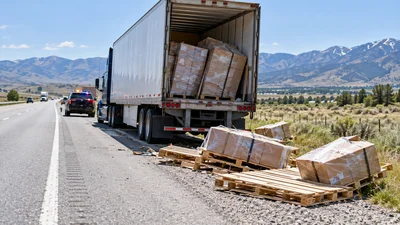
Who Can Be Held Liable When Truck Cargo Falls and Causes an Idaho Crash?
When cargo falls from a commercial truck and causes a crash in Idaho, more than [...]
Idaho’s Long Range Transportation Plan Elevates Commercial Truck Drivers Over Motorist Safety: The Freight Is Moving Off the Freeway
In 2024, 88% of Idaho’s fatal commercial truck crashes happened on rural roads. Those are [...]
Harvest Season Truck Traffic and Serious Idaho Highway Accidents: What Drivers Should Know
Harvest season can change traffic patterns on Idaho highways as agricultural trucks, trailers, farm equipment, [...]
I-84 Truck Accident Guide for August
After an I-84 truck accident during August travel, move away from immediate danger when you [...]

Heat, Fatigue, and Truck Driver Errors on Idaho Highways
Summer heat can make long-haul trucking more demanding, and fatigue can make driver mistakes more [...]
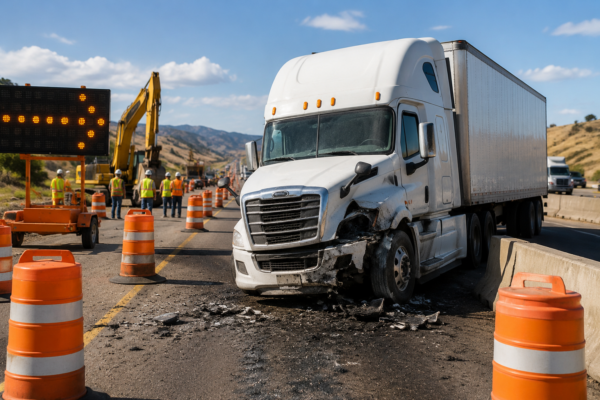
How Summer Construction Zones Lead to Serious Truck Accidents in Idaho | Hepworth Holzer, LLP
Summer roadway construction across Idaho creates conditions that significantly increase the risk of serious truck [...]

Dealing with the Trucking Company’s Insurance After a Crash in Idaho
Dealing with the Trucking Company’s Insurance After a Crash in Idaho When a commercial truck [...]
What Idaho Families Need to Know About Wrongful Death from a Truck Crash
Losing a family member in a commercial truck crash is one of the most devastating [...]
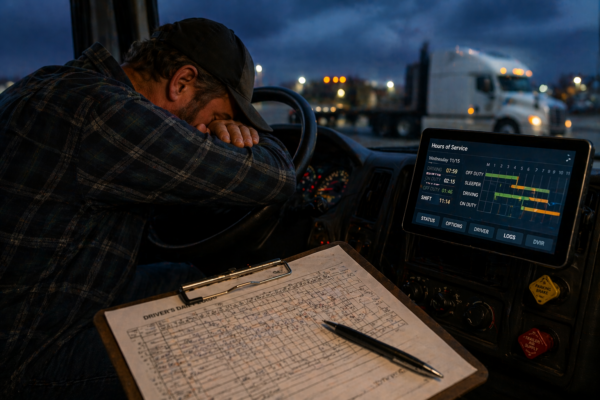
Hours of Service Rules and Truck Driver Fatigue: What Idaho Accident Victims Need to Know
Fatigued driving is one of the leading causes of serious commercial truck crashes in Idaho [...]

Black Box and ECM Data in Idaho Truck Crash Cases: What Your Lawyer Needs to Recover
When a commercial truck is involved in a serious crash, one of the most important [...]

The Most Dangerous Truck Corridors in Idaho: I-84, US-95, I-86, and I-184
Idaho’s highway system carries a level of commercial freight traffic that most residents never fully [...]
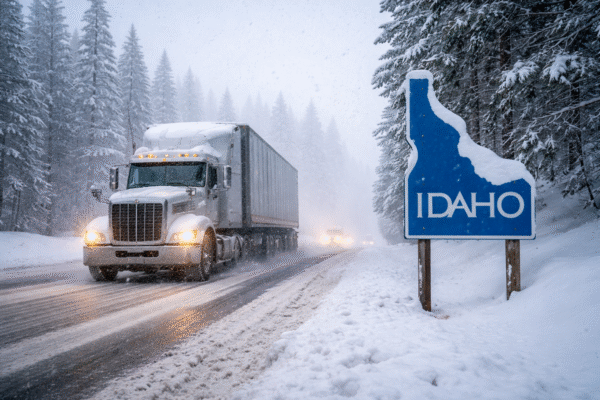
Why Winter Truck Braking Failures Lead to Severe Damages in Idaho
Winter in Idaho is no stranger to harsh weather conditions, and the challenges these conditions [...]
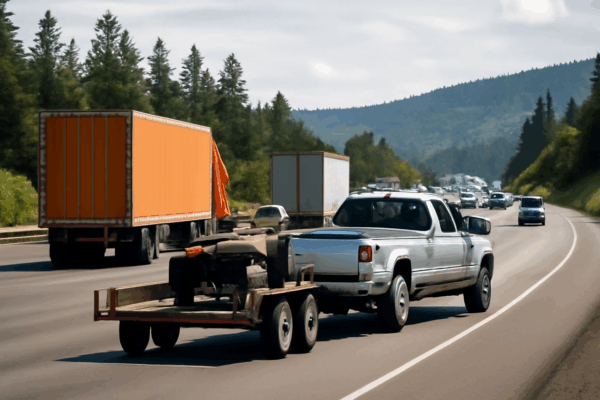
Hunting-Season Roadway Crashes on US-95 or Highway 55: Sorting Liability When Trucks and Trailers Are Involved
Hunting season in Idaho is a time when families and avid hunters alike take to [...]

Why Your Truck Accident Case May Take Longer Than You Expect
After a truck accident, victims often expect a swift resolution to their case. However, the [...]

The Role of Negligence in Truck Accident Claims in Idaho
Negligence is the foundation of most truck accident claims in Idaho. To recover compensation you [...]
Tire Blowout Accidents
A tire blowout on a commercial truck at highway speed is a sudden and violent event. The loss of a tire can cause the driver to lose control, pull sharply in the direction of the blowout, or shed large pieces of rubber into traffic that strike other vehicles. In some cases, the truck itself rolls over following a blowout.
Tire blowouts are frequently the result of poor maintenance. Worn tread, improper inflation, overloading beyond the tire’s rated capacity, and failure to inspect tires during pre-trip checks are all preventable causes. When a blowout results from negligent maintenance, the trucking company bears responsibility for the consequences.
Head-On Collisions
Head-on collisions between a commercial truck and a passenger vehicle are almost always fatal or catastrophically injurious for occupants of the smaller vehicle. These crashes typically occur when a truck driver drifts across the center line due to fatigue or distraction, when a truck is traveling the wrong way on a one-way road or highway, or when a driver loses control on a curve.
The physics of a head-on collision at highway speed between a passenger vehicle and an 80,000-pound truck leave almost no margin for survival. Cases involving head-on collisions require immediate investigation to preserve evidence before the scene is cleared.
Cargo Spill Accidents
When improperly secured cargo falls from a truck, it becomes an immediate hazard for vehicles following behind. Debris on a highway can cause drivers to swerve suddenly, collide with other vehicles, or strike the cargo directly. Liquid cargo spills create slippery conditions that can affect large stretches of roadway.
Cargo spill cases can involve the truck driver, the trucking company, and the cargo loader or shipper. Whoever was responsible for securing the load properly is liable for harm caused when that load fails.
Call Hepworth Holzer After Any Type of Truck Accident in Idaho
Whatever type of truck accident you were involved in, the legal issues are complex and the window to preserve critical evidence is short. Hepworth Holzer has the trial experience and resources to handle any truck accident case in Idaho, from initial investigation through verdict if necessary. When a crash results in a fatality, our team also handles wrongful death claims arising from truck accidents. For injuries that permanently alter a victim’s life, see how we approach catastrophic injury cases in Idaho. Call us today for your free consultation.
Frequently Asked Questions About Types Of Truck Accidents
A jackknife accident occurs when a semi-truck’s cab and trailer fold toward each other at the coupling point, typically due to sudden or hard braking. The trailer swings out of alignment and can sweep across multiple lanes, striking other vehicles. Jackknife accidents are common in wet or icy conditions and on downgrades, and are frequently linked to speeding or brake system failures.
An underride accident occurs when a smaller vehicle slides beneath the body of a semi-truck trailer, either from the rear or the side. These are among the most deadly types of truck accidents because the trailer structure can shear off the roof of the passenger vehicle at occupant level. Federal law requires rear underride guards on commercial trailers, but side guards are not universally mandated.
Truck rollovers in Idaho are commonly caused by excessive speed on curves, cargo that shifts and destabilizes the load, overcorrection after drifting onto a shoulder, and high winds affecting lightly loaded trailers. Commercial trucks have a high center of gravity compared to passenger vehicles, making them significantly more prone to rolling over when any of these conditions occur.
Truck blind spot accidents occur when a smaller vehicle is in one of a commercial truck’s no-zones — areas where the driver cannot see surrounding traffic even with properly adjusted mirrors. These zones extend up to 20 feet in front of the cab, 30 feet behind the trailer, and diagonally on both sides. When a truck driver changes lanes, merges, or turns without properly checking these zones, serious side-impact collisions result.
Liability for a cargo spill accident can fall on the truck driver, the trucking company, the cargo loader, or the freight broker, depending on who was responsible for securing the load. Federal regulations require cargo to be properly secured before a truck enters traffic. When improperly secured cargo falls and causes a crash, whoever failed to meet that obligation is legally responsible for the resulting injuries.
Client Reviews
