



Do you Need Legal Help?
Contact the Hepworth Holzer team today to schedule a free legal consultation to discuss your personal injury case.

Our Idaho Personal Injury Lawyers






Boise Work Zone and Construction Zone Accident Lawyers
Work zone crashes are rarely just about the driver who caused them — contractors, traffic control subcontractors, and government agencies all share potential liability
I-84 widening. The Eagle Road corridor project. Chinden Boulevard expansion. Downtown Boise utility work. Summer chip seals on Ada County roads. The Treasure Valley has been in a near-continuous state of road construction for years, and Idaho’s work zones produce a predictable set of serious crashes each season. What makes work zone crashes legally different from ordinary car accidents is that liability rarely belongs to the driver alone. The contractor who designed the traffic control plan, the subcontractor who set up the signing and tapers, and — in some cases — ITD or ACHD who approved and oversees the project can all share responsibility when a work zone is unsafe.
Idaho law doubles traffic fines for violations committed in active work zones. That legislative decision reflects a recognition that work zones are inherently more dangerous than normal road conditions and that drivers operating in them are held to a higher standard of care. When an at-fault driver receives a citation for a work zone traffic violation, that citation is powerful evidence of negligence per se in the civil case — and the double-fine provision underscores for juries that the driver operated recklessly in a zone designed to protect workers and motorists alike.
Our firm has been practicing personal injury law in Idaho for more than 50 years. Our attorney team has practiced car accident law for well over a combined 100+ years. For a full overview of all car accident claims we handle in Idaho, see our main car accident hub. For background on the Idaho Tort Claims Act requirements that govern government entity claims in work zone cases, see our page on dangerous roads and intersections in Idaho.
Hepworth Holzer also helps residents of Idaho with Personal Injury Matters in: Ada County, Caldwell, Canyon County, Eagle, Garden City, Gem County, Kuna, Meridian, Nampa and Star.
Work Zone Crash Patterns We Handle
Work zone crashes follow predictable patterns driven by the hazards that construction introduces into the driving environment:
- Rear-end at sudden lane closures. The most common work zone crash type. A driver approaches a lane closure without adequate advance warning — because the taper was too short, the advance signing was missing or obscured, or the flagger was in an inappropriate position — and rear-ends the vehicle ahead that has already slowed or stopped. The crash that results is partly the driver’s fault and partly the contractor’s failure to comply with MUTCD taper and signing requirements.
- Sideswipes in merge zones. When lane closures are announced too close to the actual restriction, drivers race to merge at the last moment and sideswipe other vehicles in the merge queue. Work zone design that forces late merging — rather than designing for zipper merging earlier — produces a predictable pattern of sideswipe crashes.
- Strikes of stopped or slow-moving work vehicles. Work vehicles parked or moving slowly within the travel lane, without adequate buffer space or shadow vehicle protection, are struck by inattentive or speeding drivers. The presence of the work vehicle is the contractor’s exposure; the failure to see it is the driver’s.
- Worker struck by a motorist. When a worker is in or near the travel lane without adequate physical separation, lateral buffer, or appropriate PPE and warning equipment, the crash produces two separate legal tracks: a workers’ compensation claim against the worker’s employer and a third-party negligence claim against the at-fault driver and potentially the contractor whose traffic control plan failed to protect the worker.
- Lane-shift crashes. When traffic is redirected through a lane shift — moving from the normal alignment into a temporary alignment — inadequate signing, unclear pavement markings, and insufficient delineation can cause drivers to miss the shift and strike work zone barriers or equipment.
- Night work crashes. Construction work conducted at night introduces specific hazards — reduced visibility, contrast issues with temporary striping, inadequate lighting of the work zone, and retroreflectivity failures of signage and delineators — that the MUTCD addresses with specific nighttime work zone standards. When a contractor does not meet those standards, nighttime crashes that would not have occurred in the daytime become partly the contractor’s responsibility.
Who Can Be Liable in a Work Zone Crash
The at-fault driver. Every work zone crash begins with the driver’s conduct. A driver who rear-ends, sideswipes, or strikes a worker in a work zone is liable for negligence. A work zone citation doubles the fine and strengthens the civil negligence case. When the conduct rises to recklessness — excessive speed through a clearly marked active work zone — punitive damages under Idaho Code Section 6-1604 may be available.
The prime contractor. The construction contractor on an Idaho Department of Transportation or local government project is contractually responsible for implementing and maintaining a traffic control plan (TCP) that complies with the Manual on Uniform Traffic Control Devices (MUTCD) and Idaho’s supplement to the MUTCD. When the TCP is deficient — tapers that are too short for the approach speed, advance warning signs that are missing or improperly placed, buffer spaces that are inadequate, night-work retroreflectivity that falls below standard — the contractor’s commercial general liability (CGL) policy is the recovery target alongside the driver’s auto liability.
The traffic control subcontractor. On larger projects, traffic control — the signs, cones, drums, barriers, flaggers, and their placement and maintenance — is frequently subcontracted to a specialized traffic control company. When the subcontractor’s implementation deviated from the approved TCP or from MUTCD standards, the subcontractor shares direct liability for the resulting crash.
The Idaho Transportation Department or local highway district. When ITD, ACHD, or a county highway district designed the work zone plan, approved the TCP, or exercises ongoing oversight of traffic control on the project, they can share liability for deficiencies in the plan or for their failure to correct known unsafe conditions. Claims against these government entities are governed by the Idaho Tort Claims Act under Idaho Code Section 6-901 et seq., which requires a written notice of tort claim served on the correct entity within 180 days of the crash. This is a hard deadline. Missing it permanently bars the government claim regardless of how strong the underlying evidence is.
Idaho Car Accident Help
Accident Report & Claim Guide Dangerous Roads and Intersections Head-On Collision Hit and Run Accident Intersection Accident Parking Lot Accident Rear-End Collision Road Rage and Aggressive Driving Rollover Accident Speeding Accident T-Bone and Intersection Accident Uninsured and Underinsured Work Zone and Construction Zone AccidentRelated Car Accident Videos
Frequently Asked Questions — Boise Work Zone and Construction Zone Accident Lawyers
Does Idaho really double fines in work zones?
Yes. Idaho law doubles traffic fines for violations committed in active work zones. The work zone citation is itself strong evidence of negligence in the civil case, and the double-fine provision underscores for juries that the driver operated recklessly in a zone designed to protect workers and motorists. When the conduct in the work zone was egregious — excessive speed through a clearly marked active zone — punitive damages under Idaho Code Section 6-1604 may also be available.
Can I sue ITD or the contractor for an unsafe work zone?
Potentially both. The contractor is liable when the traffic control plan was deficient or when the installed traffic control deviated from MUTCD standards or the approved TCP. Claims against ITD, ACHD, or another government agency require a written notice of tort claim within 180 days under Idaho Code Section 6-901. Discretionary-function immunity may protect some planning decisions but does not shield negligent TCP approval or failure to correct a known unsafe condition on the project.
Can I sue the contractor and the driver in the same case?
Yes. Multi-defendant work zone cases are the norm in serious work zone crashes. Idaho Code Section 6-803 governs the allocation of fault among multiple defendants. Each defendant’s percentage of fault is determined by the jury, and liability is allocated accordingly. Pursuing every responsible party is not only appropriate — it is often necessary to recover the full value of a serious work zone injury.
What is a Traffic Control Plan and why does it matter?
The Traffic Control Plan is the contractor’s approved blueprint for managing traffic safely through the work zone — specifying sign placement, taper lengths, buffer spaces, flagger positions, and nighttime delineation requirements. The gap between what the approved TCP required and what was actually installed on the day of the crash is where contractor liability is most directly established. We obtain the TCP as early as possible and compare it against the as-installed setup through retained work zone safety experts.
I am a construction worker who was struck by a vehicle. What are my options?
Two tracks run simultaneously. Your workers’ compensation claim against your employer covers medical expenses and partial wage replacement. Your third-party personal injury claim runs against the motorist who struck you and potentially against contractors whose traffic control failures contributed to your exposure. Third-party recoveries include pain and suffering, full wage loss, future damages, and other categories that workers’ compensation does not cover. Idaho Code Section 72-223 governs the workers’ comp subrogation interplay — we handle this carefully so you end up net whole.
What evidence disappears fastest in work zone cases?
The work zone setup itself — cone placement, sign locations, taper length — changes daily as the project advances. Photograph everything at the scene before leaving if you are physically able. Dashcam footage cycles quickly. Contractor daily diary entries are made and filed continuously. We send preservation letters to the contractor, ITD, and any subcontractors the same day we are retained to capture what exists before it is modified or lost.
How long do I have to file a work zone crash claim in Idaho?
Two years from the date of the crash under Idaho Code Section 5-219 for claims against private parties including drivers and contractors. Claims against government entities — ITD, ACHD, county highway districts, cities — require a written notice of tort claim within 180 days under Idaho Code Section 6-901. Workers’ compensation has its own separate timelines under Idaho Title 72. Acting quickly in a work zone case protects all of these deadlines simultaneously.
What does it cost to hire Hepworth Holzer?
Nothing upfront. We handle work zone crash cases on a contingency fee — we only get paid if we recover compensation for you. The initial consultation is free, and you will speak with a real lawyer.
Hurt in an Idaho Work Zone Crash? Call Us Today.
Work zone crash cases move fast — the traffic control setup changes daily, evidence overwrites quickly, and the 180-day Tort Claims Act deadline starts running from the moment of the crash. Hepworth Holzer pursues work zone cases throughout Boise, Meridian, Nampa, Eagle, Caldwell, and across Idaho — against drivers, contractors, traffic control subcontractors, and government agencies when the facts support it. The consultation is free. There is no fee unless we recover compensation for you.

7 Mistakes That Ruin Personal Injury Cases
Get our FREE guide and find out how you can protect your rights with Hepworth Holzer, LLPThe Traffic Control Plan — What It Is and Why It Matters
Every significant Idaho road construction project is required to have an approved Traffic Control Plan that specifies exactly how traffic will be managed through the work zone: where advance warning signs will be placed and at what distances, how long the taper will be, what the buffer space between the live travel lane and active work will be, what speed reduction the contractor will implement, where flaggers will stand, and what nighttime delineation will be used. The TCP is the blueprint — and the gap between the approved TCP and the actual implementation on the day of a crash is often where contractor liability is established.
We obtain the TCP through discovery as early as possible in every work zone case. We then retain work zone safety experts who can compare the as-installed traffic control against MUTCD and TCP standards and document every deficiency. When the contractor set up the taper 300 feet shorter than the TCP required, or used delineators that did not meet retroreflectivity standards, or placed the advance warning sign 200 feet earlier than the approved distance — those deviations are the contractor’s liability.
Construction Worker Injury Claims — The Third-Party Track
When the person injured in the work zone crash is a construction worker — an employee of the contractor, the subcontractor, or the government agency operating the equipment — two separate legal tracks run simultaneously. The workers’ compensation claim runs against the worker’s direct employer for medical benefits and wage replacement under Idaho’s workers’ compensation system (Title 72). The third-party personal injury claim runs against the at-fault motorist who struck the worker and potentially against other contractors whose traffic control failures contributed to the worker’s exposure.
Third-party recoveries in worker injury cases can be substantially larger than workers’ compensation alone — they include pain and suffering, loss of enjoyment of life, full wage loss rather than the partial replacement workers’ comp provides, and future damages. Idaho Code Section 72-223 governs the workers’ compensation subrogation interplay — the employer’s workers’ comp insurer has a right to be repaid from the third-party recovery. We handle this coordination carefully so that the injured worker ends up net whole rather than simply cycling the workers’ comp payment back to the insurer.
Evidence in Work Zone Cases — What Disappears Fastest
Work zone evidence changes daily. The traffic control setup is modified continuously as the project advances — the taper that was deficient on Monday may be correct on Friday. Dashcam footage and construction project surveillance overwrite. Contractor daily diary entries are made and filed. The physical scene evidence — temporary striping, cone placement, sign locations — is gone within hours of the crash as the contractor adjusts and the project continues. Here is what we move on immediately:
- Photographs and video of the as-installed traffic control at the time of the crash — before the contractor modifies it. If you are injured in a work zone crash and are physically able, photograph the signs, cones, tapers, and all visible traffic control elements before leaving the scene.
- Contractor daily diary and inspection logs — required on ITD projects, these document what was installed, when, and who performed the inspection. We request these through preservation letters to the contractor and ITD immediately.
- The approved TCP — available from ITD or the contracting agency through records requests and, if needed, litigation discovery.
- Vehicle event data recorder downloads from both vehicles for pre-crash speed, braking, and throttle.
- Dashcam footage from the involved vehicles and from any construction project surveillance cameras.
- Prior incident history at the same work zone location — if other crashes occurred in the same work zone before yours, that history supports a notice-of-dangerous-condition claim against the contractor and the contracting agency.
The 180-Day Tort Claims Act Deadline — and Why It Applies Here
When ITD, ACHD, a county highway district, or a city is a potential defendant in a work zone crash — because they designed the TCP, approved it, or exercise ongoing project oversight — the Idaho Tort Claims Act under Idaho Code Section 6-901 et seq. applies. A written notice of tort claim must be served on the correct government entity within 180 days of the crash. This is an unforgiving deadline. There is no extension and no exception for missing it. We serve this notice promptly in every work zone case where a government entity may be involved, even before we have completed the full investigation, because the cost of missing the deadline is the permanent loss of that piece of the case.
Why Hepworth Holzer
Work zone crash cases are among the most complex vehicle crash cases in Idaho. They involve multiple defendants, a specialized regulatory framework (MUTCD and TCP), multiple insurance policies (driver auto, contractor CGL, subcontractor CGL, government entity coverage), potential workers’ compensation coordination, and aggressive defense from the contractors and their insurers. Our firm has the resources and the experience to pursue work zone cases at this level. We retain the right work zone safety experts, serve the 180-day Tort Claims Act notices on time, obtain the TCP and daily diaries before they become harder to access, and build multi-defendant cases that assign appropriate liability to everyone who contributed to the crash. We have no qualms about going to trial. The consultation is free. There is no fee unless we recover compensation for you.
Related Car Accident Blog Posts

Dealing with the Trucking Company’s Insurance After a Crash in Idaho
Dealing with the Trucking Company’s Insurance After a Crash in Idaho When a commercial truck [...]

What Idaho Families Need to Know About Wrongful Death from a Truck Crash
Losing a family member in a commercial truck crash is one of the most devastating [...]
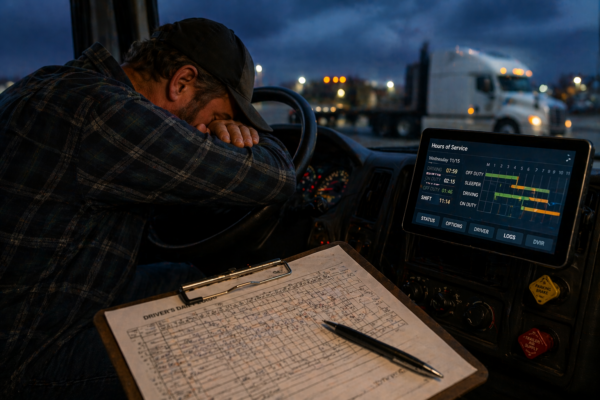
Hours of Service Rules and Truck Driver Fatigue: What Idaho Accident Victims Need to Know
Fatigued driving is one of the leading causes of serious commercial truck crashes in Idaho [...]

Black Box and ECM Data in Idaho Truck Crash Cases: What Your Lawyer Needs to Recover
When a commercial truck is involved in a serious crash, one of the most important [...]

The Most Dangerous Truck Corridors in Idaho: I-84, US-95, I-86, and I-184
Idaho’s highway system carries a level of commercial freight traffic that most residents never fully [...]

Understanding the Role of Black Ice in Boise Motorcycle & Bicycle Injury Claims
Boise, Idaho, is known for its beautiful outdoor activities, especially during the winter months. However, [...]

Understanding Uninsured and Underinsured Motorist Coverage in Idaho
Accidents happen, and while many people think about auto insurance in terms of their own [...]

Choose a Local Boise Personal Injury Lawyer
When you’ve been injured in Idaho whether in the Boise metro area of elsewhere, navigating [...]
What to Expect During the Uninsured Motorist Claim Process in Idaho
If you’ve recently been involved in a car accident and discovered that the driver responsible [...]

Do You Need a Lawyer for Uninsured/Underinsured Motorist Claims in Idaho?
If you have recently been in a car accident and are dealing with the aftermath, [...]

Uninsured Motorist Bodily Injury vs. Property Damage Coverage in Idaho
Navigating the aftermath of an accident involving an uninsured or underinsured motorist can be a [...]

How Long Do You Have to File an Uninsured Motorist Claim in Idaho?
When you’re involved in a car accident, it’s already a stressful experience. But what happens [...]
What to Do After an Accident with an Uninsured Driver in Idaho
Car accidents are stressful under any circumstances, but the situation becomes even more complicated when [...]

Is Uninsured/Underinsured Motorist Coverage Required in Idaho?
Navigating the complexities of auto insurance can be challenging, especially when it comes to understanding [...]
Filing a Claim with Your Uninsured Motorist Coverage in Idaho
Navigating the aftermath of a car accident can be a complex and overwhelming experience, especially [...]
Frequently Asked Questions About Work Zone And Construction Zone Accidents
Yes. Idaho doubles traffic fines for violations in active work zones. The citation is strong civil negligence evidence, and punitive damages under Idaho Code Section 6-1604 may be available for egregious conduct.
Potentially both. Contractor liability arises when traffic control deviated from MUTCD standards or the approved TCP. Government agency claims require a written notice of tort claim within 180 days under Idaho Code Section 6-901.
Yes. Multi-defendant work zone cases are the norm. Idaho Code Section 6-803 governs fault allocation among multiple defendants. Pursuing every responsible party is often necessary to recover the full value of a serious work zone injury.
Two tracks run simultaneously: workers’ compensation against your employer for medical and wage benefits, and a third-party personal injury claim against the driver and potentially other contractors whose traffic control failures contributed. Third-party recoveries include pain and suffering, full wage loss, and future damages not covered by workers’ comp.
The work zone setup itself changes daily. Photograph everything at the scene before leaving if able. We send preservation letters to the contractor and ITD the same day we are retained to capture what exists before it is modified.
Two years from the crash date under Idaho Code Section 5-219 for private-party claims. Government entity claims require written notice of tort claim within 180 days under Idaho Code Section 6-901. Workers’ compensation has separate timelines under Idaho Title 72.
Nothing upfront. We handle work zone crash cases on a contingency fee — we only get paid if we recover compensation for you. The initial consultation is free.
Client Reviews
