



Do you Need Legal Help?
Contact the Hepworth Holzer team today to schedule a free legal consultation to discuss your personal injury case.

Our Idaho Personal Injury Lawyers






Trucking Insurance Claims in Idaho — What You Need to Know
Commercial trucking insurance is not like your auto policy — and the people handling it are not on your side
When a commercial truck crashes into your vehicle, you are not dealing with a personal auto insurance claim. You are dealing with one of the most sophisticated and well-resourced segments of the insurance industry. Commercial trucking insurers maintain experienced claims teams, in-house legal counsel, and rapid response investigators who specialize in minimizing payouts after serious truck crashes. They handle hundreds of claims every year. They know exactly what evidence exists, how long carriers are required to keep it, and what arguments have worked in the past to reduce or deny claims.
Understanding how commercial trucking insurance works — what policies exist, what they cover, how claims are processed, and where carriers routinely try to limit their exposure — is essential to protecting your rights after a truck crash in Idaho. At Hepworth Holzer, we have navigated these insurance structures in dozens of trucking cases and recovered results including a $4.80 million settlement and a $1.85 million verdict against commercial carriers and their insurers. Call our Boise truck accident lawyers today for a free consultation.
Hepworth Holzer also helps residents of Idaho with Personal Injury Matters in: Ada County, Caldwell, Canyon County, Eagle, Garden City, Gem County, Kuna, Meridian, Nampa and Star.
Federal Minimum Insurance Requirements for Commercial Trucks
Federal law requires commercial motor vehicles operating in interstate commerce to maintain minimum levels of liability insurance. These minimums are set by the FMCSA under 49 CFR Part 387 and vary based on the type of vehicle and the cargo being transported:
- General freight: $750,000 minimum liability coverage for trucks with a gross vehicle weight rating over 10,000 pounds operating in interstate commerce
- Hazardous materials — certain types: $1,000,000 minimum for oil transported in bulk, listed hazardous substances in quantities requiring placarding, and highway route controlled quantities of radioactive materials
- Hazardous materials — highest risk: $5,000,000 minimum for certain categories of explosive or toxic materials
- Passenger carriers: Separate and higher minimums apply to buses and passenger vehicles
Idaho also imposes its own commercial vehicle insurance requirements for intrastate carriers under Idaho Code Title 49. Trucks operating entirely within Idaho that do not meet the federal interstate commerce definition must still maintain insurance coverage adequate to satisfy Idaho’s financial responsibility laws.
These minimums are floors, not ceilings. Many large trucking companies carry significantly more than the federal minimums — $1 million, $2 million, or more in primary liability coverage. Understanding what the actual policy limits are in your specific case requires obtaining and reviewing the carrier’s insurance filings, which are maintained by the FMCSA and publicly available through the agency’s SAFER system.
The MCS-90 Endorsement
One of the most important and least understood features of commercial trucking insurance is the MCS-90 endorsement. Under 49 CFR Part 387, commercial carriers are required to file a Form MCS-90 endorsement with their insurance policy. This endorsement creates an obligation for the insurer to pay judgments against the carrier for public liability arising from the operation of the insured motor vehicle — even when the specific accident might otherwise fall outside the policy’s coverage.
In practical terms, the MCS-90 endorsement functions as a guarantee to the public that there will be insurance coverage available for injuries caused by a commercial truck, regardless of certain coverage defenses the insurer might otherwise raise. It prevents carriers and their insurers from denying coverage based on technical policy exclusions in ways that would leave injured members of the public without recourse.
The MCS-90 does not increase the policy limits — it ensures that coverage is available up to the minimum required amounts even when coverage might otherwise be disputed. It is most relevant in cases involving owner-operators, leased vehicles, and situations where the carrier attempts to deny coverage based on the specific circumstances of the crash. Identifying whether an MCS-90 applies, and how it interacts with other coverage available in the case, is an important early step in any commercial trucking claim.
Idaho Truck Accident Help
18-Wheeler Accident Delivery Truck Accident I-84 Truck Accidents Wrongful Death Truck Crash Types of Crashes Preserving Evidence Choosing a Truck Accident Lawyer Common Causes of Truck Accidents Filing a Lawsuit Trucking Insurance Claims Liability Types of Compensation Truck Accident RegulationsRelated Truck Accident Videos

7 Mistakes That Ruin Personal Injury Cases
Get our FREE guide and find out how you can protect your rights with Hepworth Holzer, LLPPrimary Liability Coverage
The trucking company’s primary liability policy is the first line of coverage in most truck accident cases. This policy covers bodily injury and property damage claims arising from the operation of the carrier’s vehicles. The policy is typically issued by a commercial insurance carrier that specializes in transportation risk and that employs claims professionals who handle truck accident claims as their primary business.
Commercial trucking liability claims adjusters are not like personal auto adjusters. They are trained to investigate claims aggressively, identify arguments for reducing or denying coverage, obtain recorded statements from injured parties before they have legal representation, and make early settlement offers designed to close claims before the full extent of injuries and damages is understood. Their job is to minimize what the insurer pays — and they are good at it.
The initial settlement offer from a trucking company’s insurer is virtually never an accurate reflection of the full value of the claim. It is an opening position designed to close a case cheaply. We have seen cases where commercial carriers offered tens of thousands of dollars in initial settlements for injuries that were ultimately worth millions of dollars once properly evaluated and litigated. The gap between the initial offer and the true case value is why having experienced legal representation from the beginning matters so much in these cases.
Excess and Umbrella Coverage
Many commercial trucking operations carry excess or umbrella policies that provide coverage above the primary policy limits. A carrier with $1 million in primary liability coverage might carry an additional $4 million in excess coverage, bringing total available coverage to $5 million or more. In catastrophic injury and wrongful death cases, identifying and pursuing excess coverage is essential to recovering adequate compensation for the full scope of losses.
Excess and umbrella policies are not always disclosed voluntarily. Carriers and their primary insurers have no obligation to tell you about excess coverage that exists above the primary policy. Obtaining insurance coverage information requires formal legal process — in many cases, discovery requests served after a lawsuit is filed. In some jurisdictions, courts have required disclosure of excess coverage information earlier in the process, but the most reliable path to identifying all available coverage is through litigation with experienced counsel who knows what to demand and when.
Cargo Insurance
In addition to liability coverage, commercial trucking operations typically carry cargo insurance that covers damage to the freight being transported. Cargo insurance is not directly relevant to personal injury claims — it covers the shipper’s property, not the injuries of crash victims. However, understanding the cargo insurance structure in a case can be relevant to identifying the full range of parties and insurers involved, which sometimes yields additional sources of coverage for the injured party through the liability policies of cargo owners, shippers, and freight brokers.
Multiple Policies and Coordination of Coverage
One of the most complex aspects of commercial truck accident insurance is that multiple policies may apply to a single crash, and those policies may be issued by different insurers with different interests. In a typical semi-truck crash, potential coverage sources include the primary liability policy of the trucking company, an excess or umbrella policy above the primary limits, the trailer owner’s liability policy if the trailer is owned by a different entity than the cab, the cargo insurer’s liability coverage if a shipper or freight broker bears responsibility, your own underinsured motorist coverage if the trucking company’s coverage is insufficient to fully compensate your losses, and medical payments coverage under your own auto policy.
Coordinating claims across multiple policies requires understanding how each policy’s terms interact, which policy is primary and which is excess, how subrogation rights among insurers affect the ultimate distribution of proceeds, and how to structure a global settlement that resolves all claims without inadvertently releasing a party or policy that should remain in play. This is not work for a generalist. It requires lawyers who have handled these multi-insurer negotiations before and understand the specific dynamics of commercial trucking coverage.
Dealing with the Trucking Company’s Insurer — What Not to Do
The single most damaging mistake truck accident victims make is giving a recorded statement to the trucking company’s insurance adjuster before consulting an attorney. The adjuster will call quickly — often within hours of the crash — and they will seem helpful and reasonable. They will tell you they just need a few basic facts about what happened. What they actually need is a statement they can use to minimize your claim.
Common tactics commercial trucking insurers use to reduce claims include obtaining early recorded statements that capture descriptions of injuries before the full extent is known, making early settlement offers designed to close claims before injuries stabilize or future medical needs are established, requesting broad medical authorizations that give them access to your entire medical history rather than just records related to the crash, and arguing comparative fault — that you were partially responsible for the crash — to reduce the amount they must pay under Idaho’s modified comparative negligence rule.
Under Idaho Code Section 6-801, a plaintiff who is found to be 50 percent or more at fault cannot recover at all. Trucking insurers routinely attempt to assign fault to injured victims to reduce or eliminate their obligation to pay. Having experienced legal representation that challenges these fault assignments with solid evidence is essential to protecting your full recovery. For more on how Idaho’s fault rules work in practice, see our page on Idaho truck accident laws and federal regulations.
Bad Faith Insurance Practices in Truck Accident Cases
Insurance companies owe their policyholders a duty of good faith and fair dealing. When an insurer unreasonably denies a valid claim, fails to conduct a proper investigation, delays payment without justification, or offers a settlement that bears no reasonable relationship to the actual value of the claim, it may be acting in bad faith under Idaho law.
In the context of truck accident cases, bad faith claims most commonly arise when a carrier’s insurer refuses to pay a judgment within policy limits after a reasonable settlement demand was made, or when an insurer’s investigation is so inadequate as to constitute a refusal to properly evaluate the claim. When bad faith is established, the insurer may be liable for damages beyond the policy limits — including the full amount of a judgment against the insured even if that judgment exceeds the policy — as well as attorney’s fees and, in appropriate cases, punitive damages.
Idaho’s bad faith insurance law provides important protections for truck accident victims when insurers act unreasonably. For more on how bad faith insurance practices work and how they affect truck accident claims, see our page on bad faith insurance in Idaho.
Related Truck Accident Blog Posts
Idaho’s Long Range Transportation Plan Elevates Commercial Truck Drivers Over Motorist Safety: The Freight Is Moving Off the Freeway
In 2024, 88% of Idaho’s fatal commercial truck crashes happened on rural roads. Those are [...]
Harvest Season Truck Traffic and Serious Idaho Highway Accidents: What Drivers Should Know
Harvest season can change traffic patterns on Idaho highways as agricultural trucks, trailers, farm equipment, [...]

I-84 Truck Accident Guide for August
After an I-84 truck accident during August travel, move away from immediate danger when you [...]

Heat, Fatigue, and Truck Driver Errors on Idaho Highways
Summer heat can make long-haul trucking more demanding, and fatigue can make driver mistakes more [...]
How Summer Construction Zones Lead to Serious Truck Accidents in Idaho | Hepworth Holzer, LLP
Summer roadway construction across Idaho creates conditions that significantly increase the risk of serious truck [...]

Dealing with the Trucking Company’s Insurance After a Crash in Idaho
Dealing with the Trucking Company’s Insurance After a Crash in Idaho When a commercial truck [...]
What Idaho Families Need to Know About Wrongful Death from a Truck Crash
Losing a family member in a commercial truck crash is one of the most devastating [...]
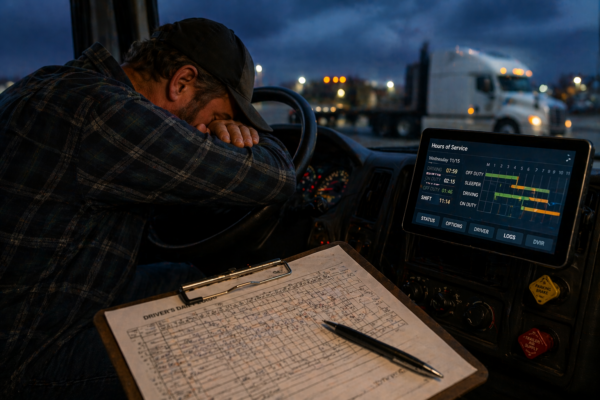
Hours of Service Rules and Truck Driver Fatigue: What Idaho Accident Victims Need to Know
Fatigued driving is one of the leading causes of serious commercial truck crashes in Idaho [...]

Black Box and ECM Data in Idaho Truck Crash Cases: What Your Lawyer Needs to Recover
When a commercial truck is involved in a serious crash, one of the most important [...]

The Most Dangerous Truck Corridors in Idaho: I-84, US-95, I-86, and I-184
Idaho’s highway system carries a level of commercial freight traffic that most residents never fully [...]
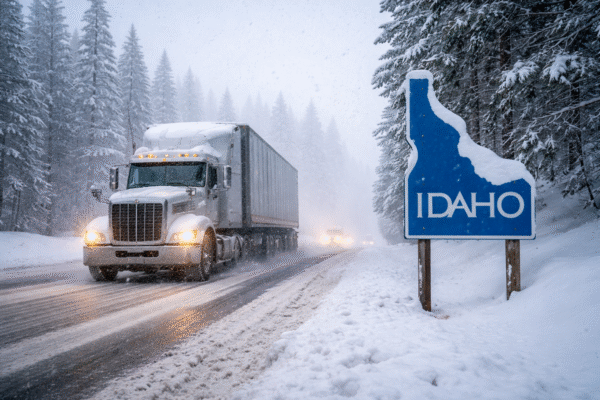
Why Winter Truck Braking Failures Lead to Severe Damages in Idaho
Winter in Idaho is no stranger to harsh weather conditions, and the challenges these conditions [...]
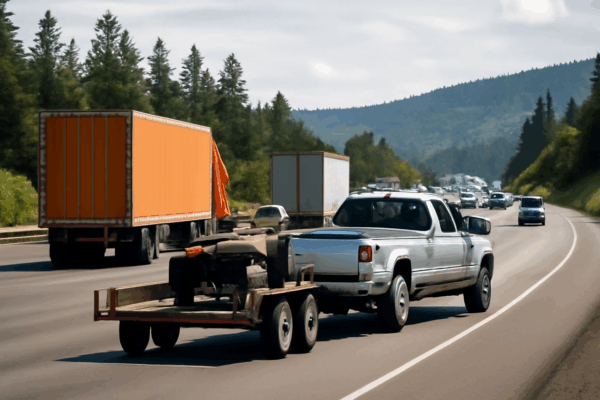
Hunting-Season Roadway Crashes on US-95 or Highway 55: Sorting Liability When Trucks and Trailers Are Involved
Hunting season in Idaho is a time when families and avid hunters alike take to [...]

Why Your Truck Accident Case May Take Longer Than You Expect
After a truck accident, victims often expect a swift resolution to their case. However, the [...]

The Role of Negligence in Truck Accident Claims in Idaho
Negligence is the foundation of most truck accident claims in Idaho. To recover compensation you [...]

Top 5 Mistakes to Avoid After a Truck Accident in Idaho
After a serious truck crash, the choices you make in the first few days can [...]
Your Own Insurance After a Truck Crash
Do not overlook your own insurance coverage after a truck crash. Your personal auto policy may include underinsured motorist (UIM) coverage that applies when the trucking company’s liability coverage is insufficient to fully compensate your losses. Medical payments coverage under your own policy may provide immediate payment for medical expenses regardless of fault. If you were injured as a pedestrian or cyclist, your homeowner’s or renter’s policy may have relevant provisions.
Idaho law requires insurers to offer underinsured motorist coverage, though policyholders may reject it in writing. If you have UIM coverage and the trucking company’s liability policy is exhausted before your losses are fully compensated, your own insurer becomes responsible for the gap up to your UIM policy limits. Coordinating this claim requires care — giving your own insurer information that could be used against you in the primary claim is a real risk if the timing and sequencing of communications is not managed carefully.
Call Hepworth Holzer Before You Talk to Any Insurance Company
The most important thing you can do after a truck crash in Idaho is call an experienced truck accident lawyer before you speak with any insurance adjuster — including your own. At Hepworth Holzer, we handle all insurance communications on your behalf from day one, identify every applicable policy, and make sure nothing is said or signed that damages your claim. We have recovered millions of dollars for Idaho truck accident victims against commercial carriers and their insurers, and we are prepared to take every case to trial if a fair settlement cannot be reached. Call us today for a free consultation. There is no fee unless we recover compensation for you.
Frequently Asked Questions About Trucking Insurance Claims In Idaho
Under 49 CFR Part 387, commercial trucks carrying general freight in interstate commerce must carry a minimum of $750,000 in liability coverage. Trucks carrying certain hazardous materials must carry $1,000,000, and those transporting the highest-risk materials must carry $5,000,000. Many carriers maintain coverage significantly above these minimums. Idaho also imposes financial responsibility requirements on intrastate carriers under Idaho Code Title 49. The actual policy limits in any specific case can be determined through the carrier’s FMCSA filings, which are publicly available through the agency’s SAFER system.
The MCS-90 is a federally required endorsement to commercial trucking liability insurance policies under 49 CFR Part 387. It creates a guarantee that the insurer will pay judgments for public liability arising from the operation of the insured vehicle — even when the specific crash might otherwise fall outside the policy’s coverage. The MCS-90 prevents carriers and insurers from denying coverage based on technical policy exclusions in ways that would leave injured members of the public uncompensated. It does not increase the policy limits, but it ensures coverage is available up to the required minimums even when coverage might otherwise be disputed.
No. You should not give a recorded statement to the trucking company’s insurance adjuster before consulting an attorney. Commercial trucking claims adjusters are trained professionals whose job is to minimize what the insurer pays. A recorded statement taken before you fully understand the extent of your injuries and before you have legal representation can be used to minimize your claim. The answer to any contact from the carrier’s insurer is to call an experienced truck accident attorney first and let them handle all communications on your behalf.
Yes, in many cases. Many commercial trucking operations carry excess or umbrella policies that provide coverage above the primary policy limits. A carrier with $1 million in primary coverage may carry an additional $4 million or more in excess coverage. Additionally, other parties who bear liability — trailer owners, freight brokers, cargo loaders — may carry their own policies. Your own underinsured motorist coverage may also apply if the trucking company’s coverage is insufficient. Identifying all available coverage requires formal legal process and experienced counsel.
Bad faith insurance occurs when an insurer unreasonably denies a valid claim, fails to conduct a proper investigation, delays payment without justification, or offers a settlement that bears no reasonable relationship to the actual value of the claim. In truck accident cases, bad faith most commonly arises when an insurer refuses to settle within policy limits after a reasonable demand, exposing the policyholder to an excess judgment. When bad faith is established under Idaho law, the insurer may be liable for damages beyond the policy limits, attorney’s fees, and in appropriate cases, punitive damages.
Your own auto insurance may provide coverage after a truck crash in several ways. Underinsured motorist (UIM) coverage applies when the trucking company’s liability coverage is insufficient to fully compensate your losses — your own insurer pays the gap up to your UIM limits. Medical payments coverage provides immediate payment for medical expenses regardless of fault. If you were injured as a pedestrian or cyclist, your homeowner’s or renter’s policy may also have relevant provisions. Coordinating these claims with the primary claim against the trucking company requires careful management to avoid inadvertently damaging your position.
Client Reviews
