




7 Mistakes That Ruin Personal Injury Cases
Get our FREE guide and find out how you can protect your rights with Hepworth Holzer, LLP
Our Idaho Personal Injury Lawyers






Idaho Poorly Maintained Road Motorcycle Accident Lawyers
A pothole, edge drop-off, or patch of loose gravel that a car navigates without incident can put a motorcyclist in the trauma center
Motorcycles and road hazards interact differently than cars and road hazards — in ways that are well understood by traffic engineers and almost always fatal to insurance arguments that blame the rider. A pothole that causes a car to bounce and lose a hubcap can cause a motorcycle to lose traction entirely, throw the rider, and result in catastrophic injury. An edge drop-off on a rural Idaho highway that a pickup truck absorbs as a jolt can cause a motorcycle’s front wheel to drop, the bars to jerk, and the rider to go down at speed. Loose gravel spread across an intersection by a late-season chip seal that a sedan drives through without incident can put a rider in a ground slide at full approach speed. If you were injured in a motorcycle crash caused by a road defect or poor maintenance anywhere in Idaho, we are here to help. Call us for a free consultation.
Road hazard motorcycle crashes are legally complex because they almost always involve a government defendant — ITD, ACHD, a county highway district, or a city — and government defendants in Idaho are protected by the Idaho Tort Claims Act in ways that require specific procedures, specific notice, and specific legal arguments to overcome. Our firm has been pursuing road hazard motorcycle claims against Idaho government entities for more than 50 years. We know this area of law in depth, and we know the 180-day notice deadline that permanently bars the claim if missed. For a full overview of how we handle motorcycle injury claims throughout Idaho, see our main motorcycle practice page.
Hepworth Holzer also helps residents of Idaho with Personal Injury Matters in: Ada County, Caldwell, Canyon County, Eagle, Garden City, Gem County, Kuna, Meridian, Nampa and Star.
Road Hazards That Cause Motorcycle Crashes in Idaho
The specific road conditions that cause motorcycle crashes differ significantly from those that cause car crashes, because a motorcycle’s two-wheel balance is far more sensitive to surface irregularities than a four-wheeled vehicle’s stability. The road hazards we see most frequently in our practice include:
- Potholes and pavement failures. Deep potholes — particularly those hidden by standing water or positioned in low-light conditions — can cause a front wheel to drop and lock, or a rear wheel to break loose. Idaho’s freeze-thaw cycles are hard on pavement, and potholes on Boise city streets, Ada County roads, and rural state highways are a consistent problem that ITD and ACHD maintenance logs document year after year.
- Pavement edge drop-offs. Where the paved road surface has eroded or settled to create a drop to the unpaved shoulder — sometimes several inches deep — a motorcycle that rides the edge to avoid traffic or drifts slightly right can have its front wheel caught, which initiates the overcorrection sequence that ends in a crash. ITD and ACHD engineering standards specify maximum allowable edge drop-offs. When those standards are violated, the agency is potentially liable.
- Loose gravel and chip seal applications. Fresh chip seal applied without adequate sweeping of loose aggregate leaves a layer of gravel that behaves like ball bearings under a motorcycle tire. This is an especially common cause of intersection approach crashes in late summer and early fall when Ada and Canyon County roads undergo annual surface treatment. If the gravel was not swept before the road was reopened to traffic, and if a rider was not adequately warned, the contractor and the contracting agency may share liability.
- Expansion joints and bridge deck transitions. Metal expansion joints, bridge deck grating, and the ridge created by an uneven transition from road to bridge surface can catch a motorcycle tire — particularly a narrow front tire — and cause a loss of steering control. The I-84 bridges across the Boise River and the Snake River, the Broadway Bridge, and numerous smaller bridges on state and county highways have documented transition conditions that are disproportionately hazardous for motorcycles.
- Debris in the roadway. Sand washed from driveways, gravel spilled from dump trucks, tree branches down after a storm, or construction debris that was not cleared from the travel lane can cause a motorcycle crash that a car would navigate without incident. When the debris was the result of a contractor’s failure to clean up, or the agency’s failure to respond to a documented hazard report, liability exists.
- Inadequate or missing signage. A sharp curve on a rural Idaho highway without adequate advisory speed signs, a construction zone without proper advance warning, or a road surface change without a warning sign can cause a rider traveling at a reasonable speed to encounter a hazard without time to respond. Signage standards are specified by the MUTCD and Idaho’s supplement to it — violations are directly relevant to liability.
- Guardrail end treatments. Outdated guardrail end treatments — sometimes called “can openers” — that spear or launch rather than redirect a motorcycle that leaves the road have been a documented safety hazard for decades. When a crash involves an outdated guardrail end treatment on a state or county road, the agency responsible for its maintenance faces a significant liability exposure.
The Idaho Tort Claims Act — The Most Important Deadline in Road Hazard Cases
Claims against government entities in Idaho are governed by the Idaho Tort Claims Act under Idaho Code Section 6-901 et seq. The Act imposes a requirement that is absolute and non-negotiable: before filing a lawsuit against any government entity — ITD, ACHD, a county, a city, or a highway district — you must serve a written notice of tort claim on the correct entity within 180 days of the crash or the cause of action is permanently barred.
This 180-day deadline runs from the date of the crash, regardless of when you retained a lawyer, regardless of whether you were still in the hospital, and regardless of whether you were even aware you had a claim against the government. There are no exceptions and no extensions. Missing it means the government entity cannot be sued at all — even if their negligence is clearly documented and their maintenance records show they had notice of the dangerous condition for years.
We serve this notice immediately in every road hazard motorcycle case — as a protective measure — even before we have completed the full investigation into which entity is responsible. We identify the correct government defendant quickly because serving notice on the wrong entity does not protect the claim. In Idaho, state highways (including I-84, US-95, US-20/26, SH-55, SH-21, and all other numbered state routes) are maintained by ITD. In Ada County, most city arterials and county roads are maintained by ACHD. Canyon County, Gem County, and other counties have their own highway districts. Identifying the right defendant before the deadline passes is critical.
Discretionary Function Immunity — and When It Does Not Apply
Government entities in Idaho frequently invoke discretionary function immunity under the Tort Claims Act, arguing that decisions about how to design or prioritize road maintenance are protected policy-level choices that cannot be challenged in court. This defense is real and must be taken seriously — but it is not unlimited.
Discretionary function immunity protects high-level policy and planning decisions: the decision to use a particular pavement design, the policy of prioritizing certain road types for chip seal, the budget allocation for maintenance. It does not protect operational failures — the decision to leave a pothole unfilled after it was reported, the failure to sweep loose aggregate before reopening a chip-sealed road to traffic, the failure to repair an edge drop-off that was documented in multiple inspection reports. The line between protected discretionary decisions and actionable operational failures is fact-specific and requires attorneys who know Idaho Tort Claims Act practice deeply. Drawing that line correctly is where road hazard cases are won and lost.
Prior Notice — The Key to Overcoming Government Immunity
The strongest road hazard claims against government entities are those where the agency had documented prior notice of the dangerous condition and failed to act. Prior notice can be established through maintenance request logs, ITD or ACHD inspection records, 311 complaint records from the public, prior crash reports at the same location, and internal engineering study results that identified the hazard. When the records show that the agency knew about the pothole, the edge drop-off, or the debris condition for weeks or months before your crash and chose not to correct it, the liability argument is substantially stronger than when the defect was newly created.
We subpoena maintenance records, inspection logs, and public complaint records as early in the case as possible. These records are held by the agency and will not be volunteered. In cases where we identify a pattern of prior crashes or complaints at the same location, that pattern becomes evidence that the agency had notice of a known dangerous condition — exactly the standard the Tort Claims Act requires for liability to attach.
Who Else May Be Liable Besides the Government Entity
Not every road hazard claim runs solely against a government entity. Other potentially liable parties include:
- Construction contractors and subcontractors who created the hazard through work on the road — a chip seal contractor who failed to sweep, a utility company whose trench repair created an uneven surface, a developer whose grading work sent gravel onto the adjacent road.
- Property owners whose landscaping, drainage, or construction activity created the road hazard — gravel washing from a driveway, tree debris from a neglected tree, construction equipment tracking debris onto the road surface.
- Commercial vehicles that spilled debris or gravel from an improperly loaded or covered truck. Idaho Code Section 49-1010 requires loads to be secured to prevent spillage. A truck that spills gravel on a road where a motorcyclist subsequently crashes faces direct liability.
For more detail on how Idaho’s dangerous road framework applies across all crash types, see our page on dangerous roads and intersections in Idaho. When a road hazard contributed to a rear-end crash sequence, see our page on rear-end motorcycle collisions in Idaho for how those cases are built alongside a government entity claim.
Idaho’s Two-Year Personal Injury Deadline
Idaho Code Section 5-219 gives you two years from the date of the crash to file a personal injury lawsuit. Wrongful death claims under Idaho Code Section 5-311 carry the same window. But the 180-day Tort Claims Act notice under Idaho Code Section 6-901 is the earlier and more consequential deadline for any case involving a government defendant. For a full overview of the Idaho motorcycle insurance coverage that may apply when a road hazard caused your crash, see our Idaho motorcycle insurance and helmet law guide. Two years sounds long. 180 days is approximately six months. When you are recovering from serious injuries, six months can pass very quickly. Call us as soon as you are able. We serve the notice immediately and continue building the case from there.
Why Hepworth Holzer
Our firm has been pursuing road hazard motorcycle claims against Idaho government entities for more than 50 years — against ITD, ACHD, county highway districts, and cities throughout the state. We know the Tort Claims Act procedures, the notice requirements, the discretionary function immunity arguments, and the maintenance record discovery that makes these cases. We know how to identify the correct government defendant before the 180-day clock runs out. And we know how to build the prior notice case that turns a government immunity defense into a liability finding. When a road hazard contributed to a head-on crash on a rural Idaho highway, see our page on head-on motorcycle collisions in Idaho for how those cases are handled. When you call, you talk to a real lawyer. The consultation is free. There is no fee unless we recover compensation for you.
Do You Need Legal Help?
Related Motorcycle Accident Videos
Frequently Asked Questions About Poorly Maintained Road Motorcycle Accidents
Potentially yes. Claims against government entities are governed by the Idaho Tort Claims Act under Idaho Code Section 6-901. A written notice of tort claim must be served within 180 days of the crash. Discretionary function immunity protects policy decisions but not operational failures like ignoring documented road defects.
Idaho Code Section 6-901 requires written notice of tort claim within 180 days of the crash. Miss this and the government claim is permanently barred — no exceptions, no extensions. We serve this notice immediately in every road hazard case involving a potential government defendant.
State highways (I-84, US-95, SH-55, SH-21, etc.) are maintained by ITD. Most city arterials and county roads within Boise, Meridian, Eagle, Garden City, Kuna, and Star are maintained by ACHD. Serving notice on the wrong entity does not protect the claim.
No. Discretionary function immunity protects high-level policy decisions but not operational failures — leaving a documented pothole unfilled, failing to sweep chip seal aggregate, ignoring repeated complaints about a road edge drop-off. When records show prior notice and failure to act, the immunity defense fails.
The contractor may be directly liable — a chip seal contractor who failed to sweep loose aggregate, a utility company whose trench repair created an uneven surface, or a developer whose grading sent gravel onto the adjacent road. We identify every potentially liable party from the first day.
The 180-day notice under Idaho Code Section 6-901 is the most urgent for government claims. The personal injury statute of limitations is two years under Idaho Code Section 5-219. Wrongful death under Idaho Code Section 5-311 carries the same two-year window. The road hazard itself may be repaired quickly after the crash — call us immediately.
Nothing upfront. We handle road hazard motorcycle cases on a contingency fee — we only get paid if we recover compensation for you. The initial consultation is free.
Related Motorcycle Accident Blog Posts

Uninsured and Underinsured Motorist Coverage in Idaho
Navigating the complexities of car insurance can be a daunting task, especially when it comes [...]
Jun

How to Handle Insurance Companies After a Motorcycle Accident in Idaho
Motorcycle accidents can be traumatic experiences, both physically and emotionally. In the aftermath of such [...]
Jun
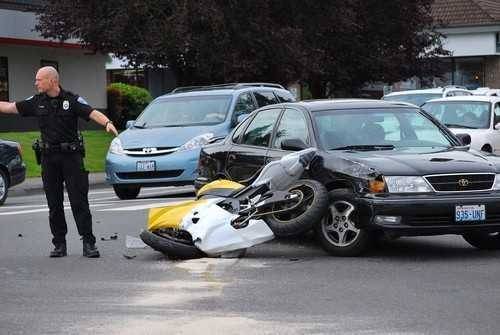
Common Injuries in Idaho Motorcycle Accidents and Their Long-Term Effects
Idaho is a beautiful state with plenty of scenic roads that make it perfect for [...]
May
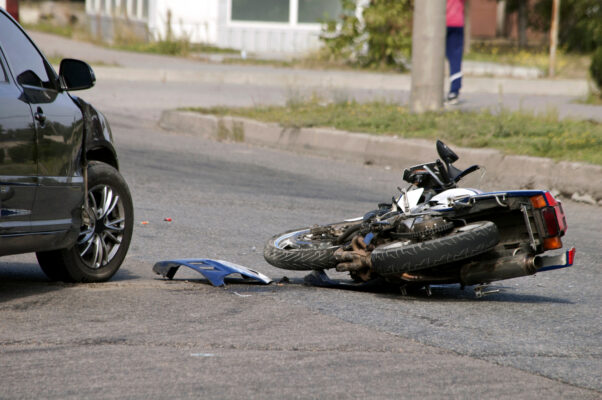
The Importance of Defensive Riding for Idaho Motorcyclists
The Importance of Defensive Riding for Idaho Motorcyclists Motorcycle riding is an exhilarating experience that [...]
May

Idaho Motorcycle Accident Statistics
Idaho is known for its stunning landscapes and outdoor activities, including motorcycle riding. However, riding [...]
Apr

Idaho Motorcycle Accident Statistics: Trends and Analysis
Idaho is known for its stunning landscapes and outdoor activities, including motorcycle riding. However, riding [...]
Apr

What to Do If You’re Involved in a Hit-and-Run Motorcycle Accident in Idaho
Motorcycle accidents are not uncommon, and unfortunately, hit-and-run accidents can happen. Being involved in a [...]
Mar

Idaho Motorcycle Accident Attorneys
Have you been hurt while riding your motorcycle? Check out this blog to learn more [...]
Feb
Client Reviews
