

Yes. Vehicle maintenance records can help prove fault after an Idaho crash when a mechanical problem may have contributed to the collision. Service invoices, inspection reports, repair recommendations, tire records, brake work, warning-light diagnostics, and fleet maintenance logs can help show whether a driver, vehicle owner, employer, repair shop, or another party knew about a safety problem and failed to correct it.
The strongest maintenance evidence connects a documented safety problem to the mechanical failure that caused or worsened the crash. The key questions are whether a safety-related condition existed, whether someone responsible for the vehicle knew or should have known about it, whether the problem was corrected, and whether it contributed to the collision.
Hepworth Holzer, LLP helps injured people investigate Idaho vehicle crashes, preserve evidence, and identify whether poor maintenance may have played a role.




Why Maintenance Records Can Matter After a Crash
Many Idaho crashes involve driving behavior such as speeding, distraction, unsafe turns, or following too closely. Some collisions also involve a mechanical problem.
Examples may include:
Worn brakes that increase stopping distance
Bald, damaged, or improperly maintained tires that contribute to loss of control
Steering or suspension problems that affect handling
Faulty lights that reduce visibility
Warning signs that were ignored until a mechanical problem became more serious
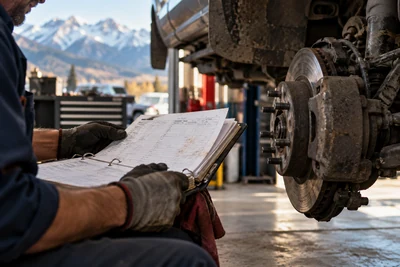
Maintenance records can turn a general claim that the brakes failed into a timeline. They may show when a problem was first identified, what repair was recommended, whether the repair was completed, and who decided to keep the vehicle in service.
This evidence can be especially useful when the vehicle changes after the crash because it is repaired, sold, salvaged, dismantled, or destroyed.






What Types of Vehicle Maintenance Records Can Be Useful?
The most useful records depend on the suspected mechanical failure. Evidence may include:
Oil-change and routine service records that mention safety concerns
Brake inspection, replacement, and repair invoices
Tire purchase, rotation, alignment, pressure, and replacement records
Steering and suspension repair records
Diagnostic scans and warning-light reports
Dealer warranty and recall service records
Pre-trip and post-trip inspection reports for commercial vehicles
Fleet maintenance schedules and repair logs
Written estimates for repairs that were recommended but declined
Text messages, emails, or work orders discussing a known problem
Towing, storage, and post-crash inspection records
These records should be considered with the vehicle itself, crash photographs, witness statements, electronic vehicle data, police reports, and expert inspection when necessary.
A single repair invoice may raise a question. Several records may help establish a timeline showing when a problem appeared, how serious it was, and what happened before the crash.
How Maintenance Records Can Help Prove Negligence
In a negligence claim, maintenance records can help answer four factual questions.
1. Did the vehicle have a dangerous condition before the crash?
A repair invoice may document worn brake pads, a leaking hydraulic component, severe tire wear, steering play, or another safety-related condition.
2. Did a responsible person know or have reason to know about the problem?
A mechanic may have recommended immediate repair. A fleet driver may have submitted a defect report. A dashboard warning may have appeared repeatedly.
3. Was the problem corrected?
Records may show that the owner authorized the repair, postponed it, declined it, or continued operating the vehicle without addressing the condition.
4. Did the condition contribute to the crash?
Maintenance records often need to be matched with physical evidence. A pre-crash brake warning has more significance if a post-crash vehicle inspection confirms a brake-system failure.
Maintenance records do not prove fault automatically. They are one part of the evidence used to determine what happened and whether a person or business failed to use reasonable care.
Who Could Be Responsible for Poor Vehicle Maintenance?
Responsibility depends on who owned, controlled, serviced, maintained, or operated the vehicle.
A private vehicle owner may be responsible if the owner continued driving after learning about a serious safety defect. A driver may also bear responsibility if clear warning signs were ignored before the collision.
An employer or fleet operator may be responsible when a company vehicle was not inspected or maintained reasonably. Commercial truck cases may involve extensive inspection, repair, and maintenance documentation.
A repair shop may come under investigation if a recent repair was performed incorrectly or if the repair created a new safety problem.
A manufacturer or parts supplier may also be relevant if the problem resulted from a defective component rather than neglected maintenance.
More than one cause can exist in the same crash. Poor maintenance and unsafe driving may both contribute to a collision.
Related Videos
Rules of a Personal Injury Claim
Choosing a Personal Injury Attorney
Maintenance Records in Idaho Truck Accident Cases
Commercial vehicle cases often contain more maintenance evidence than ordinary passenger-vehicle claims. Trucking companies may have inspection reports, driver defect reports, repair histories, annual inspection records, vendor invoices, and fleet-management data.
Federal motor carrier safety regulations contain inspection, repair, and maintenance requirements for certain commercial motor vehicles. In a truck crash investigation, those records may be compared with the condition of the truck after the collision.
If a driver reported a brake, tire, steering, or lighting problem before the crash, the investigation may focus on whether the company corrected the problem before returning the vehicle to service.
Hepworth Holzer, LLP discusses the preservation of maintenance, inspection, electronic, and other evidence after a truck collision here:
When a commercial truck is involved, early preservation efforts can help protect records, electronic information, and vehicle components before they are changed or lost through repair, disposal, or ordinary business activity.
Can Maintenance Records Affect Shared Fault in Idaho?
Yes. Idaho uses a comparative responsibility system. When the conduct of more than one party contributes to an injury, responsibility can be allocated among the parties. An injured person’s own share of responsibility can affect the compensation available.
For example, one driver may have been traveling too fast for the circumstances while the other vehicle had severely worn brakes that had already been identified as needing repair. Investigators may need to examine both the driving conduct and the condition of the vehicle.
More information about comparative responsibility in Idaho is available here:
https://hepworthholzer.com/2020/10/08/comparative-responsibility/
Maintenance evidence may also be relevant when an insurer argues that a crash resulted entirely from the injured driver’s conduct. Objective service records may help establish that a mechanical problem existed before the collision and provide evidence for determining whether that condition contributed to the impact.
Verdicts & Settlements
How to Preserve Maintenance Evidence After an Idaho Crash
If mechanical failure is suspected, evidence preservation should begin as early as reasonably possible. A vehicle can change quickly after a crash. It may be repaired, dismantled, released from a tow yard, sold for salvage, or declared a total loss.
Useful preservation steps may include:
Photographing the vehicle and damaged mechanical components
Keeping repair invoices and recent service records
Saving text messages or emails involving mechanics, vehicle owners, employers, or fleet personnel
Avoiding unnecessary alteration of a potentially defective component
Identifying the tow yard, repair facility, or storage location
Seeking relevant records from a fleet owner or maintenance provider
Preserving available electronic vehicle information
Arranging an appropriate inspection when the mechanical issue is disputed
Hepworth Holzer, LLP provides more information about steps to consider after a collision here:
https://hepworthholzer.com/after-a-car-accident/
For a broader discussion of Idaho car accident claims and investigations, visit:
https://hepworthholzer.com/boise-car-accident-attorneys/
What If the Insurance Company Says Maintenance Did Not Matter?
An insurance company may argue that a mechanical defect did not cause the collision, that the driver did not know about the condition, or that the damage appeared only because of the crash.
Those questions should be compared with the available records and physical evidence.
An investigation may examine maintenance records alongside:
Post-crash vehicle inspection findings
Available electronic vehicle data
Tire marks and other roadway evidence
Photographs of damaged or failed components
Witness accounts
Mechanic testimony
Accident reconstruction evidence
Earlier complaints or repair recommendations
The goal is to establish a reliable sequence of events.
What condition existed before the crash? Who knew about it? What repairs were recommended? Were those repairs performed? Did the condition contribute to the collision or the resulting injuries?
A maintenance record becomes more meaningful when other evidence supports the same sequence.
What Compensation May Be Available?
If negligent maintenance contributed to an Idaho crash, an injured person may be able to pursue compensation from the party or parties legally responsible for the resulting harm.
Depending on the facts, claimed losses may include:
Medical expenses
Anticipated treatment costs
Lost income
Reduced earning capacity
Property damage
Pain
Physical limitations
Other losses permitted under Idaho law
The amount and types of compensation available depend on the evidence, injuries, insurance coverage, allocation of responsibility, and other circumstances.
Maintenance records can strengthen an investigation into fault, but their existence does not guarantee liability or a particular recovery.
When Should an Attorney Investigate Maintenance Records?
Maintenance evidence deserves closer attention when the circumstances suggest that a vehicle did not operate normally before impact.
Examples include:
A driver reports that the brakes failed
A tire separates or blows out
The vehicle shows unusual steering behavior
A commercial vehicle experiences an apparent equipment failure
A warning light or safety warning appeared shortly before the crash
A repair had recently been recommended but not completed
A component had recently been repaired and then failed
An attorney can also identify records that may exist outside an injured person’s possession.
Depending on the case, records may be held by:
Another driver
A vehicle owner
An employer
A trucking company
A dealership
An independent repair facility
A parts supplier
A towing company
A storage facility
Another business involved with the vehicle
Finding those sources early can be valuable because records and physical evidence do not necessarily remain available indefinitely.
Speak With an Idaho Car Accident Attorney
If you were injured in a Boise, Meridian, Treasure Valley, or other Idaho crash and suspect that bad brakes, worn tires, faulty steering, missed inspections, or another maintenance problem played a role, Hepworth Holzer, LLP can review the circumstances and help identify evidence that may need to be preserved.
The firm offers free consultations. Call (208) 328-6998 to discuss your situation.
For more information about Idaho accident reports and claims, visit:
https://hepworthholzer.com/boise-car-accident-attorneys/idaho-accident-report-and-claim-guide/
To contact Hepworth Holzer, LLP, visit:
https://hepworthholzer.com/contact/
This article is for informational purposes only and is not legal advice. Consult an attorney about your specific situation.
