

When cargo falls from a commercial truck and causes a crash in Idaho, more than one person or company may be responsible. Depending on who controlled the load and why it came loose, potentially liable parties may include:
- The truck driver
- The trucking company or motor carrier
- The shipper
- A warehouse or third-party cargo-loading company
- The trailer owner
- A maintenance or repair provider
- A manufacturer of defective securement equipment or trailer components
Falling cargo can cause a serious crash even when the truck never strikes your vehicle. Lumber, pipes, machinery, pallets, construction materials, and other freight can hit a vehicle, block a lane, or force you to brake or swerve suddenly.
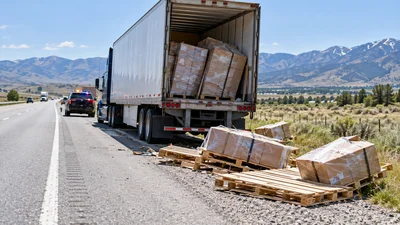
Liability usually depends on who loaded and secured the cargo, who had a duty to inspect it, whether the securement equipment was suitable and maintained, and what caused the cargo to shift or fall. Hepworth Holzer, LLP represents people injured in Idaho truck crashes and can investigate the chain of decisions and equipment failures that contributed to a cargo-related collision.






Why Falling Truck Cargo Can Involve More Than One Responsible Party
Commercial freight can pass through several hands before a truck reaches an Idaho highway. A shipper may prepare the freight. Warehouse workers may position it. A third-party loading company may secure it. The motor carrier may provide the trailer, straps, chains, binders, doors, or anchor points. The driver may have inspection duties before and during the trip.
A cargo-loss investigation may need to determine:
- Who loaded the freight
- Who selected the securement method
- Who supplied the straps, chains, binders, blocking, bracing, or other securement equipment
- Whether the equipment was appropriate for the cargo
- Whether the load shifted after the trip began
- Whether required inspections occurred
- Whether anyone discovered a problem and failed to correct it
- Whether a component broke, wore out, or was defective
For a broader discussion of fault in commercial vehicle crashes, see:
The Truck Driver May Be Liable
A truck driver may be responsible when the evidence shows that the driver failed to inspect the cargo or securement system when an inspection was required, ignored signs that cargo had shifted, or continued driving after discovering a securement problem.
Federal rules may apply to the trip. Under 49 C.F.R. § 392.9, covered commercial motor vehicle cargo must be properly distributed and adequately secured. Subject to stated exceptions, truck and truck-tractor drivers must check cargo and securement devices before driving, inspect them within the first 50 miles of a trip, and reexamine them during transportation after specified events or intervals.
Driving behavior may also matter. Speed, abrupt steering, hard braking, or sudden lane movements can place additional force on a load. If cargo was unstable or inadequately secured, the driver's actions may be part of the causation analysis.
Evidence that may help evaluate the driver's conduct includes:
- Driver inspection records
- Driver logs
- Electronic logging device records
- Dash camera footage
- Telematics data
- Photographs
- Witness statements
- Post-crash inspection records






The Trucking Company May Share Responsibility
The motor carrier may also be responsible depending on the driver's employment relationship, the driver's work at the time of the crash, and the company's own conduct.
A trucking company may be investigated for issues such as:
- Unsafe cargo-loading or securement policies
- Inadequate driver training
- Poor inspection practices
- Failure to replace worn securement equipment
- Trailer maintenance problems
- Failure to correct known safety issues
Company records can help show who controlled the trailer, who performed inspections, who supplied securement equipment, and whether the company had prior notice of a problem.
A Shipper or Cargo-Loading Company May Be Responsible
Some freight is loaded before the driver receives the trailer or cargo. A shipper, warehouse, distribution center, or independent loading contractor may become part of the liability analysis when its conduct contributed to an unsafe load.
Potential loading problems can include:
- Uneven weight distribution
- Inadequate blocking or bracing
- Improper stacking
- Too few securement devices
- Use of unsuitable or damaged securement equipment
- Placement of heavy cargo where shifting is more likely
- Inaccurate or incomplete information about the freight
The legal significance of those facts depends on who controlled the loading process, what each party knew or should have known, and whether the condition could reasonably have been identified before the crash.
A Trailer Owner or Maintenance Provider May Be Liable
Cargo can be loaded correctly and still come loose when part of the trailer or securement system fails. Broken anchor points, worn straps, damaged chains, defective latches, weakened tie-down points, trailer door failures, and other equipment problems can contribute to a cargo loss.
Investigators may examine the conduct of a trailer owner, maintenance contractor, repair facility, or another party responsible for keeping the equipment in safe operating condition.
Useful records may include:
- Maintenance records
- Repair invoices
- Inspection reports
- Equipment purchase records
- Prior defect reports
- Photographs of the failed component
- The failed part itself
Preserving broken equipment can be especially valuable when the cause of the failure is disputed.
A Manufacturer May Be Involved When Equipment Is Defective
A product liability issue may arise when a securement product or trailer component fails because of a defect. The product may include a strap, chain, hook, latch, anchor point, locking mechanism, trailer door, or another component used to contain the load.
A product failure can involve questions about design, manufacturing, warnings, installation, use, maintenance, or wear. The actual failed component may provide evidence that cannot be recreated later.
Related Videos
Rules of a Personal Injury Claim
Choosing a Personal Injury Attorney
Idaho Law Requires Loads to Be Secured
Idaho Code § 49-613 generally provides that a vehicle may not be operated on a public highway unless its load is secured to prevent the load from becoming loose, detached, or a hazard to other highway users. The statute contains specific exceptions for certain vehicles, operations, and agricultural loads, so whether the section applies depends on the facts.
Federal cargo-securement rules may also apply to commercial vehicles. Federal regulations address how cargo must be distributed and secured and, for covered drivers, when cargo and securement devices must be inspected.
A safety-rule violation can be evidence in a truck crash claim, but a violation alone does not answer every liability question. The evidence still needs to connect the unsafe condition or conduct to the cargo loss, the crash, and the resulting injuries or other losses.
A falling load does not have to strike your vehicle for the cargo loss to cause a serious crash.
What Evidence Can Help Prove a Falling Cargo Claim?
Cargo-related truck crashes can become evidence-intensive quickly. Freight may be moved or reloaded, trailers may return to service, damaged hardware may be discarded, and electronic data may be overwritten.
Evidence that may help establish what happened includes:
- Photographs and video of the roadway, cargo, trailer, and securement devices
- Police reports
- Commercial vehicle inspection reports
- Cargo manifests
- Bills of lading
- Loading diagrams and instructions
- Driver inspection records
- Trip documents
- Electronic logging device data
- Telematics and event data
- Dash camera footage
- Nearby business or traffic-camera footage
- Maintenance and repair records
- Securement equipment
- Broken hardware or failed trailer components
- Witness statements
- Company safety policies
- Training materials
- Communications among the shipper, carrier, loader, driver, or maintenance provider
For more information about preserving evidence after a truck crash, see:
Verdicts & Settlements
What If the Truck Never Hit Your Vehicle?
Direct contact with the truck is not always required for falling cargo to cause a crash. Cargo can enter traffic and force you to take emergency action. You may swerve into another lane, strike a barrier, brake suddenly and be hit from behind, or collide with cargo lying in the roadway.
The central question is causation. Evidence must show how the cargo created the hazard and how that hazard led to the collision and your injuries.
Evidence may include:
- Camera footage
- Debris patterns
- Vehicle damage
- Skid or tire marks
- Witness accounts
- Police observations
- The truck's speed and braking data
- Electronic records showing the truck's movement before the cargo came loose
For more information about electronic truck data, see:
How Idaho Comparative Fault Can Affect Recovery
Idaho uses a comparative negligence or comparative responsibility system. Under Idaho Code § 6-801, an injured person's own negligence or responsibility does not automatically bar recovery when it is not as great as the negligence or responsibility of the person from whom recovery is sought. Any damages awarded are reduced in proportion to the injured person's share of responsibility.
In a falling-cargo case, a trucking company or insurer may argue that another driver was speeding, following too closely, distracted, or responded unreasonably after cargo entered the roadway. Those arguments should be compared with the actual timing and physical evidence.
Relevant facts may include:
- Your speed
- Your following distance
- Visibility
- Traffic conditions
- Road conditions
- Lane position
- The location of the fallen cargo
- The amount of time available to react
- The actions of surrounding drivers
A sudden roadway hazard may leave very little time for a safe response. Crash reconstruction evidence can help show how much time and distance were actually available.
What Compensation May Be Available?
Compensation in an Idaho truck accident claim depends on the injuries, financial losses, evidence of liability, applicable law, and available sources of recovery.
Depending on the facts, recoverable damages may include:
- Medical expenses
- Future medical treatment
- Lost income
- Reduced earning capacity
- Property damage
- Pain and suffering
- Physical limitations
- Other legally recoverable losses
The value of a claim cannot be determined from the type of crash alone. Serious injuries may require time before doctors can determine how the injuries will affect your work, mobility, daily activities, and future medical needs.
For a related discussion of damages in truck accident claims, see:
https://hepworthholzer.com/2024/07/11/understanding-compensation-for-truck-accident-injuries/
Why Early Investigation Matters
A falling-cargo crash can involve several businesses, contracts, insurance policies, and layers of evidence. Early investigation can help identify who loaded the cargo, who supplied the securement equipment, who inspected the load, and who controlled the trailer.
It can also help preserve evidence before:
- Freight is moved or discarded
- A trailer is repaired
- Broken securement equipment is replaced
- Electronic data is overwritten
- Surveillance video is deleted
- Witnesses become harder to locate
An attorney can send preservation requests, review shipping and inspection records, identify potentially responsible parties, and work with qualified experts when cargo securement, vehicle dynamics, maintenance, or equipment failure is disputed.
Speak With an Idaho Truck Accident Attorney
If falling or unsecured truck cargo caused a crash that injured you or a family member, Hepworth Holzer, LLP can review the evidence, explain the liability issues that may affect your claim, and identify the parties and insurance coverage that may be involved.
Hepworth Holzer, LLP has offices in Boise and Meridian and represents injured people in Idaho. The firm offers free consultations for potential injury claims.
Call 208-369-9655 to discuss your situation.
You can also learn more about Idaho truck accident claims here:
https://hepworthholzer.com/2020/09/16/idaho-truck-accident-guide/
This article is for general informational purposes only. It is not legal advice, does not create an attorney-client relationship, and is not a substitute for legal advice about a specific situation.
