

A summer car accident in Idaho can become more complicated when a driver, passenger, vehicle, insurance policy, medical provider, or rental agreement comes from another state. Idaho law generally controls how fault for the crash is evaluated, while insurance coverage may depend on the policy language and the state where the policy was issued.
If you are visiting Boise, Idaho, Meridian, Idaho, the Treasure Valley, or another Idaho community, you may need to notify several insurers, preserve evidence before leaving the state, and continue medical care after returning home. Hepworth Holzer, LLP helps injured people identify the policies that may apply, document their losses, and pursue claims based on the evidence and Idaho law.
A visiting driver should preserve Idaho evidence before returning home. Video, witness information, and physical evidence may disappear long before an insurance claim is resolved.






Why Summer Travel Creates Extra Insurance Questions 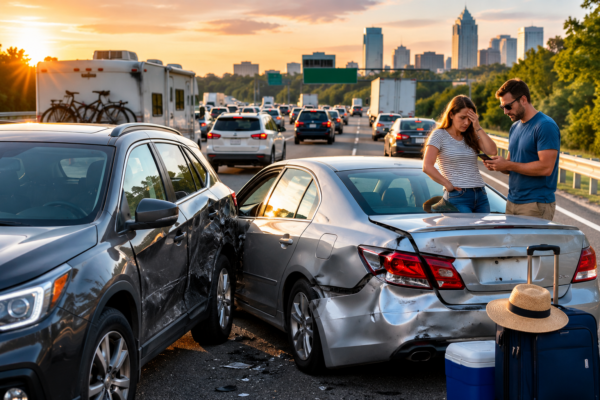
Summer brings more road trips, rental cars, recreational travel, and unfamiliar drivers to Idaho highways. Visitors may be traveling on Interstate 84, driving a borrowed or rented vehicle, following navigation directions, or returning home within days of a crash.
Those facts do not prove negligence. They can make an investigation more difficult when drivers, witnesses, medical providers, vehicle owners, rental companies, and insurers are located in several states.
An Idaho collision involving a visiting or out-of-state driver may raise questions such as:
- Which insurer should receive the first claim notice?
- Does the visiting driver’s policy cover a crash in Idaho?
- Will an out-of-state policy adjust to Idaho’s minimum liability requirements?
- Does medical payments coverage, personal injury protection, or uninsured motorist coverage apply?
- Does a rental agreement or credit card benefit provide additional protection?
- Which state’s law controls a disputed insurance term?
- Where can a lawsuit be filed if the claim does not settle?
- How can the injured person continue treatment after returning home?
The answers depend on the collision facts, policy wording, rental documents, and states connected to the claim.
Read more about Idaho claims involving visiting drivers:
https://hepworthholzer.com/2025/05/22/idaho-car-accident-claims-involving-out-of-state-drivers/






Idaho Uses a Fault-Based Car Insurance System
Idaho generally uses a fault-based system for car accident claims. A driver who causes a collision may be responsible for resulting bodily injuries and property damage, usually through liability insurance.
Idaho law generally requires minimum liability limits of:
- $25,000 for bodily injury to one person
- $50,000 for bodily injury to two or more people in one crash
- $15,000 for property damage
An out-of-state policy does not become an Idaho policy only because the crash happened in Idaho. Many policies provide coverage throughout the United States and contain provisions that may adjust coverage to the minimum limits required where a crash occurs. The result depends on the policy contract and the insurance law that applies.
A complete coverage review may include:
- The declarations page
- Coverage forms
- Endorsements
- Exclusions
- Definitions
- Permissive-use terms
- Household and resident-relative provisions
- Rental vehicle provisions
- Notice and cooperation requirements
How Comparative Responsibility Can Affect an Idaho Claim
Fault can affect whether an injured person may recover compensation and how much may be available. Under Idaho’s comparative responsibility rule, compensation may be reduced by the injured person’s percentage of responsibility.
Recovery against a party may be barred when the injured person’s responsibility is as great as or greater than that party’s responsibility. This makes reliable evidence especially valuable.
Useful fault evidence may include:
- Crash-scene photographs and video
- Vehicle damage
- Witness statements
- Police reports
- Dash-camera or body-camera footage
- Traffic or business surveillance video
- Event data recorder information
- Mobile telephone records
- Roadway measurements
- Weather and visibility information
Evidence should be preserved promptly, especially when a visitor plans to leave Idaho soon after the collision.
Which Insurance Companies Should You Notify?
A visitor injured in Idaho should usually notify the visitor’s own insurer promptly, even when another driver appears responsible. Timely notice can protect access to first-party benefits and allow the carrier to investigate.
The responsible driver’s liability insurer may also need notice. When a rental car, employer-owned vehicle, borrowed vehicle, rideshare vehicle, or family vehicle is involved, several policies may require review.
Potential sources of coverage may include:
- The responsible driver’s bodily injury and property damage liability coverage
- The vehicle owner’s insurance
- The injured person’s medical payments coverage
- Personal injury protection issued under another state’s law
- Uninsured motorist coverage
- Underinsured motorist coverage
- Collision coverage
- Rental company liability coverage
- A collision damage waiver
- Credit card rental benefits
- Employer or commercial auto coverage
- Rideshare insurance
- Umbrella or excess liability insurance
Do not assume that the first adjuster who calls represents every available policy. Each insurer has its own insured, coverage duties, policy limits, and claim procedures.
Before giving a recorded statement or signing a broad medical authorization, identify:
- The adjuster’s company
- The person or business the adjuster represents
- The claim number
- The type of coverage involved
- The information the policy requires
- Whether other insurers may have an interest in the claim
Rules of a Personal Injury Claim Choosing a Personal Injury AttorneyRelated Videos
How Home-State Benefits May Follow a Visitor Into Idaho
Some travelers live in states that require no-fault personal injury protection. Others carry optional medical payments coverage. These benefits may pay certain medical expenses after an Idaho crash regardless of who caused it, subject to the policy’s limits, exclusions, deductibles, and coordination rules.
Uninsured and underinsured motorist coverage may become important when the responsible driver has no insurance or does not have enough liability coverage to address the injuries.
Idaho auto policies generally include uninsured and underinsured motorist bodily injury coverage unless the named insured rejects the coverage as permitted by law. A visitor’s policy may follow different rules because it was issued in another state.
Request a complete certified copy of every potentially relevant policy. A declarations page alone may not show the endorsements, exclusions, definitions, notice duties, or dispute procedures that control coverage.
Learn more about uninsured and underinsured motorist claims:
https://hepworthholzer.com/boise-uninsured-and-underinsured-motorist-lawyers/
Rental Cars Can Create Several Coverage Layers
A summer traveler may be driving a rental vehicle obtained at an airport, hotel, or neighborhood location. A rental car claim can involve:
- The renter’s personal auto policy
- The rental agreement
- Optional products purchased from the rental company
- A credit card benefit
- Coverage purchased through a travel company
- An employer’s business auto policy
- The insurance of another authorized driver
- The liability coverage of the driver who caused the crash
A collision damage waiver is not the same as liability insurance. It may address damage to the rental vehicle while leaving injury claims to another policy. Credit card benefits may contain strict notice deadlines, documentation requirements, exclusions, and limits.
Report the crash to the rental company as required by the agreement. Save:
- The complete rental contract
- The vehicle condition report
- Photographs taken before and after the crash
- Rental receipts
- Towing and storage records
- Repair or damage estimates
- Communications with the rental company
- Credit card benefit documents
- Travel records that show who rented and drove the vehicle
Read the firm’s guide to rental car accident claims in Idaho:
Verdicts & Settlements
What to Do Before Leaving Idaho
Travelers often need to return home within days. Evidence can disappear much sooner than the insurance claim is resolved.
When health and safety allow, take these steps before leaving Idaho:
- Call law enforcement and obtain the report number.
- Photograph every vehicle, license plate, insurance card, roadway condition, traffic control, and visible injury.
- Record the exact crash location and each vehicle’s direction of travel.
- Collect witness names, telephone numbers, and email addresses.
- Save hotel, rental, fuel, toll, itinerary, and trip-change records.
- Seek medical evaluation and describe every symptom accurately.
- Notify the appropriate insurers and rental company.
- Avoid posting crash details, photographs, or recovery updates on social media.
- Keep damaged personal property, child seats, and relevant electronic records.
- Ask how to request body-camera, dash-camera, business, or traffic footage before it is overwritten.
- Keep receipts for added lodging, transportation, flight changes, towing, and other crash-related expenses.
A traveler should not delay urgent medical care to collect evidence. Health and safety come first.
Continue Medical Care After Returning Home
A visitor may receive emergency or urgent care in Idaho and continue treatment after returning home. Give new medical providers the Idaho emergency records, imaging results, discharge instructions, and medication list.
Tell each provider:
- When and where the crash occurred
- How the collision happened
- Which symptoms began after the crash
- Whether symptoms have changed
- What treatment has already been provided
- How the injuries affect sleep, work, mobility, travel, and daily activities
Follow recommended care and keep copies of:
- Medical records
- Bills and insurance statements
- Prescription receipts
- Therapy records
- Mileage and travel expenses
- Work restrictions
- Wage-loss documentation
- Photographs of visible injuries
- A private symptom and recovery journal
Gaps in treatment can make it harder to show how later complaints relate to the Idaho crash. A gap does not automatically defeat a claim, but insurers may ask why care was delayed or interrupted.
How the Insurance Claim Process Usually Unfolds
The insurance process often begins with claim notice and a preliminary investigation. Adjusters may collect statements, photographs, repair estimates, police records, medical information, and coverage documents.
An insurer may:
- Accept responsibility
- Dispute responsibility
- Assign part of the responsibility to the injured person
- Ask for more evidence
- Reserve a coverage decision
- Refer the claim to another carrier
- Offer an early settlement
- Dispute whether treatment or expenses relate to the crash
The next stage involves documenting losses. A bodily injury claim may include medical expenses, lost income, future care needs, pain, physical limitations, scarring, and loss of normal activities. Property claims may include repair costs, total-loss value, towing, storage, rental expenses, and damaged personal property.
Trip-related losses may also require documentation. These can include additional lodging, changed flights, replacement transportation, missed reservations, or other expenses caused by the collision. Whether an insurer must pay a specific expense depends on fault, coverage, proof, and applicable law.
A settlement demand should usually account for the injuries and future needs that can be evaluated with reasonable care. An early payment may not address treatment that has not yet been recommended or work losses that are still developing.
Signing a release generally ends the claims described in that document. Review the language, parties, claims, and scope before signing.
Idaho Filing Deadlines and Out-of-State Lawsuits
Idaho Code Section 5-219 generally provides a two-year period for personal injury actions. Exceptions may shorten, extend, or otherwise change the deadline. Claims involving a state or local government can include earlier notice requirements.
The crash location, party residences, business contacts, insurance terms, and other facts can affect where a lawsuit may be filed and which procedures apply. A visitor should not assume that the home-state deadline controls an Idaho crash claim.
Early legal review can help identify:
- The correct filing period
- Any government notice requirement
- The courts that may have jurisdiction
- The parties who should receive notice
- The evidence that should be preserved
- The insurance policies that require a claim
How an Idaho Car Accident Attorney Can Help a Visiting Driver
A local attorney can investigate the Idaho scene while an injured visitor continues treatment at home.
Legal work may include:
- Preserving video and electronic evidence
- Locating Idaho witnesses
- Obtaining law enforcement materials
- Reviewing insurance policies from several states
- Identifying rental, employer, rideshare, umbrella, or vehicle-owner coverage
- Coordinating medical records from several providers
- Documenting travel and trip-interruption expenses
- Addressing comparative responsibility arguments
- Communicating with insurers
- Evaluating settlement documents
- Preparing a lawsuit when needed
The firm represents injured people in Boise, Meridian, and nearby communities throughout Idaho.
Learn about the firm’s Boise car accident attorneys:
https://hepworthholzer.com/boise-car-accident-attorneys/
Review the Idaho personal injury guide:
https://hepworthholzer.com/2020/09/16/idaho-personal-injury-guide/
Frequently Asked Questions About Idaho Summer Car Accidents
Can I make an Idaho insurance claim after returning to my home state?
You may continue an Idaho accident claim after returning home. You should keep the insurers informed of your current address, medical providers, and contact information. You should also preserve Idaho evidence before it becomes unavailable.
Does my out-of-state auto policy cover an Idaho crash?
Many auto policies provide coverage throughout the United States, but the available protection depends on the policy language and applicable insurance law. Request the complete policy, not only the declarations page.
Which insurer pays first after a rental car crash?
There is no single answer for every rental claim. Priority may depend on the rental agreement, personal auto policy, optional rental products, credit card benefits, the driver’s status, and the coverage of the person who caused the crash.
Can I use my home-state personal injury protection after an Idaho crash?
Possibly. Personal injury protection or medical payments coverage may follow you into Idaho, subject to the policy’s territorial terms, limits, exclusions, and coordination rules.
What if the responsible driver has too little insurance?
Your underinsured motorist coverage may apply when the responsible driver’s liability limits do not fully address the covered harm. The result depends on the policy, applicable law, available limits, and required claim procedures.
How long do I have to file an Idaho car accident lawsuit?
Idaho Code Section 5-219 generally provides two years for personal injury actions, but exceptions and earlier notice requirements can apply. A lawyer should review the specific deadline for your claim.
Speak With an Idaho Car Accident Attorney
A summer crash far from home can leave you managing medical care, travel changes, vehicle damage, and calls from insurers in several states. Hepworth Holzer, LLP offers consultations at no charge and can review the Idaho collision, the insurance policies that may apply, and the next steps for your situation.
Call 208-328-6998 or request a confidential case review:
https://hepworthholzer.com/contact/
The firm serves injured people in Boise, Meridian, and communities throughout Idaho.
This article is for general informational purposes and is not legal advice. Consult an attorney about your specific situation.
