

Fall creates added risk for deer-related car accidents in Idaho because deer and elk move between seasonal ranges and are especially active around dawn, dusk, and nighttime. The Idaho Transportation Department reports an average of about 1,010 crashes involving wildlife each year on Idaho highways and interstates. A direct collision with a deer often becomes a first-party insurance issue. A separate injury claim may arise when another driver contributes to the crash by speeding, following too closely, swerving unsafely, driving while distracted, or failing to maintain control.
Hepworth Holzer, LLP helps injured drivers in Boise, Meridian, and communities across Idaho evaluate fault, insurance coverage, and the evidence that may matter after a serious wildlife-related crash.
Idaho Transportation Department wildlife information:
https://itd.idaho.gov/environmental/wildlife/





Why Deer-Related Crashes Are a Fall Concern in Idaho 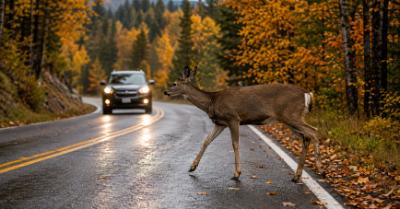
Deer and elk movement changes as colder weather approaches. Big game animals travel toward lower-elevation winter ranges and may cross Idaho roads and highways along the way. Idaho Fish and Game also advises that big game animals are especially active at dawn, dusk, and night, when drivers may have less time to see an animal near the shoulder or entering a lane.
That risk is not limited to remote highways. Drivers in Boise, Meridian, the Treasure Valley, and on routes leading toward foothills and mountain communities can encounter wildlife with little warning. The Idaho Transportation Department has documented wildlife-vehicle collision hot spots on Interstates, U.S. highways, and state highways throughout Idaho.
Idaho Fish and Game wildlife-collision guidance:
https://idfg.idaho.gov/article/watch-wildlife-highways-and-avoid-costly-collisions
How to Reduce the Risk of a Deer Collision
No driver can control when a deer enters the road, but defensive driving can reduce the chance that a sudden animal crossing becomes a serious collision.
Useful precautions include:
- Reduce speed in areas marked for wildlife crossings.
- Scan the road ahead and both shoulders, especially in low light.
- Use high beams when conditions allow and when they will not interfere with other drivers.
- Leave extra following distance so you have more time to brake if the vehicle ahead reacts to wildlife.
- If one deer crosses, watch for additional animals that may follow.
- Stay focused and avoid phone use and other distractions.
- Wear your seat belt every time you drive.
If a deer suddenly appears, brake firmly while keeping the vehicle under control. Avoid a sharp swerve when you can safely remain in your lane. Idaho Fish and Game advises that swerving can cause a driver to lose control, leave the roadway, enter another lane, or hit another object.
Brake first and keep control of the vehicle. A sudden swerve can turn a wildlife encounter into a multi-vehicle crash.






What to Do After Hitting a Deer in Idaho
Safety comes first after an Idaho deer accident. If anyone may be injured, call 911. If the vehicle can be moved safely, move it out of the travel lane and turn on the hazard lights. Do not approach an injured deer because a frightened or wounded animal may move unpredictably.
Idaho Fish and Game advises motorists to report injury collisions through a public safety dispatcher. When your condition allows, document the scene, especially when another driver was involved or fault may later be disputed.
Try to preserve:
- Photographs of vehicle damage, debris, skid marks, the roadway, and the shoulder.
- Dash camera footage or video from nearby vehicles.
- Names and contact information for witnesses.
- The responding agency and crash-report information.
- Notes about lighting, traffic, lane position, weather, and what happened immediately before impact.
- Medical records, repair estimates, towing records, and insurance communications.
For more information about steps after an Idaho motor vehicle collision, review the firm’s Idaho car accident guide:
https://hepworthholzer.com/2020/09/16/idaho-car-accident-guide/
What Happens if You Want to Salvage the Deer?
Idaho allows the salvage of certain wildlife killed in accidental vehicle collisions. Idaho Fish and Game states that a person who salvages eligible wildlife must notify the agency within 24 hours and obtain a salvage permit within 72 hours.
Do not attempt to remove an animal from an active roadway when doing so would put you or other drivers at risk. Drivers who do not want to salvage an animal can still report roadkill to help Idaho agencies identify collision locations and wildlife movement patterns.
Idaho Fish and Game roadkill salvage requirements:
https://idfg.idaho.gov/rule/roadkill/dispatch
Will Car Insurance Cover a Deer Accident?
Coverage depends on the policy you purchased and the facts of the crash. The Idaho Department of Insurance states that comprehensive coverage generally applies when a vehicle is damaged by hitting an animal. A deductible generally applies, and comprehensive coverage is optional.
Medical payments coverage may also help pay covered medical bills for you or your passengers after a covered auto accident if that coverage is part of your policy. Medical payments coverage typically applies regardless of fault.
Idaho Department of Insurance optional auto coverage information:
https://doi.idaho.gov/consumers/auto-insurance/optional-auto-coverages/
The firm’s guide to understanding your Idaho car insurance policy explains several types of coverage that may become relevant after a motor vehicle collision:
https://hepworthholzer.com/2020/11/01/understanding-your-idaho-car-insurance-policy/
Rules of a Personal Injury Claim Choosing a Personal Injury AttorneyRelated Videos
When Another Driver May Be Responsible
A deer may trigger the emergency, but another driver’s actions can still create legal responsibility. For example, a driver may rear-end you after you brake for a deer because that driver was following too closely. Another motorist may swerve into your lane without checking whether the lane is clear.
Potential negligence may include:
- Following too closely.
- Driving too fast for visibility, road, or traffic conditions.
- Distracted driving.
- Making an unsafe lane change.
- Crossing the center line.
- Losing control during an unsafe evasive maneuver.
In these situations, the legal question is not simply whether wildlife was present. The question is whether another driver failed to use reasonable care under the circumstances and whether that conduct caused or contributed to the collision and your injuries.
Verdicts & Settlements
Idaho Comparative Responsibility Can Affect a Claim
Idaho uses a comparative responsibility rule. Under Idaho Code Section 6-801, damages can be reduced in proportion to an injured person’s assigned share of responsibility. Recovery against a particular defendant can be barred when the injured person’s responsibility is as great as that defendant’s responsibility.
This rule can matter in a deer-related crash when an insurer argues that more than one driver contributed to the collision. Vehicle positions, dash camera footage, witness statements, braking marks, photographs, and electronic vehicle data may become useful when fault is disputed.
Idaho Code Section 6-801:
https://legislature.idaho.gov/statutesrules/idstat/title6/t6ch8/sect6-801/
The firm’s discussion of comparative responsibility in Idaho provides more detail:
https://hepworthholzer.com/2020/10/08/comparative-responsibility/
What Compensation May Be Available?
If another driver’s negligence caused or contributed to your injuries, a claim may seek compensation for losses that can be proven. Depending on the facts, those losses may include:
- Medical expenses.
- Lost income.
- Reduced earning capacity.
- Pain and physical limitations.
- Future medical treatment.
- Property damage.
A direct deer strike with no negligent third party is different. In that situation, the claim may primarily involve your own comprehensive coverage, medical payments coverage, health insurance, or other first-party coverage that applies under your policies.
The value and viability of a claim depend on the injuries, available insurance, evidence, medical documentation, and fault analysis.
How Long Do You Have to Bring an Idaho Injury Claim?
Idaho Code Section 5-219 generally provides a two-year filing period for many personal injury actions. Exceptions can change the deadline. Claims involving an Idaho government entity can also involve separate notice requirements that may arise much sooner than the ordinary filing deadline.
Idaho Code Section 5-219:
https://legislature.idaho.gov/statutesrules/idstat/title5/t5ch2/sect5-219/
Idaho Code Section 6-906, which addresses certain tort claims against political subdivisions:
https://legislature.idaho.gov/statutesrules/idstat/title6/t6ch9/sect6-906/
A legal deadline should not be treated as extra investigation time. Video can be erased, witnesses can become difficult to locate, and vehicles can be repaired before evidence is preserved. If another driver may have contributed to a serious deer-related crash, early review can help identify evidence that should be protected.
When an Idaho Car Accident Attorney Can Help
Legal help may be useful when a deer-related crash involves serious injuries, several vehicles, disputed fault, or questions about available insurance coverage. An attorney can review the evidence, identify potential sources of coverage, and evaluate whether another driver’s conduct created a negligence claim even though wildlife was involved.
For more information about representation after an Idaho motor vehicle crash, visit:
https://hepworthholzer.com/boise-motor-vehicle-accident-lawyers/
Frequently Asked Questions About Idaho Deer Accidents
Does Hitting a Deer Mean I Am Legally at Fault?
Not automatically. A deer can enter the roadway without warning. Fault becomes more complicated when another vehicle is involved or when evidence shows that a driver’s speed, following distance, distraction, lane movement, or evasive action contributed to the collision.
Does Idaho Require Comprehensive Insurance?
No. Comprehensive coverage is generally optional. It is the type of auto coverage that commonly applies to vehicle damage caused by hitting an animal. Your deductible, limits, exclusions, and other policy terms can affect what the insurer pays.
What if Another Driver Hits Me While I Am Braking for a Deer?
The other driver may be responsible if the evidence shows that the driver followed too closely, drove too fast for the conditions, was distracted, or otherwise failed to use reasonable care. Idaho’s comparative responsibility rules may also affect the claim if more than one person contributed to the crash.
Should I Call 911 After Hitting a Deer?
Call 911 when anyone may be injured or when the collision creates an immediate traffic or safety hazard. Idaho Fish and Game specifically advises motorists to report injury collisions to a public safety dispatcher.
Speak With an Idaho Car Accident Attorney
A deer-related collision can leave you dealing with injuries, vehicle repairs, insurance calls, and questions about whether another driver contributed to the crash. Hepworth Holzer, LLP serves injured people from offices in Boise and Meridian and represents clients in communities across Idaho.
To discuss the circumstances of an Idaho car accident, call (208) 328-6998 or visit:
https://hepworthholzer.com/contact/
This article is for informational purposes only and is not legal advice. Consult an attorney about your specific situation.

 |
 |