

A driver may be liable for a black ice car accident in Idaho when unsafe driving contributes to the collision. Ice alone does not establish fault or excuse negligence. Idaho law requires motorists to adjust their driving to account for weather, visibility, and roadway hazards. Liability depends on whether a driver or another responsible party acted negligently, not simply whether ice was present. Idaho’s comparative negligence rules can also affect compensation when multiple people share responsibility for a crash.
Does Black Ice Excuse a Driver From Liability in Idaho?
Black ice can turn an ordinary drive through Boise or Meridian into a dangerous situation within seconds. A vehicle may lose traction while approaching an intersection, crossing an overpass, or traveling through a shaded section of roadway.
When an accident happens, one of the first questions injured drivers and passengers ask is whether anyone can be held responsible.
Black ice does not automatically excuse a driver from liability. Under Idaho law, motorists must operate their vehicles with reasonable care, considering the conditions around them.
Winter collisions can leave you managing medical expenses, vehicle repairs, missed work, and difficult insurance questions.
Identifying who caused the collision requires examining how each driver responded to the conditions and whether reasonable precautions could have prevented the accident.
Even when weather plays a major role, you may have a claim if another person’s negligence contributed to your injuries.
Key point: Black ice does not decide fault. The evidence must show whether someone failed to use reasonable care.
What Makes Black Ice Dangerous on Idaho Roads?
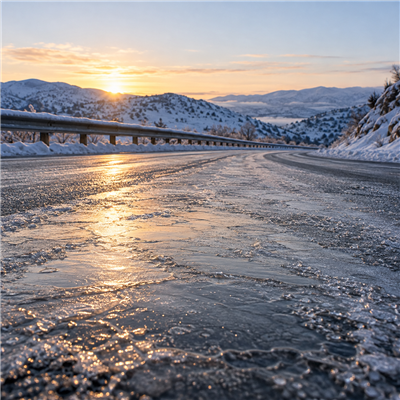
Black ice is a thin, often transparent layer of ice that forms on pavement. Because the darker roadway remains visible beneath the frozen surface, drivers may not recognize the hazard until their tires lose traction.
Black ice can develop when moisture freezes, particularly during periods when temperatures fluctuate around freezing.
In the Treasure Valley, drivers may encounter icy patches during colder months on roads in Boise, Meridian, Eagle, Nampa, and surrounding communities.
Some locations deserve particular attention:
- Bridges and overpasses that may freeze before surrounding pavement.
- Shaded roads where sunlight does not warm the surface.
- Intersections where vehicles repeatedly brake or accelerate.
- Areas where melting snow or accumulated water refreezes.
- Roads where surface conditions change unexpectedly.
A road can appear relatively dry while isolated patches remain slippery.
This makes black ice difficult to recognize, but drivers must still respond reasonably to foreseeable winter hazards.
Idaho Law Requires Drivers to Adjust Their Speed for Road Conditions
One of the central legal questions in a black ice accident is whether a driver was traveling at a safe speed.
Idaho Code § 49-654 addresses speed restrictions and requires motorists to drive at speeds that are reasonable and prudent under existing conditions.
The statute also requires reduced speeds when special hazards exist because of weather or highway conditions.
A driver can be traveling below the posted speed limit and still be driving too fast for icy conditions.
For example, imagine a motorist traveling through Boise on a cold January morning.
The posted speed limit is 35 mph, and the driver maintains that speed while approaching an intersection. The roadway looks clear, but temperatures are below freezing.
When traffic slows, the motorist brakes, slides across black ice, and strikes the vehicle ahead.
Although the driver was not exceeding the posted limit, the investigation may examine whether a lower speed and greater following distance would have prevented the collision.
Speed alone does not establish negligence. Investigators must consider visibility, road conditions, traffic, vehicle handling, and the driver’s opportunity to recognize potential hazards.
The key question is whether the driver exercised reasonable care under the circumstances.
Who Can Be Held Responsible for a Black Ice Crash?
Several parties may potentially share responsibility for an Idaho winter driving accident.
A Driver Who Failed to Adjust to Icy Conditions
Driver negligence is often the primary issue in a black ice collision.
A motorist may be responsible when evidence shows that unsafe driving contributed to the crash.
Examples include:
- Following another vehicle too closely.
- Driving too fast for freezing conditions.
- Accelerating or braking aggressively.
- Failing to maintain an appropriate lookout.
- Driving with unsafe or excessively worn tires.
- Ignoring warnings about hazardous road conditions.
Consider a rear-end collision near an intersection in Meridian.
A driver approaches stopped traffic without leaving sufficient distance to brake safely. The vehicle encounters black ice, slides forward, and strikes another car.
The driver may argue that the ice made the collision unavoidable.
An investigation would examine whether reasonable precautions could have reduced the likelihood of the crash.
People injured under these circumstances can learn more about pursuing compensation through the firm’s Idaho car accident guide.
Another Motorist Who Created an Unexpected Hazard
Sometimes a black ice collision involves more than one negligent driver.
A motorist might suddenly change lanes, make an unsafe turn, or stop without adequate justification.
Another driver may then brake or swerve onto an icy section of roadway.
In this situation, investigators must examine the actions of everyone involved.
The driver who lost control is not necessarily the only person responsible.
Idaho negligence law permits consideration of multiple contributing causes when determining liability.
A Government Entity Responsible for Road Maintenance
A city, county, or state agency may have responsibilities concerning public road maintenance.
Still, the presence of ice on a public roadway does not automatically establish government negligence.
Government liability claims often involve questions concerning maintenance duties, notice of hazardous conditions, reasonable response times, available resources, and statutory immunity.
Idaho’s Tort Claims Act also imposes requirements that differ from ordinary personal injury lawsuits.
For example, Idaho Code § 6-906 generally requires written notice of a qualifying tort claim against a political subdivision within 180 days.
A claim involving the state requires examination of the applicable notice provisions and other statutory requirements.
Claims involving snow and ice removal may also face significant immunity defenses.
An attorney must evaluate the responsible agency, the specific conduct involved, and whether Idaho law permits the claim.
A Vehicle Owner or Maintenance Provider
Certain crashes involve mechanical problems that contribute to a driver’s inability to maintain control.
Defective brakes, unsafe tires, or other vehicle problems may warrant further investigation.
Liability may involve a maintenance provider, manufacturer, or another party when evidence establishes a legally recognized duty, a breach or defect, and a connection to the accident.
These situations require more than showing that the vehicle lost traction.
How Does Idaho’s Comparative Negligence Law Affect Compensation?
Idaho follows a modified comparative negligence system under Idaho Code § 6-801.
This rule allows an injured person to potentially recover damages when that person’s negligence is not as great as the negligence attributed to the person or persons against whom recovery is sought, subject to the applicable allocation rules.
A person’s own percentage of responsibility reduces the damages recoverable.
For example, imagine a black ice accident where the total proven damages equal $100,000.
Investigators determine that one driver failed to maintain a safe following distance, while the injured driver was also traveling too fast for the conditions.
If the injured person is assigned 20% of the fault, a $100,000 damages award would generally be reduced to $80,000.
If the injured person’s share of negligence reaches the statutory bar, recovery may be unavailable.
The precise comparison can be more complicated when several defendants are involved.
For a closer explanation, review the firm’s article about comparative responsibility in Idaho injury cases.
What Evidence Helps Establish Fault After a Black Ice Accident?
A successful injury claim usually depends on evidence showing how the crash occurred and whether negligence contributed.
Because ice can melt shortly after a collision, preserving available evidence may be particularly valuable.
Relevant evidence may include:
- Photographs of the roadway, vehicles, and surrounding conditions.
- Police reports and statements from witnesses.
- Weather observations from the time and location of the collision.
- Dashcam footage or nearby surveillance recordings.
- Vehicle damage patterns and electronic crash data.
- Tire condition, maintenance records, and inspection findings.
- Road treatment records and documented hazard reports, when relevant.
An accident reconstruction specialist may help explain vehicle movement, braking, traction, and the sequence of impacts.
The purpose is not simply to prove that black ice existed.
The evidence must connect the negligent conduct to the collision and resulting injuries.
That distinction can become central when an insurance company argues that weather was the sole cause.
Can You Recover Compensation if Black Ice Caused Your Injuries?
An injured person may be entitled to compensation when another party’s negligence caused or contributed to the crash.
Available damages depend on the injuries, documented losses, applicable insurance coverage, and Idaho law.
Potential compensation may include medical expenses, future treatment costs, lost income, reduced earning capacity, property damage, and physical pain and suffering.
A serious collision can also affect daily activities, personal relationships, and long-term independence.
Insurance companies evaluate these losses through medical records, employment information, witness statements, and other documentation.
Some claims require evidence from medical or financial experts.
An injured person should not assume that the first settlement offer reflects the full value of a claim.
The firm’s Idaho personal injury guide explains other considerations that may affect compensation.
What if the Insurance Company Blames the Weather?
An insurer may deny responsibility by asserting that the accident resulted from an unavoidable weather event.
Black ice can sometimes cause a collision despite reasonable driving precautions. In those circumstances, negligence may not be established.
Yet the existence of an icy surface does not answer whether a driver acted reasonably.
An investigation should consider whether the motorist had enough warning to reduce speed, increase following distance, or take other reasonable precautions.
Insurance adjusters may also examine whether the injured person contributed to the collision.
Before accepting a settlement or signing a release, it is sensible to understand which losses the agreement covers.
The firm’s explanation of car accident insurance and compensation provides further information about the claims process.
What Should You Do After a Black Ice Accident in Idaho?
The steps taken after a winter collision can protect your health and help preserve evidence.
First, move to a safe location when possible, avoiding additional exposure to passing traffic. Call emergency services when someone is injured or immediate assistance is necessary.
Seek medical attention promptly. Some injuries become more apparent after the initial shock of an accident subsides.
If conditions permit, photograph the vehicles and roadway before the scene changes. Obtain the other drivers’ contact and insurance information.
Report the collision when required by Idaho law and cooperate with responding officers.
Preserve medical records, repair estimates, insurance communications, and documentation of missed work.
Avoid speculating about fault or accepting blame before the circumstances have been investigated.
If injuries are involved, consider discussing the situation with an Idaho personal injury attorney before resolving the insurance claim.
You can also review the firm’s car accident checklist for further practical guidance.
How Long Do You Have to File an Idaho Black Ice Accident Claim?
Under Idaho Code § 5-219(4), the general statute of limitations for personal injury actions is two years.
The deadline ordinarily begins when the claim accrues, often on the date of the collision, although exceptions and special rules may apply.
Claims involving government entities can have substantially shorter notice deadlines.
The time limits for property damage and other types of claims may differ.
Missing a required deadline can affect the ability to pursue compensation.
For this reason, injured people should seek individualized legal advice promptly rather than assuming every claim has the same filing period.
Speak With an Idaho Car Accident Attorney About Your Winter Collision
A black ice crash can raise difficult questions about driver behavior, road conditions, insurance coverage, and shared fault.
Hepworth Holzer, LLP helps injured people in Boise, Meridian, and throughout Idaho understand their rights after serious vehicle collisions. Our attorneys can examine available evidence, assess potential liability, address insurance disputes, and explain the options for pursuing compensation.
If you were injured in a winter driving accident, contact Hepworth Holzer, LLP to schedule a consultation and discuss your circumstances.
This article provides general information, not legal advice. Consult an attorney about your specific situation.

 |
 |