

Yes, headlight problems can affect who is responsible for a nighttime car accident in Idaho. State law requires drivers to use appropriate vehicle lighting between sunset and sunrise, and defective or improperly used headlights may contribute to a collision. Idaho Code § 49-903 establishes lighting requirements, while Idaho Code § 6-801 addresses how shared responsibility can affect compensation. Determining fault requires examining visibility, driver behavior, vehicle condition, and evidence from the crash scene.
How Can Headlight Problems Affect Fault in an Idaho Car Accident?
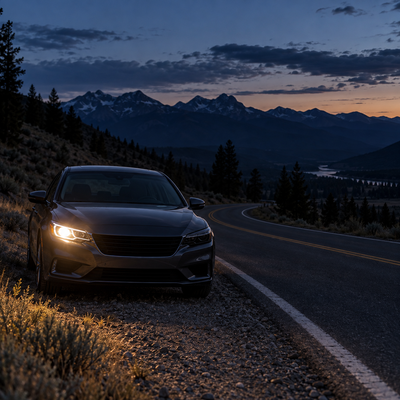
Headlights serve two purposes: helping drivers see the road and making vehicles visible to other motorists. When headlights are broken, improperly adjusted, or switched off, drivers may have difficulty recognizing hazards or identifying approaching vehicles.
In nighttime collisions, these problems can become central to determining negligence.
For example, imagine a driver traveling along a poorly illuminated road outside Boise. Another vehicle approaches with one nonfunctioning headlight. The first driver mistakes the approaching vehicle for a motorcycle and misjudges its position.
If a collision occurs, investigators may examine whether the defective headlight contributed to the driver’s mistaken perception.
A lighting violation does not automatically establish responsibility for an accident. The injured person generally must demonstrate that the other driver’s negligence contributed to the collision and resulting injuries.
An experienced Idaho car accident lawyer can evaluate how lighting conditions, visibility, and driver decisions affected the crash.
What Does Idaho Law Require Regarding Headlights?
Idaho establishes specific requirements for vehicle lighting.
Under Idaho Code § 49-903, vehicles traveling on highways must display the required lights:
- Between sunset and sunrise.
- Whenever available light is insufficient to make people and vehicles clearly visible from 500 feet ahead.
These requirements apply even when a driver believes that ambient lighting provides enough visibility during nighttime hours.
Idaho also regulates headlight equipment, including proper illumination, positioning, and high-beam use.
Drivers should understand that complying with lighting laws involves more than simply switching on their headlights. Their vehicles must have properly functioning equipment, and they must operate that equipment appropriately.
A driver who knowingly operates a vehicle with defective headlights may create a foreseeable safety risk.
The legal significance of that defect depends on the circumstances. Investigators must consider whether the problem existed before the collision, whether the driver knew or reasonably should have discovered it, and whether it contributed to the accident.
Common Headlight Problems That Can Contribute to Nighttime Crashes
Not every headlight-related accident involves a vehicle operating completely without lights.
Several lighting problems can affect nighttime visibility.
Burned-Out or Malfunctioning Headlights
A vehicle with one working headlight may be harder to identify or judge from a distance.
Other motorists might misinterpret its width, location, or direction of travel.
When both headlights fail, the risks can increase substantially, particularly on roads without continuous street lighting.
Improperly Adjusted Headlights
Headlights aimed too high can interfere with the vision of approaching drivers.
Headlights aimed too low may not adequately illuminate the roadway ahead.
A driver who cannot see an obstruction until reaching it may have less time to react, especially when traveling at higher speeds.
Improper High-Beam Use
High beams can improve visibility on dark roads, but their improper use may temporarily impair another driver’s vision.
Idaho Code § 49-923 addresses when drivers must use a lower headlight beam while approaching or following other vehicles.
An accident investigation may examine whether a driver failed to dim high beams appropriately and whether glare contributed to the collision.
Dirty, Damaged, or Obstructed Headlights
Clouded lenses, damaged assemblies, and accumulated road debris can reduce effective illumination.
A vehicle may technically have operating headlights while still providing inadequate nighttime visibility.
These conditions can become relevant when evaluating vehicle maintenance and driver negligence.
How Idaho Comparative Negligence Applies to Headlight-Related Accidents
Idaho follows a modified comparative negligence system.
Under Idaho Code § 6-801, an injured person’s responsibility can reduce the compensation available in a negligence claim. Recovery is generally barred when the injured person’s responsibility is as great as or greater than the responsibility of the person against whom recovery is sought.
This means multiple drivers may share responsibility for the same nighttime collision.
Consider a hypothetical accident involving two vehicles on a Boise-area roadway.
One driver approaches an intersection without functioning headlights. Another driver turns left without adequately checking for approaching traffic.
An investigation determines that both drivers contributed to the collision.
Suppose the turning driver is assigned 30% responsibility and the driver without headlights is assigned 70%.
If the turning driver proves $100,000 in damages, the 30% allocation of responsibility could reduce the recoverable amount to $70,000, assuming the applicable comparative responsibility requirements are satisfied.
This is an illustration, not an actual case result.
Fault allocations depend on the evidence and applicable law. Insurance companies may disagree about those allocations.
For more information, read the Idaho comparative responsibility explanation:
https://hepworthholzer.com/2020/10/08/comparative-responsibility/
What Evidence Can Establish That Headlights Contributed to a Crash?
One of the greatest challenges in nighttime accident cases is reconstructing what each driver could reasonably see before the collision.
The condition of the headlights after an accident does not necessarily establish their condition beforehand. Impact damage can destroy otherwise functional lighting equipment.
Investigators may examine several categories of evidence:
- Police reports documenting lighting conditions and driver statements.
- Photographs showing headlight damage, road conditions, and the accident scene.
- Surveillance footage or dashcam recordings capturing vehicles before impact.
- Witness statements describing whether headlights were illuminated.
- Vehicle inspections identifying burned-out bulbs, wiring failures, or other defects.
- Available electronic vehicle data and maintenance records.
- Accident reconstruction findings addressing visibility, speed, and reaction time.
Preserve evidence promptly. A damaged headlight after impact does not prove that the light was defective before the crash.
The timing of evidence collection matters.
Vehicles are frequently repaired, dismantled, or transferred after accidents. Physical evidence may become unavailable if nobody takes appropriate preservation measures.
An attorney may arrange vehicle inspections, request relevant recordings, and consult qualified reconstruction professionals when necessary.
The objective is to determine what occurred rather than relying entirely on conflicting recollections.
Can a Driver Without Headlights Blame Another Motorist?
Yes. A driver whose headlights were not operating may still argue that another motorist contributed to the crash.
For example, another driver might have been speeding, distracted, impaired, or violating a traffic-control signal.
Investigators must evaluate all potentially negligent conduct and its relationship to the collision.
The fact that one driver violated a lighting requirement does not excuse unrelated negligent conduct by another driver.
Likewise, an insurance company should not automatically assign fault to an injured motorist simply because the other vehicle was difficult to see.
In some cases, the central question becomes whether a reasonably attentive driver could have avoided the collision under the existing conditions.
A thorough evaluation considers vehicle speed, illumination, sight distance, road design, and available reaction time.
How Insurance Companies Evaluate Nighttime Headlight Accident Claims
Insurance adjusters often investigate nighttime accidents by reviewing photographs, statements, vehicle damage, and police reports.
When headlights are disputed, an insurer may argue that the injured driver could have prevented the collision through greater attention or a lower speed.
Another insurer might argue that defective lights made its insured vehicle unusually difficult to detect.
These competing explanations can influence settlement negotiations.
For injured motorists, the Idaho car insurance guide explains coverage and the claims process:
https://hepworthholzer.com/2020/11/01/understanding-your-idaho-car-insurance-policy/
Insurance coverage and legal responsibility are separate questions.
A driver may be legally responsible for an accident while insurance policy limits affect the amount an insurer will pay.
If a claim involves an uninsured or underinsured motorist, additional coverage questions may arise.
Before accepting a settlement, injured people should understand the nature of their injuries, anticipated medical expenses, potential future losses, and any disputed liability issues.
What Compensation May Be Available After a Nighttime Collision?
When another party’s negligence causes injuries, Idaho law may permit recovery of economic and noneconomic damages.
Depending on the circumstances, compensation may include:
- Emergency medical treatment, hospitalization, and rehabilitation expenses.
- Future medical care related to the accident.
- Lost income and reduced earning capacity.
- Property damage.
- Physical pain and suffering.
- Emotional distress and loss of enjoyment of life.
The amount recoverable depends on the evidence, the applicable legal rules, and any allocation of comparative responsibility.
Medical records, employment documentation, expert assessments, and other evidence may help establish the extent of the losses.
The Idaho personal injury guide explains negligence, damages, and the claims process:
https://hepworthholzer.com/2020/09/16/idaho-personal-injury-guide/
What Should You Do After a Nighttime Crash Involving Headlight Problems?
Taking practical steps after an accident may protect your health and preserve information relevant to the claim.
- First, seek medical attention for possible injuries. Some symptoms become more noticeable after the initial shock of a collision subsides.
- When safe and feasible, take photographs of the vehicles, headlights, roadway, and surrounding lighting.
- Identify witnesses who observed the collision or saw the vehicles immediately beforehand.
- Report the crash to the appropriate authorities and provide accurate information about what you observed.
- Avoid guessing about the other vehicle’s lighting condition if you are uncertain.
- Preserve photographs, repair estimates, medical documentation, and correspondence from insurers.
- If headlight defects are disputed, consider obtaining legal guidance before potentially relevant vehicle components are repaired or discarded.
Idaho Code § 5-219 generally provides a two-year deadline for filing personal injury lawsuits, subject to exceptions and claim-specific rules.
Prompt investigation can help preserve evidence well before that deadline approaches.
Frequently Asked Questions About Idaho Nighttime Crashes
Is driving with one broken headlight illegal in Idaho?
Idaho law requires appropriate vehicle lighting and compliant headlight equipment. Driving at night with a defective headlight may violate applicable requirements. Whether a particular defect establishes a violation depends on the vehicle, its required equipment, and the facts involved.
Can I recover compensation if my headlights were not working?
Potentially. Idaho comparative negligence law may allow recovery when your assigned responsibility is less than the responsibility of the person against whom you seek damages. Your share of fault may reduce compensation.
Can high beams make another driver responsible for an accident?
Improper high-beam use can contribute to negligence when glare interferes with another driver’s ability to see and contributes to a collision. The evidence must establish the relationship between the lighting conduct and the accident.
Who determines whether headlights caused a nighttime crash?
Police officers may document their findings, but insurers, attorneys, reconstruction specialists, and, when litigation requires it, judges or juries may evaluate the evidence and determine legal responsibility.
Speak With an Idaho Car Accident Attorney About Your Nighttime Crash
Headlight problems can complicate an accident claim, particularly when drivers disagree about visibility or responsibility.
Hepworth Holzer, LLP helps injured people in Boise, Meridian, and other Idaho communities investigate car accidents, evaluate insurance claims, and understand their legal options.
If you were injured in a nighttime collision involving broken headlights, improper high beams, or disputed fault, contact Hepworth Holzer, LLP to request a consultation.
A careful review of the available evidence can help you make informed decisions about your next steps.
This article is for informational purposes only and is not legal advice. Consult an attorney about your specific situation.
