

Back-to-school car accident risks increase in Boise during August because familiar summer routes change quickly. School buses return to neighborhood streets, families learn new drop-off routines, teen drivers travel to classes and activities, and more children walk or bicycle near intersections.
You can reduce the risk by leaving earlier, slowing before school areas, increasing your following distance, and expecting sudden stops near buses, crosswalks, and campus entrances. If a crash happens, early medical care, photographs, witness information, video preservation, and careful insurance communication can protect your family and the evidence connected to a claim.
Hepworth Holzer, LLP helps Idaho families understand the insurance, evidence, and liability questions that can follow a school-related collision.






Why August Changes Boise Traffic Before the First Bell 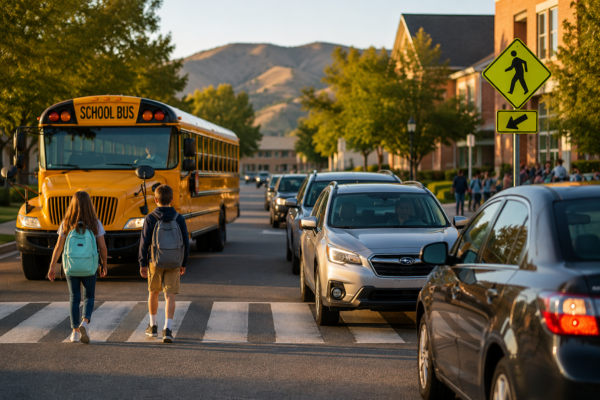
August does not need to have the highest crash count of the year to create added risk. The concern is the rapid return of traffic patterns that many drivers have not seen for several months.
A route that felt predictable in July may include a bus stopping every few blocks, a line of vehicles waiting to enter a school parking lot, or a crossing guard directing children across the street. Orientations, sports practices, and supply drop-offs can begin before regular classes, so traffic may change before the first day of school.
Boise families are also adjusting work schedules, childcare plans, and new commutes. A rushed parent may follow too closely. A driver may brake suddenly behind a pickup line. A student driver may be navigating heavy traffic without much experience. These pressures can combine in areas where children, bicyclists, and pedestrians have little protection.
School traffic can change before classes officially begin. Treat every August school route as an unfamiliar route.
Common Back-to-School Car Accident Patterns
Many August crashes involve familiar driving mistakes in a more crowded and less predictable environment. Common examples include:
- Rear-end collisions behind school buses or pickup lines
- Left-turn crashes near school entrances and busy intersections
- Sideswipe accidents when drivers merge around waiting vehicles
- Parking lot collisions caused by backing or blocked sight lines
- Pedestrian accidents at crosswalks, bus stops, and neighborhood corners
- Bicycle accidents involving students riding beside parked cars
- Crashes involving inexperienced or distracted teen drivers
- Collisions caused by illegal or unsafe passing of a school bus
A low-speed crash can still cause a concussion, neck injury, back injury, fracture, or aggravation of an existing condition. Children may have difficulty describing pain or explaining how they feel.
Seek prompt medical evaluation, especially when a child develops headaches, dizziness, confusion, vomiting, unusual fatigue, sleep changes, balance problems, or a behavior change after a collision.





School Buses Create Sudden Stops and Limited Visibility
School buses are large, make frequent stops, and can block your view of children near the roadway. If you follow too closely, you may not have enough time to stop when a bus activates its warning lights. A driver approaching from the opposite direction may also misunderstand when stopping is required.
Idaho Code Section 49-1422 generally requires drivers meeting or overtaking a stopped school bus to stop when the bus has activated its required visual signals. Oncoming traffic on a highway with more than three lanes is not required to stop under that section. Drivers should still reduce speed and watch carefully for children near the road.
Create space early rather than reacting at the last second. Avoid passing a bus unless the law clearly permits it and you can confirm that no child is entering the roadway.
Parents should teach children never to cross immediately in front of or behind a bus without confirming that the bus driver sees them. A child can disappear from another motorist’s view within a bus blind spot.
Drop-Off and Pickup Areas Reward Patience
School entrances can become congested even when each vehicle is moving slowly. Drivers may double-park, block a driveway, stop in an active lane, make an unexpected U-turn, or allow a child to exit on the traffic side of the vehicle.
A safer routine includes:
- Following the school’s designated traffic pattern
- Keeping crosswalks, sidewalks, and bicycle lanes clear
- Avoiding phone use while the vehicle is moving or waiting in line
- Having backpacks, lunches, and school items ready before arrival
- Letting children exit only in the designated area
- Avoiding hurried passes around stopped or waiting vehicles
- Checking mirrors and blind spots before backing or changing lanes
Idaho’s distracted-driving law restricts holding or using a mobile electronic device while operating a motor vehicle, subject to stated exceptions. A brief glance at a message can prevent you from seeing a child step from between parked vehicles.
Teen Drivers Face a Steeper Learning Curve
August often brings newly licensed drivers onto routes that include school traffic, buses, cyclists, and congested parking lots. A teen may understand basic traffic rules but have limited experience judging closing distance, recognizing a developing hazard, or staying calm when another driver acts aggressively.
Parents can help by practicing the route, identifying congestion points, and setting clear rules about passengers, phones, departure times, and seat belts. Leaving earlier can reduce pressure to speed or make a risky maneuver.
You can also ask your teen to describe the route before driving it alone. Discuss where buses stop, where traffic tends to back up, and where pedestrians may enter the street unexpectedly.
When a teen causes a crash, insurance coverage may involve a parent or household policy. The vehicle owner, driver, employer, transportation contractor, or another motorist may also share responsibility, depending on the facts.
Children Walking and Bicycling Need More Space
Children can be difficult to see beside large vehicles, landscaping, utility boxes, or parked cars. They may misjudge speed, cross outside a marked area, or change direction without warning.
Slow before crosswalks, scan both sides of the street, and avoid passing another vehicle that has stopped near a pedestrian. Leave extra space when driving beside a young bicyclist, especially near parked cars where a door could open.
Families affected by a vehicle-pedestrian collision can review the firm’s guidance on what to do immediately after a pedestrian accident in Idaho.
Parents of young bicyclists may also benefit from reviewing these Idaho bicycle accident steps.
What Should You Do After a Boise Back-to-School Crash?
The moments after a collision can feel confusing, especially when a child is involved. Focus first on safety and medical needs.
- Call 911 when anyone may be injured or the scene creates a traffic hazard.
- Move to a safe location when it is possible and lawful to do so.
- Photograph the vehicles, road, traffic signs, crosswalks, bus lights, debris, and visible injuries.
- Obtain names and contact information from witnesses, crossing guards, school staff, and other drivers.
- Ask whether nearby schools, buses, homes, or businesses may have video.
- Exchange insurance and vehicle information without arguing about fault.
- Seek medical care and follow treatment instructions.
- Notify the appropriate insurer, but avoid guessing about injuries or accepting blame.
- Keep receipts, medical records, school absence notes, repair estimates, and wage-loss information.
- Write down what happened while the details are still fresh.
Video can disappear quickly. Buses, businesses, residences, and traffic systems may retain footage for limited periods, so early requests matter.
Do not post crash details, photographs, or medical updates on social media while an insurance claim is being reviewed. An insurer may use those posts to challenge the severity of an injury or dispute your description of the collision.
Rules of a Personal Injury Claim Choosing a Personal Injury AttorneyRelated Videos
How Can Idaho Fault Rules Affect a Claim?
A back-to-school crash may involve more than one careless act. One driver may be following too closely while another stops in an active lane. A motorist may fail to yield while a pedestrian crosses outside the expected area.
Idaho applies comparative responsibility. Compensation can be reduced according to an injured person’s share of fault. Recovery can be barred when that share is as great as the responsibility of the person from whom recovery is sought.
Insurance companies may use this rule to shift blame. Photographs, video, witness accounts, vehicle data, medical records, and a detailed timeline can help test those arguments.
The firm’s explanation of comparative responsibility in Idaho provides more background.
Potential damages may include medical expenses, lost income, property damage, pain, physical limitations, future treatment, and other losses supported by the evidence. Claim value depends on the injuries, available coverage, fault evidence, medical history, and long-term effects.
Verdicts & Settlements
When Can a Boise Car Accident Attorney Help?
A lawyer can investigate the scene, preserve video, identify witnesses, review insurance policies, communicate with adjusters, collect medical and wage documentation, and evaluate whether several parties share responsibility.
Legal counsel can also help your family understand whether an early settlement accounts for future treatment, continuing limitations, missed school, or ongoing transportation needs.
The firm’s Boise car accident attorneys focus on evidence gathering, insurance analysis, and case preparation.
The Idaho car accident guide explains the broader claim process for injured drivers and families.
Idaho Code Section 5-219 generally provides a two-year filing period for many personal injury actions. Exceptions can apply. Claims involving a public entity may require earlier notice. Evidence may disappear long before a filing deadline, so prompt review can protect practical options.
Talk With a Boise Car Accident Attorney
A back-to-school collision can affect medical care, work, transportation, and a child’s return to class at the same time. Hepworth Holzer, LLP represents injured people and families in Boise, Meridian, and communities throughout Idaho.
Call 208-328-6998 or visit the firm’s contact page to discuss the collision, available insurance, and possible next steps.
This article is for informational purposes only and is not legal advice. Consult an attorney about your specific situation.

 |
 |