An Idaho school zone car accident can involve more than one responsible party. A speeding, distracted, or inattentive driver is often the main focus. A vehicle owner, employer, school bus contractor, school district, municipality, maintenance provider, or another party may also require investigation.
If you or your child was injured near a school in Boise, Meridian, or another Idaho community, liability will depend on who owed a duty of care, what unsafe conduct occurred, and whether that conduct caused the injuries. A traffic citation can support your claim, but it does not decide every civil liability issue. School zone cases often require a close review of crosswalk rules, school bus signals, driver conduct, video footage, insurance policies, and government notice deadlines.
Hepworth Holzer, LLP helps injured people and families investigate how a collision happened, preserve evidence, identify responsible parties, and determine which insurance policies may apply.
School zone crash claims often turn on evidence that can disappear quickly. Early action can help preserve video, vehicle data, witness information, and public records.




Why School Zone Car Accidents Can Involve Several Parties 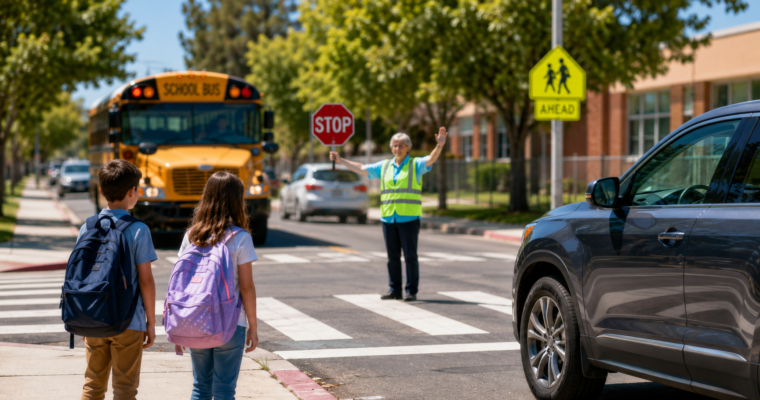
School arrival and dismissal periods place cars, buses, bicycles, pedestrians, crossing guards, and young drivers within a confined area. A child can be difficult to see behind a parked sport utility vehicle. A parent can stop suddenly in a pickup lane. A driver can look toward oncoming traffic while turning across a crosswalk.
Several acts or conditions can combine to cause one school zone car accident. Your investigation should address questions such as:
- Who controlled each vehicle?
- Was anyone speeding, distracted, impaired, or following too closely?
- Did a driver fail to yield, stop, signal, or keep a proper lookout?
- Was a school bus loading or unloading students?
- Did poor vehicle maintenance contribute to the crash?
- Was the driver performing work for an employer or contractor?
- Did a roadway, sign, signal, crosswalk, or pickup plan contribute?
- Which insurance policies and legal deadlines apply?
A collision near a school does not automatically make the school responsible. Evidence must connect each potential defendant to conduct or a condition that caused or contributed to the injuries.






The Negligent Driver Is Often Primarily Liable
Drivers must use reasonable care under the circumstances. Near a school, reasonable care can require a driver to slow below the posted limit when children are entering crosswalks, vehicles are double-parked, or visibility is limited.
A driver can be liable for conduct such as:
- Speeding through an active school zone
- Looking at a phone or another distraction
- Failing to yield at a crosswalk
- Passing a vehicle stopped for a pedestrian
- Backing without checking for children
- Turning across a crosswalk without looking
- Following too closely in a pickup line
- Passing a stopped school bus unlawfully
Idaho Code Section 49-1422 generally requires a driver approaching a stopped school bus from either direction to stop when the bus is using the required visual signals. The driver must remain stopped until the bus resumes motion or the visual signals stop. The stop requirement does not apply to an oncoming driver on a highway with more than three lanes. A violation can lead to a traffic case and can also support a civil injury claim when the violation caused the crash.
When an Employer or Vehicle Owner May Share Responsibility
The person behind the wheel is not always the only party whose conduct or insurance matters. A driver may have been making a delivery, transporting children, performing maintenance work, or completing another job duty when the collision occurred.
An employer can be responsible for an employee’s negligence when the employee was acting within the scope of employment. Separate claims can arise from unsafe hiring, poor supervision, inadequate training, or failure to maintain a company vehicle.
A vehicle owner may require investigation when the owner knowingly allowed an unsafe or unqualified person to drive or failed to correct a known mechanical problem. The owner’s insurance policy can also provide coverage even when ownership alone does not create legal liability. Registration records, employment documents, maintenance files, driving records, and complete insurance policies can help clarify responsibility and coverage.
School Bus Company and Contractor Liability
A school bus accident can involve the bus driver, a private transportation contractor, a school district, a maintenance company, or another motorist. Your investigation may examine whether the bus driver activated the required warning signals, stopped in a safe location, supervised loading and unloading, followed the assigned route, and responded properly to surrounding traffic.
Evidence can include:
- Interior and exterior bus video
- Stop-arm camera footage
- Driver qualification and training records
- Inspection and maintenance files
- Route information and dispatch communications
- GPS or electronic vehicle data
- Statements from students, parents, and crossing guards
Bus video and electronic records can be overwritten under routine retention practices. A prompt preservation letter can direct a company, contractor, or public entity to retain specific records while your claim is investigated.
Can a School District or Government Agency Be Liable?
A school district, city, county, or state agency is not responsible merely because a collision occurred on public property. A valid claim generally requires evidence that connects the public entity or one of its employees to a legally actionable act, omission, or condition.
Possible examples include negligent operation of a public vehicle, a dangerous traffic-control condition, or another hazard within the entity’s legal responsibility. Government claims can involve immunity defenses, separate procedures, and short notice periods.
Idaho Code Section 6-906 generally requires a claim against a political subdivision or its employee to be presented within 180 days after the claim arose or reasonably should have been disc
overed, whichever is later. Separate statutes and exceptions can affect the deadline. Idaho Code Section 6-906A also includes timing provisions for claims involving minors.
You should not assume that the ordinary personal injury filing period protects a claim against a school district, city, county, highway district, or another public entity. A lawyer can review which entity controlled the vehicle, roadway, signal, sign, crosswalk, or school transportation program.
Verdicts & Settlements
How Idaho Comparative Responsibility Can Affect Compensation
Idaho uses a modified comparative responsibility rule. Under Idaho Code Section 6-801, your damages can be reduced according to the percentage of responsibility assigned to you. Recovery against a particular defendant can be barred when your responsibility is as great as that defendant’s responsibility.
An insurance company may argue that a pedestrian crossed outside the expected area, a bicyclist entered traffic suddenly, a parent stopped unexpectedly, or another driver contributed to the collision. When a child is involved, the child’s age, development, conduct, and ability to appreciate risk can require a separate legal analysis.
Read Hepworth Holzer, LLP’s guide to Idaho comparative responsibility:
https://hepworthholzer.com/2020/10/08/comparative-responsibility/
What Evidence Can Prove School Zone Accident Liability?
School zone car accident claims often depend on evidence that disappears quickly. A police report is a useful starting point, but it may not identify every responsible party, witness, video source, or insurance policy.
Evidence can include:
- Police reports and citations
- Photographs of vehicles, crosswalks, signs, and sightlines
- School, business, residential, bus, or traffic-camera footage
- Dashcam recordings
- Witness statements
- Mobile phone records
- Vehicle event data
- Driver qualification and employment records
- Maintenance and inspection documents
- Medical records and school absence records
- Accident reconstruction or traffic-engineering analysis
Hepworth Holzer, LLP’s Idaho accident report and claim guide explains how investigation, medical documentation, insurance communication, and claim evaluation fit together:
https://hepworthholzer.com/boise-car-accident-attorneys/idaho-accident-report-and-claim-guide/
The firm’s page about what to do after a car accident provides additional guidance:
https://hepworthholzer.com/after-a-car-accident/
What Compensation May Be Available After a School Zone Crash?
Compensation depends on the injuries, evidence, insurance coverage, and responsible parties. Recoverable losses can include:
- Emergency treatment and hospital care
- Surgery, rehabilitation, and therapy
- Future medical care or support needs
- Lost income and reduced earning capacity
- Pain, disability, scarring, and loss of normal activities
- Property damage and transportation expenses
A serious childhood injury can affect education, development, mobility, independence, and future employment. A settlement should account for more than current medical bills when doctors are still evaluating long-term needs.
Coverage can come from several sources. Depending on the facts, those sources can include the negligent driver’s liability policy, a commercial vehicle policy, an employer’s coverage, a school bus contractor’s policy, or uninsured or underinsured motorist coverage.
What Should You Do After an Idaho School Zone Car Accident?
Call 911 and obtain medical care. Children can have difficulty describing headaches, dizziness, confusion, pain, or emotional changes. Follow-up care can identify injuries that were not obvious at the scene.
When conditions permit:
- Photograph the vehicles, roadway, crosswalks, bus signals, signs, lighting, weather, and nearby cameras.
- Collect witness names and contact information.
- Preserve damaged clothing, bicycles, car seats, helmets, and electronic devices.
- Keep medical bills, school communications, work-loss records, transportation receipts, and insurance correspondence.
- Write down what you remember before details fade.
Notify the appropriate insurer, but do not guess about fault. Review requests for recorded statements, broad medical authorizations, or releases before you agree to them.
Idaho Code Section 5-219 generally provides a two-year filing period for many personal injury actions. Exceptions can apply, and government notice deadlines can expire much sooner. Video and electronic evidence can disappear within days or weeks.
How an Idaho Car Accident Attorney Can Help
An Idaho car accident attorney can identify potentially responsible parties, send preservation requests, obtain video, interview witnesses, inspect vehicles, review employment and maintenance records, analyze insurance policies, document damages, and respond to shared-responsibility arguments.
Legal counsel can also investigate whether the driver was working, whether a transportation contractor maintained the bus, whether a public entity controlled a traffic signal or roadway condition, and whether additional insurance applies.
The Boise car accident attorneys at Hepworth Holzer, LLP focus on careful investigation, direct communication, insurance analysis, and case preparation.
Learn more about the firm’s Idaho car accident practice:
https://hepworthholzer.com/boise-car-accident-attorneys/
Speak With an Idaho School Zone Car Accident Attorney
A school zone collision can leave your family managing medical appointments, missed work, school absences, transportation problems, and insurance calls at the same time. Hepworth Holzer, LLP offers free consultations to injured people and families in Boise, Meridian, Nampa, Eagle, Caldwell, Garden City, Kuna, Star, nearby communities, and throughout Idaho.
Call 208-328-6998 or visit:
https://hepworthholzer.com/contact/
You can discuss how the crash happened, which parties may be responsible, what insurance may apply, and which steps can protect your claim. A prompt legal review can help preserve evidence and clarify the options available for your situation.
This article is for informational purposes only and is not legal advice. Consult an attorney about your specific situation.