Traffic camera footage can help prove an Idaho car accident claim when it captures vehicle movement, traffic signals, lane positions, visibility, or the moments before and after a collision. If you were injured in a crash, video may help clarify facts that drivers, witnesses, photographs, or a police report cannot fully establish.
Hepworth Holzer, LLP can evaluate available video with police reports, photographs, witness statements, vehicle damage, medical records, electronic data, and other evidence to develop a clearer picture of how the collision occurred.
Time can matter. Some private surveillance systems overwrite older recordings after a short retention period. Some government traffic cameras are used mainly for live roadway monitoring and may not create a stored recording. Idaho Transportation Department policy states that its highway CCTV video is generally not recorded, except for limited equipment diagnosis and training purposes. If a potentially useful recording exists, identifying and preserving it early can protect evidence before it disappears.
Traffic video can disappear before a claim is fully investigated. Identifying possible camera sources early can protect evidence that may not be available later.






Why Traffic Camera Footage Can Matter After an Idaho Car Accident 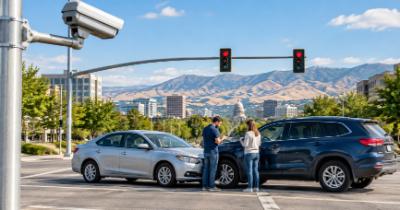
Two drivers can remember the same crash differently. You may believe that you entered an intersection on a green light while another driver claims that the light was red. One driver may say that a lane change happened without warning while the other says that the lane was clear.
A recording can provide an independent view of part of the event.
Depending on the camera location, angle, lighting, and image quality, video may show:
- Which vehicle entered an intersection first
• Vehicle movement before impact
• Whether a driver failed to yield
• A sudden or unsafe lane change
• Braking or evasive movement
• Vehicle positions immediately after impact
• Pedestrians, bicyclists, or other vehicles near the collision
• Road, traffic, lighting, and visibility conditions
Video does not automatically decide who is legally responsible. A camera may have a limited angle, an object may block part of the scene, or the recording may begin too late. The most reliable investigation compares the video with the other available evidence.
For more information about Idaho collision claims, see the Idaho Car Accident Guide:
https://hepworthholzer.com/2020/09/16/idaho-car-accident-guide/
Where Car Accident Video May Come From
You may think first of government-operated traffic cameras, but useful crash video can come from several sources near the collision scene.
Possible sources include:
- Transportation or traffic-monitoring cameras
• Nearby business surveillance systems
• Gas station cameras
• Parking lot and parking garage cameras
• Apartment or condominium security systems
• Residential doorbell cameras
• Dashcams
• Commercial truck or fleet cameras
• Rideshare vehicle cameras
• Cameras mounted on nearby buildings
A visible camera does not mean that a recording exists. Some systems provide live views without storing continuous video. Other systems may save recordings only for a limited period.
Private cameras can create another challenge. A business or property owner may have a system that automatically records over older files. That makes early identification of possible video sources useful after an Idaho car accident.






Are Idaho Traffic Cameras Recorded?
You should not assume that every Idaho traffic camera stores video.
The Idaho Transportation Department uses CCTV cameras to monitor highway conditions and assist with incident response. ITD policy states that it does not record CCTV video as a general practice. Limited recording may occur for equipment diagnosis or training, and snapshots may be shared through Idaho 511.
That means a camera visible on an Idaho roadway may not have stored footage of your crash.
Private surveillance systems work differently. A nearby store, gas station, apartment complex, parking facility, residence, or commercial vehicle may have recorded the collision even when a government traffic camera did not.
The key question is not simply whether a camera was nearby. You need to determine whether that specific camera recorded the relevant area at the relevant time and whether the recording still exists.
Why Preserving Accident Video Quickly Matters
After a crash, your first priorities may include medical care, transportation, vehicle repairs, and insurance communications. Evidence preservation can receive less attention during those first days.
Video may disappear while those issues are being handled.
A private business may retain surveillance footage for days or weeks before the system records over older files. A dashcam may overwrite older footage as storage fills. A commercial fleet may follow its own retention policy. A government traffic camera may not store video at all.
When you identify a possible recording source, an attorney may take steps to request preservation before the footage is deleted or overwritten.
Depending on who controls the recording and the circumstances of the claim, obtaining video may involve:
- A preservation request
• A direct request to a business or property owner
• A public records process when applicable
• A subpoena
• A formal discovery request after a lawsuit is filed
• Another lawful evidence-gathering method
Preserving evidence early can be especially useful when fault is disputed.
How Video Can Help Establish Fault
A car accident claim depends on evidence showing how the collision happened and whose conduct contributed to it.
Consider a crash at a Boise intersection. You say that another driver entered after the traffic signal changed. The other driver gives the opposite account, and there are no independent eyewitnesses.
A camera that shows both vehicles entering the intersection may help establish the sequence of events.
In another example, two vehicles collide during a lane change on a multi-lane roadway. One driver says that the other vehicle moved into an occupied lane. The other driver says that the lane was clear. Nearby surveillance footage may show the position and movement of both vehicles before impact.
Video may also help establish facts that can be difficult to reconstruct from memory alone, including:
- Whether brake lights activated
• Whether a turn signal was visible
• The location of surrounding traffic
• Whether another vehicle contributed to the collision
• Whether a pedestrian or bicyclist was present
• Whether a vehicle stopped after the crash
• Whether construction, parked vehicles, landscaping, or another obstruction affected visibility
The goal is not merely to locate footage. The goal is to determine what the recording can reliably establish when compared with the rest of the evidence.
Traffic Camera Footage and Idaho Comparative Responsibility
Idaho uses a comparative responsibility system in negligence cases. Under Idaho Code § 6-801, your own share of responsibility can reduce the damages you may recover. Recovery can also be barred when your responsibility is as great as the responsibility of the person from whom you seek damages.
A short section of video may become valuable when an insurance company argues that both drivers contributed to the collision.
For example, footage may help show:
- Whether you had time to respond to another vehicle
• Whether a lane change was already underway
• Whether another vehicle entered the roadway unexpectedly
• Whether either driver failed to yield
• Whether surrounding traffic affected the available response time
A recording can also reveal facts that do not support your initial understanding of the crash. A careful legal evaluation should consider what the video actually shows rather than assuming that every recording will support one side.
Learn more about shared fault in Idaho:
https://hepworthholzer.com/2020/10/08/comparative-responsibility/
Rules of a Personal Injury Claim Choosing a Personal Injury AttorneyRelated Videos
Can Video Contradict a Police Report or Witness Statement?
Yes. A police report can be a useful part of a collision investigation, but the responding officer often arrives after the crash. The officer may rely on driver statements, witness accounts, roadway evidence, vehicle locations, photographs, and other information gathered at the scene.
Video may show details that were unavailable when the initial report was prepared.
Witnesses can also make sincere mistakes. A crash happens quickly, and a person watching from across an intersection may see only part of the event.
A recording can sometimes clarify those disagreements, but it still needs context. A clip that begins one second before impact may not explain what happened several seconds earlier. A distant camera may make speed difficult to assess. Darkness, weather, glare, obstructions, or image quality can also limit what the recording proves.
Other Evidence That Can Support an Idaho Car Accident Claim
Traffic camera footage is only one possible source of evidence. Your claim may be stronger when several independent sources support the same sequence of events.
Evidence may include:
- Photographs from the collision scene
• Vehicle damage
• Police reports
• Witness statements
• Dashcam recordings
• Cell phone photographs or videos
• Medical records
• Emergency response records
• Vehicle electronic data
• Commercial driver records when applicable
• Accident reconstruction evidence when expert analysis is appropriate
For practical steps after a collision, see:
https://hepworthholzer.com/2018/01/02/protecting-yourself-after-a-car-accident-a-checklist/
What Should You Do if You Think a Camera Recorded the Crash?
If your medical condition permits, record the exact location and approximate time of the crash as soon as you can. Include your direction of travel and the intersection, street, nearby business, or landmark closest to the collision.
Look for cameras that may face the roadway. You may see them on businesses, residences, parking structures, gas stations, traffic poles, apartment buildings, or commercial properties.
You can also take these steps:
- Preserve original dashcam files
• Photograph visible cameras near the scene
• Keep the police report or incident number
• Write down the names of nearby businesses
• Ask witnesses whether they recorded any part of the crash
• Save communications about requested footage
• Keep original video files in their original form
• Tell your attorney about possible camera sources promptly
Do not enter private property without permission or interfere with surveillance equipment. The person, business, or agency controlling a recording may have procedures for requests and release of footage.
What if the Insurance Company Disputes What the Video Shows?
Video can be persuasive without being conclusive.
An insurance company may argue that a recording has an incomplete angle, does not clearly show the traffic signal, or begins too late to establish the full sequence of events. The insurer may also rely on other evidence to dispute what appears on screen.
That is why video should be evaluated with the full claim.
Vehicle damage may help establish the angle of impact. Scene photographs may document final vehicle positions, debris, skid marks, or visibility conditions. Witness testimony may explain events outside the camera view. Medical records can document injuries and treatment after the collision.
For more information about evidence and insurance issues in Idaho car accident claims, see:
https://hepworthholzer.com/2021/11/30/what-you-should-know-about-your-car-accident-claim/
How an Idaho Car Accident Lawyer Can Use Video Evidence
Finding a camera is only the first step. Someone still needs to determine who controls the recording, whether it exists, how long it may be retained, how it can lawfully be obtained, and how it fits with the rest of the evidence.
An attorney handling an Idaho car accident claim may help by:
- Identifying likely camera sources near the collision
• Requesting preservation of relevant recordings
• Seeking copies through lawful procedures
• Comparing timestamps with police, dispatch, phone, or vehicle records when available
• Reviewing footage with photographs and vehicle damage
• Investigating conflicting accounts of the collision
• Evaluating comparative responsibility
• Consulting qualified experts when technical analysis is needed
• Presenting relevant evidence during insurance negotiations
• Preparing evidence for litigation when a lawsuit becomes necessary
A careful investigation may also reveal facts that were not apparent at the scene. A recording may show another vehicle, an obstructed view, unexpected traffic movement, or another condition that affects how the collision should be evaluated.
Talk With an Idaho Car Accident Attorney About Video Evidence
If you were injured in a crash in Boise, Meridian, the Treasure Valley, or another Idaho community, potentially useful video may not remain available indefinitely. Hepworth Holzer, LLP can review the collision, investigate possible evidence sources, address insurance issues, and explain the legal options that may apply to your situation.
The firm offers free consultations. Call (208) 328-6998 to speak with Hepworth Holzer, LLP about an Idaho car accident claim.
This article is for informational purposes only and is not legal advice. Speak with an attorney about the facts of your specific situation.