Summary
When a deer causes an Idaho car crash, liability depends on what actually caused the collision. A driver who strikes a deer may have no negligence claim against another person if the animal entered the roadway so suddenly that no other driver caused or contributed to the wreck. A different result may apply when another driver was speeding, following too closely, distracted, changing lanes unsafely, crossing the center line, or otherwise failing to use reasonable care.
Insurance coverage can also change depending on how the crash happened. A direct collision with a deer may fall under comprehensive coverage if the policy includes it. If another driver’s negligence caused or contributed to the collision, that driver’s liability insurance may become relevant.
Hepworth Holzer, LLP helps people injured in Boise, Meridian, the Treasure Valley, nearby communities, and throughout Idaho evaluate fault, insurance coverage, and evidence after serious motor vehicle crashes.
A deer can create the emergency without deciding who is legally responsible. Fault depends on what each driver did before and during the collision.





When a Deer Is the Only Cause of the Crash
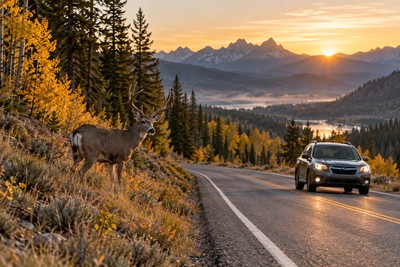
Some deer collisions happen with almost no warning. A deer may run from the shoulder, brush, or median directly into a vehicle’s path, leaving a careful driver with too little time or distance to avoid impact.
When no other person caused or contributed to the collision, the claim may primarily involve the driver’s own insurance rather than a negligence claim against another driver.
For vehicle damage, comprehensive coverage may apply to a direct collision with an animal when the policy includes that protection. The deductible, coverage limits, exclusions, and policy language can affect what the insurer pays.
To learn more about Idaho automobile insurance coverage, visit:
https://hepworthholzer.com/2020/11/01/understanding-your-idaho-car-insurance-policy/
Medical payments coverage or health insurance may also become relevant when a driver or passenger suffers injuries. The benefits available depend on the policies involved.
The key point is that hitting a deer does not, by itself, establish negligence by another person.
When Another Driver May Be Liable for a Deer-Related Crash
A deer may trigger a chain of events without being the only cause of the resulting collision.
For example, a driver may brake because a deer enters the roadway. If the vehicle behind that driver was following too closely and cannot stop in time, the rear driver’s conduct may become a central issue.
Another driver may see a deer and swerve into an occupied lane. The animal prompted the reaction, but the driver’s speed, awareness of surrounding traffic, lane position, and manner of steering can still affect liability.
Conduct that may become relevant includes:
• Following another vehicle too closely
• Driving too fast for traffic, visibility, weather, or roadway conditions
• Looking at a phone or becoming otherwise distracted
• Crossing the center line while trying to avoid an animal
• Changing lanes without checking surrounding traffic
• Failing to keep a reasonable lookout
• Losing control because of excessive speed
• Making an unsafe evasive maneuver when a safer response was reasonably available
The legal question is not simply whether the deer caused a driver to react. The question is whether the driver acted with reasonable care under the circumstances and whether the driver’s conduct caused or contributed to the collision.
For a broader discussion of Idaho motor vehicle injury claims, visit:
https://hepworthholzer.com/2020/09/16/idaho-car-accident-guide/






Can More Than One Driver Be Responsible?
Yes. Idaho uses comparative responsibility principles in negligence cases.
Under Idaho Code Section 6-801, responsibility may be allocated among people whose conduct contributed to an injury. A claimant’s own share of responsibility can reduce the damages that may be recovered. The statute can also bar recovery against a particular defendant when the claimant’s responsibility is as great as or greater than that defendant’s responsibility.
This issue can matter in a deer-related collision because several decisions may occur within only a few seconds.
Consider a driver who sees a deer and suddenly moves into the next lane. A second vehicle is already traveling in that lane. The first driver may argue that an immediate maneuver was necessary to avoid the animal. The second driver may argue that the lane change was unsafe.
A different dispute may arise after a rear-end collision. The rear driver may claim that the vehicle ahead stopped without warning. The front driver may respond that emergency braking was necessary because a deer entered the road.
Those situations require an evaluation of each driver’s conduct. Saying that “the deer caused it” does not resolve every question of fault.
For more information about comparative responsibility in Idaho, visit:
https://hepworthholzer.com/2020/10/08/comparative-responsibility/
What Evidence Can Help Determine Liability?
A deer-related crash may unfold in only a few seconds. Evidence can help show how the collision developed and whether another driver’s actions contributed.
Useful evidence may include:
• Photographs of each vehicle and the damage location
• Photographs of debris, skid marks, lane markings, shoulders, signs, and the surrounding roadway
• Dash camera footage
• Nearby business, residential, or traffic camera footage when available
• Witness names and contact information
• Police or crash-report information
• Notes about the position and direction of each vehicle
• Towing and repair records
• Medical records documenting injuries and treatment
• Insurance communications
• Electronic vehicle data when available and relevant
The location and pattern of vehicle damage can help investigators understand the sequence of events. Rear damage may support a different reconstruction than side-impact damage after a lane change.
Video can be especially useful when drivers disagree about whether someone braked, swerved, crossed a lane line, changed lanes, or had enough time to react.
Related Videos
Rules of a Personal Injury Claim
Choosing a Personal Injury Attorney
What If You Swerved to Avoid the Deer?
Swerving can turn a wildlife encounter into a multi-vehicle crash. A sudden steering movement can send a vehicle into another lane, across the center line, onto a shoulder, or off the road.
Swerving to avoid a deer does not automatically establish negligence. The surrounding facts matter.
A driver confronted with an animal entering the vehicle’s path at close range may have very little time to decide what to do. A driver who sees a deer farther ahead and makes an aggressive lane movement without accounting for nearby traffic presents a different situation.
Relevant facts may include:
• The driver’s speed
• Visibility and lighting
• Traffic around the vehicle
• Lane position
• Distance from the deer
• Road and weather conditions
• The amount of time available to react
• Whether braking, steering, or another response was reasonably available
Liability should be based on the actual evidence, not only on the fact that a driver swerved.
Who Pays for Injuries and Vehicle Damage?
The answer depends on how the collision occurred and what insurance coverage is available.
When a deer is the only apparent cause of a direct collision, the driver’s comprehensive coverage may apply to vehicle damage if the policy includes that protection. Medical payments coverage or health insurance may also help with certain medical expenses, depending on the policy terms.
When another driver’s negligence caused or contributed to the crash, that driver’s liability insurance may become relevant to bodily injury and property damage claims.
If an at-fault driver has no liability insurance or does not have enough coverage to address the losses, uninsured or underinsured motorist coverage may become relevant, depending on the facts and the injured person’s policy.
Insurance policies contain definitions, exclusions, conditions, deductibles, and limits. Identifying an insurance company is only the first part of determining what coverage may apply.
Verdicts & Settlements
What Compensation May Be Available?
When another person’s negligence caused or contributed to an Idaho deer-related crash, an injured person may have a claim for losses that can be supported with evidence.
Depending on the circumstances, recoverable damages may include:
• Medical expenses
• Future medical needs
• Lost income
• Reduced earning capacity
• Physical pain
• Limitations caused by injuries
• Property damage
The presence of a deer does not automatically eliminate a negligence claim against another driver. At the same time, another driver is not automatically responsible simply because multiple vehicles were involved.
The evidence must connect the other driver’s conduct to the collision and the resulting losses.
How Long Do You Have to Bring an Idaho Injury Claim?
Idaho Code Section 5-219 generally provides a two-year limitations period for many personal injury actions. Exceptions can change the applicable deadline in a particular case.
Claims involving a governmental entity can also involve separate notice requirements and shorter procedural deadlines. Those claims should be evaluated promptly because missing a required notice deadline can affect the ability to pursue compensation.
Waiting can also create evidence problems even when the legal filing deadline has not expired. Vehicles may be repaired or destroyed. Video recordings may be overwritten. Witnesses can become harder to locate. Memories can fade.
Preserving evidence early can make it easier to determine whether another driver’s conduct caused or contributed to the collision.
What Should You Do After an Idaho Deer Crash?
Safety comes first. Call 911 when someone may be injured or when the collision creates a roadway hazard. Move away from active traffic when it is safe to do so, and do not approach an injured deer.
After immediate safety concerns have been addressed:
• Seek medical care for injuries
• Photograph the vehicles, roadway, damage, debris, and surrounding area when it is safe
• Exchange information with other involved drivers
• Identify witnesses and collect contact information
• Ask whether nearby vehicles or businesses may have camera footage
• Report the crash to the appropriate insurer
• Keep towing, repair, medical, wage, and insurance records
• Write down what you remember while the events are still recent
Avoid guessing about details you did not see. A sudden wildlife encounter can make it difficult to understand the entire sequence, especially when several vehicles are involved.
For information about Idaho car accident claims and legal representation, visit:
https://hepworthholzer.com/boise-motor-vehicle-accident-lawyers/
Speak With an Idaho Car Accident Attorney
A deer-related collision can raise two separate questions: which insurance coverage applies to the wildlife collision and whether another driver’s actions created a negligence claim.
Hepworth Holzer, LLP represents people injured in motor vehicle crashes in Boise, Meridian, the Treasure Valley, nearby areas, and throughout Idaho. The firm can review how the collision occurred, examine available insurance coverage, and evaluate evidence that may help determine responsibility.
Call 208-328-6998 to request a consultation.
You can also contact the firm at:
https://hepworthholzer.com/contact/
This article is for general informational purposes only. It is not legal advice and does not create an attorney-client relationship. Every case depends on its specific facts and applicable law. Consult an attorney about your situation.