When investigating accidents, environmental factors like rapid temperature swings can drastically alter the accident scene, making it more difficult to reconstruct accurately. Hepworth Holzer, LLP, with its vast experience in accident reconstruction and personal injury law, understands the complexities introduced by temperature fluctuations. This guide delves into the key challenges that temperature changes create, the science behind how these variations affect crucial physical evidence, and how experts address these challenges during investigations.






The Effect of Temperature Variations on Physical Evidence 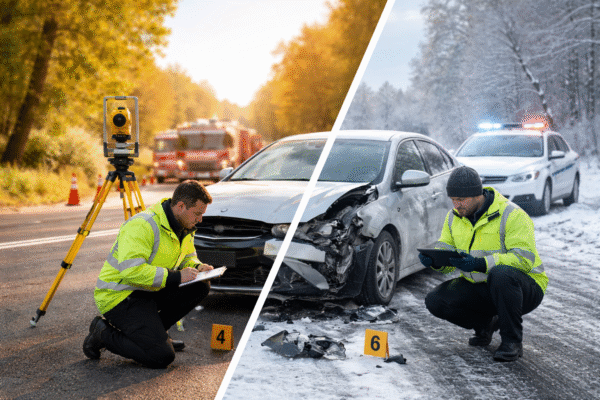
Accident reconstruction is an intricate process that requires precise analysis of physical evidence found at the scene. However, temperature plays a significant role in altering the properties of materials involved in an accident. Tire marks, vehicle damage, and even human injuries can be impacted by rapid changes in temperature, which ultimately affects how experts interpret the evidence. Understanding these effects is critical for both accident reconstructionists and legal teams to ensure that they can accurately represent the facts in a case.
- Tire Marks: The Temperature Sensitivity of Skid Marks
One of the most important pieces of evidence in an accident reconstruction is the tire mark. Skid marks, which can reveal critical information about the speed of the vehicle and how the driver attempted to avoid the collision, are influenced by road conditions and temperature. On hot days, the road surface may soften, leading to tire marks that may appear longer or deeper than they would under normal conditions. This can lead to an overestimation of speed or braking distance.
On the contrary, during cold weather, the road can become hardened, causing the tire to leave a less distinct mark. This reduced depth and length could result in underestimating the speed or the amount of braking that occurred during the incident. As a result, experts have to carefully account for temperature changes when interpreting skid marks, adjusting their analysis to ensure that they don’t draw inaccurate conclusions.






- The Influence of Temperature on Vehicle Damage and Deformation
Temperature also plays a critical role in the way vehicles respond to impact. Metals and other materials used in car construction expand or contract depending on the ambient temperature. This means that the extent of vehicle deformation could differ significantly if an accident occurred during extremely hot or cold conditions. In extreme heat, materials may soften, leading to greater deformations, while in colder conditions, metals could become more brittle, potentially causing different kinds of damage upon impact.
Experts in accident reconstruction use temperature-controlled simulations to better understand the potential impact of environmental changes on vehicle deformation. These simulations allow them to recreate the exact conditions at the time of the accident, including the temperature, to get a more accurate reading of how the vehicles would have reacted in the circumstances. This process ensures that the reconstruction takes into account all factors, including temperature, which may affect the results.
- The Impact of Temperature on Human Injuries
Human injuries can also be significantly influenced by the temperature at the time of the crash. For instance, in cold weather, certain types of injuries, such as bruising or soft tissue damage, may be less visible or may be exacerbated by the body’s natural response to cold stress. This could lead to an inaccurate assessment of the severity of the injuries if temperature fluctuations are not taken into account.
In contrast, heat can cause the human body to swell, which might distort the visual evidence of injuries, especially in cases of contusions or sprains. The presence of swelling can make it difficult to assess the full extent of injuries at first glance, and in some cases, it may delay the diagnosis of certain conditions. During reconstruction, experts must adjust for this factor by considering the known temperatures during the accident and how they may have influenced the victim’s injuries. This adjustment is necessary to ensure that the true severity of the injuries is understood.
How Experts Adapt to Temperature Variability in Accident Reconstruction
Accident reconstruction professionals are trained to take environmental factors such as temperature into account. They use a variety of methods to ensure that the impact of temperature changes is properly addressed. These methods include:
- Temperature-controlled simulations: These simulations recreate the conditions of the accident scene, including temperature, to help experts better understand how materials, such as road surfaces and vehicle components, would have reacted during the incident. By simulating different temperature scenarios, reconstructionists can develop a more accurate picture of what occurred during the accident.
- Meteorological data: Accident reconstruction specialists often rely on data from weather stations and meteorologists to understand the conditions at the time of the accident. This data includes temperature, humidity, and other environmental factors that might have influenced the accident scene. By correlating the available meteorological data with the physical evidence, experts can adjust their analysis accordingly.
- Adjustments for temperature at the time of the accident: In some cases, temperature records are available for the exact time and place of the accident. Experts can use this information to adjust their reconstruction, accounting for temperature fluctuations that could have affected tire marks, vehicle damage, and injuries.
Rules of a Personal Injury Claim Choosing a Personal Injury AttorneyRelated Videos
The Legal and Insurance Implications of Temperature Variability in Accident Cases
For legal teams representing victims of accidents, temperature fluctuations can have serious implications. When the physical evidence at the scene is impacted by temperature, it is important for accident reconstructionists to adjust their analysis to reflect these changes. Failing to do so could result in inaccurate findings that might affect the outcome of a case. Additionally, insurance companies may also use the temperature data to assess liability and the severity of the damages.
At Hepworth Holzer, LLP, our attorneys are experienced in handling cases where environmental factors like temperature fluctuations play a significant role in the reconstruction of an accident. Our team works closely with accident reconstruction experts to ensure that all evidence is accurately interpreted, and we ensure that these factors are properly considered when presenting a case. By doing so, we aim to provide our clients with the best possible outcome, whether through litigation or settlement.
Verdicts & Settlements
The Importance of Accurate Temperature Considerations in Accident Reconstruction
Temperature fluctuations play a crucial role in accident reconstruction, affecting everything from tire marks to vehicle deformation and human injuries. As these factors are often overlooked or misunderstood, it is important for accident reconstruction experts to adjust their analysis based on the known temperatures at the time of the incident. By accounting for temperature variability, experts can provide a more accurate and reliable reconstruction of the accident scene.
For those involved in personal injury cases where temperature swings may have impacted the reconstruction of the accident, it is essential to work with experienced professionals who understand these complexities. If you are facing a legal matter related to an accident, Hepworth Holzer, LLP is here to help. Our team is dedicated to ensuring that all aspects of your case, including temperature considerations, are properly handled, and we will fight to ensure you receive the compensation you deserve.
To learn more about this subject click here: What is My Personal Injury Case Worth?