

You may be able to seek compensation after an Idaho ATV, UTV, side-by-side, or recreational vehicle accident when another person, business, property owner, rental company, or product manufacturer caused or contributed to the crash. A claim can arise from careless operation, poor supervision, defective equipment, unsafe property conditions, or a collision with another vehicle.
The strength of your claim will depend on the available evidence, the cause of the crash, the insurance policies that apply, and the effect of your injuries. Idaho comparative responsibility law can reduce or prevent recovery when an injured person shares responsibility. Most Idaho personal injury lawsuits are also subject to a two-year filing period, although some claims have shorter notice requirements.
Hepworth Holzer, LLP helps injured people evaluate fault, identify insurance coverage, preserve evidence, document losses, and understand their legal options after recreational vehicle accidents throughout Idaho.
A recreational vehicle accident claim depends on who caused the crash, what duties applied, and whether that conduct caused your injuries.




When an ATV or Recreational Vehicle Accident May Support a Claim 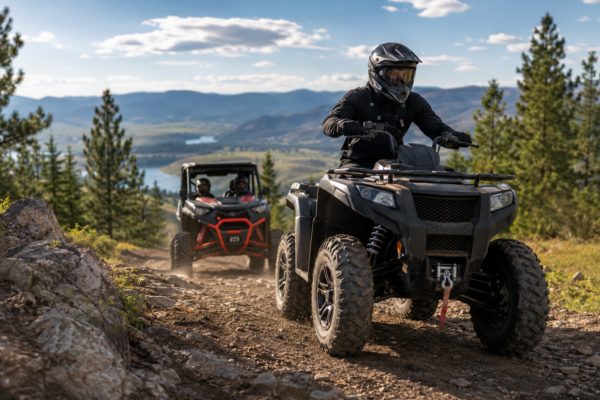
An ATV crash does not automatically create a right to compensation. You generally need evidence showing that another party failed to use reasonable care and that the failure caused your injuries.
Recreational vehicle claims can involve:
- All-terrain vehicles
- Utility terrain vehicles
- Side-by-sides
- Dirt bikes
- Snowmobiles
- Golf carts
- Boats
- Personal watercraft
- Other off-road or recreational machines
The legal issues can change depending on where the crash occurred, who owned the vehicle, whether it was rented, whether a business organized the activity, and whether the injured person was an operator, passenger, pedestrian, or occupant of another vehicle.
Situations that may support an Idaho injury claim include:
- Another rider was speeding, impaired, distracted, or operating aggressively.
- A driver crossed a trail, road, or access point without yielding.
- An owner allowed a child, intoxicated person, or inexperienced rider to use a vehicle without reasonable instruction or supervision.
- A rental company supplied a poorly maintained vehicle or failed to provide necessary safety information.
- A property owner failed to address a concealed drop-off, blocked sightline, damaged trail, or another dangerous condition.
- A defective tire, brake, steering component, throttle, door, seat belt, or roll cage contributed to the crash or worsened the injuries.
- A pickup, sport utility vehicle, or other road vehicle struck an ATV or UTV at a crossing or on a road where operation was permitted.
For more information about negligence and Idaho injury claims, read the Idaho personal injury guide:
https://hepworthholzer.com/2020/09/16/idaho-personal-injury-guide/
Who May Be Responsible for an Idaho ATV Accident?
One recreational vehicle accident can involve several responsible parties. Identifying each potential source of fault and insurance coverage matters because an ATV or UTV may not be covered by an ordinary automobile policy.
Potentially responsible parties may include:
- The operator: A rider may be responsible when careless operation causes a collision, rollover, passenger ejection, or loss of control.
- The vehicle owner: An owner may face a negligent entrustment claim after allowing someone who was too young, impaired, untrained, or otherwise unfit to operate the machine.
- A rental company or tour operator: A business may be responsible for unsafe equipment, poor maintenance, inadequate warnings, or unreasonable supervision.
- A property owner or event organizer: Liability may arise when a known or reasonably discoverable property hazard creates an unreasonable risk.
- A manufacturer, distributor, or seller: A product liability claim may arise when a defective vehicle or component causes the crash or makes the injuries worse.
- Another motorist: A driver may be responsible for striking an ATV, UTV, or other recreational vehicle at a trail crossing, access point, or permitted roadway.
Product liability cases often require technical investigation. Preserve the damaged ATV, UTV, helmet, tire, restraint, and other components before repairs, disposal, or destructive testing.
Learn more about defective product claims:
https://hepworthholzer.com/boise-product-liability-attorneys/
How Idaho Comparative Responsibility Can Affect Compensation
Idaho uses a modified comparative responsibility rule. Under Idaho Code Section 6-801, an injured person can be prevented from recovering damages when that person’s responsibility is as great as or greater than the responsibility of the party from whom recovery is sought. When recovery is permitted, the compensation is reduced according to the injured person’s percentage of responsibility.
For example, a UTV operator may enter a curve too quickly while using a rental vehicle with dangerously worn tires. If the evidence supports responsibility by both the operator and the rental company, the judge or jury may assign a percentage of responsibility to each party. The injured person’s recovery will depend on that allocation and the parties against whom the claim is pursued.
Insurance companies may argue that an injured rider:
- Traveled too fast
- Ignored warning signs
- Failed to wear protective equipment
- Carried too many passengers
- Used the vehicle in a prohibited area
- Operated the vehicle while impaired
- Failed to use an available restraint
Those arguments should be evaluated against the entire record, including photographs, witness statements, maintenance records, rental documents, vehicle data, operating instructions, trail conditions, and the conduct of every involved party.
Idaho Code Section 49-666 contains helmet requirements for certain riders under 18 who operate or ride motorcycles, motorbikes, UTVs, or ATVs. The statute also contains restraint provisions for qualifying UTVs and specific exceptions. Whether a claimed violation affects an injury case depends on the facts, the type of vehicle, the rider’s age, the location, the available equipment, and whether the alleged violation caused or increased the injuries.






What Compensation May Be Available?
The compensation available after an Idaho ATV or recreational vehicle accident depends on the evidence, the severity of the injuries, the applicable insurance coverage, and the effect of the accident on your life.
A claim may include compensation for:
- Ambulance transportation and emergency care
- Hospital treatment and surgery
- Rehabilitation, physical therapy, and medication
- Future medical treatment and assistive equipment
- Lost wages
- Reduced future earning ability
- Pain and physical limitations
- Loss of normal activities
- Scarring or disfigurement
- Permanent disability
- Property damage
- Other documented accident-related expenses
ATV and side-by-side crashes can cause traumatic brain injuries, spinal injuries, fractures, internal injuries, severe soft-tissue injuries, and permanent impairments.
Learn about issues that may arise after a traumatic brain injury:
https://hepworthholzer.com/boise-traumatic-brain-injury-attorneys/
When a recreational vehicle accident causes a death, eligible surviving family members may have a wrongful death claim under Idaho law. The available claims and eligible parties depend on the family’s circumstances.
Read more about Idaho wrongful death claims:
https://hepworthholzer.com/boise-wrongful-death-attorneys/
Insurance Issues After an ATV or UTV Crash
Insurance coverage is often one of the most difficult parts of a recreational vehicle claim. A standard automobile policy may exclude an off-road vehicle. A homeowners policy may also contain exclusions based on the vehicle type, ownership, location, or use.
Possible sources of coverage include:
- A separate ATV or UTV policy
- A recreational vehicle policy
- A homeowners policy
- An umbrella policy
- A commercial liability policy
- A rental company policy
- A tour operator or event policy
- A property owner’s policy
- A policy covering another involved motor vehicle
Coverage may also depend on whether the crash occurred on a public road, designated trail, private property, farm, campground, rental property, or organized tour.
Do not assume that no insurance is available because the ATV did not have a conventional automobile policy. A legal review can identify policies, exclusions, additional insureds, and other possible sources of compensation.
Evidence That Can Strengthen a Recreational Vehicle Claim
Off-road crash scenes can change quickly. Tire marks disappear, damaged machines are repaired, trails change, and electronic data can be overwritten.
Useful evidence may include:
- Photographs and video of the terrain, signs, weather, vehicle positions, and visible hazards
- The ATV, UTV, helmet, restraints, tires, and damaged components
- Witness names and contact information
- Rental agreements and waivers
- Inspection forms and training materials
- Maintenance and repair records
- GPS information
- Mobile phone data
- Onboard vehicle data
- Action-camera footage
- Medical records and bills
- Wage and employment records
- Disability documentation
- Reports from law enforcement, land managers, businesses, or event staff
Preserve the vehicle and safety equipment in their post-crash condition. Do not authorize repairs, disposal, downloads, or destructive testing before the evidence has been documented.
A signed waiver does not always end a claim. Its effect can depend on the wording, the parties, the conduct involved, and Idaho law. Have the document reviewed before assuming that you have no legal options.
Rules of a Personal Injury Claim Choosing a Personal Injury AttorneyRelated Videos
What to Do After an Idaho ATV Accident
Get medical care. Some head, neck, spine, and internal injuries do not produce immediate symptoms. Tell your medical providers how the crash occurred and describe every symptom accurately.
Document the scene. When it is safe, photograph the vehicle, trail, road, property conditions, protective equipment, and visible injuries.
Preserve the vehicle and equipment. Keep the ATV, UTV, helmet, restraints, and damaged parts unchanged.
Gather witness information. Obtain names, telephone numbers, email addresses, and any available photographs or videos.
Report the incident. Notify the appropriate property owner, rental company, tour operator, land manager, event organizer, or law enforcement agency.
Protect your statements. Avoid giving a detailed recorded statement to an insurance company before you understand the available coverage and legal issues.
Limit social media activity. Do not post crash photographs, riding videos, location data, or recovery updates that may be taken out of context.
Save your records. Keep medical bills, receipts, insurance letters, employment records, repair estimates, and other accident-related documents.
Watch the deadlines. Idaho Code Section 5-219 generally provides a two-year period for personal injury lawsuits. Exceptions may change that period. Claims involving a state or local government can also require notice before the ordinary lawsuit deadline. Early action helps preserve evidence even when the filing period has not expired.
How an Idaho Injury Attorney Can Help
A recreational vehicle claim may require more than a crash report and medical bills. An attorney can:
- Inspect and preserve the vehicle
- Protect electronic and physical evidence
- Interview witnesses
- Examine rental, training, and maintenance records
- Review waivers and releases
- Identify every potentially responsible party
- Locate available insurance coverage
- Document current and future losses
- Consult qualified experts when necessary
- Respond to comparative responsibility arguments
- Negotiate with insurers
- Prepare the case for litigation when appropriate
Hepworth Holzer, LLP represents injured people throughout Idaho. The firm’s attorneys build claims using reliable evidence and work to present the full effect of an injury on the client’s health, employment, family, and daily life.
Verdicts & Settlements
Frequently Asked Questions About Idaho ATV Accident Claims
Can an injured ATV passenger make a claim?
A passenger may have a claim when the operator, vehicle owner, rental company, property owner, product manufacturer, another motorist, or another party caused or contributed to the accident. The available claim depends on the evidence and insurance coverage.
Does a waiver prevent every recreational vehicle claim?
No. The effect of a waiver depends on its language, the parties, the conduct involved, and Idaho law. A waiver should be reviewed before you decide that no claim is available.
Can I recover compensation if I was partly responsible?
Possibly. Idaho’s modified comparative responsibility rule may allow recovery when your responsibility is less than the responsibility of the party from whom you seek compensation. Your damages can be reduced according to your percentage of responsibility.
What happens if the ATV was uninsured?
Other coverage may still apply. Potential sources can include homeowners, umbrella, rental, commercial, property, tour operator, or other motor vehicle policies. Coverage requires a review of the facts and policy language.
Does failing to wear a helmet end an Idaho ATV injury claim?
Not automatically. Helmet requirements, statutory exceptions, the rider’s age, causation, and the nature of the injuries can all matter. The failure to use protective equipment may become part of a responsibility or damages argument, but it does not resolve every issue in the case.
How long do I have to file an Idaho ATV accident lawsuit?
Idaho Code Section 5-219 generally provides two years for personal injury lawsuits, but exceptions and earlier notice rules can apply. Claims involving government entities may require prompt written notice. Speak with an attorney as soon as possible to determine the deadline that applies to your situation.
Speak With an Idaho Personal Injury Attorney
If another person, company, property condition, or defective product caused or contributed to your ATV, UTV, side-by-side, or recreational vehicle accident, Hepworth Holzer, LLP can review the facts and explain your options.
Call the Boise office at 208-328-6998 or contact the firm online:
https://hepworthholzer.com/contact/
The firm serves injured people in Boise, Meridian, and communities throughout Idaho. A prompt investigation can help preserve the evidence needed for a fair evaluation of your claim.
No attorney can promise a particular result. This article is for general informational purposes and is not legal advice. Consult an attorney about your specific situation.

 |
 |